Limited Time Offer!
For Less Than the Cost of a Starbucks Coffee, Access All DevOpsSchool Videos on YouTube Unlimitedly.
Master DevOps, SRE, DevSecOps Skills!
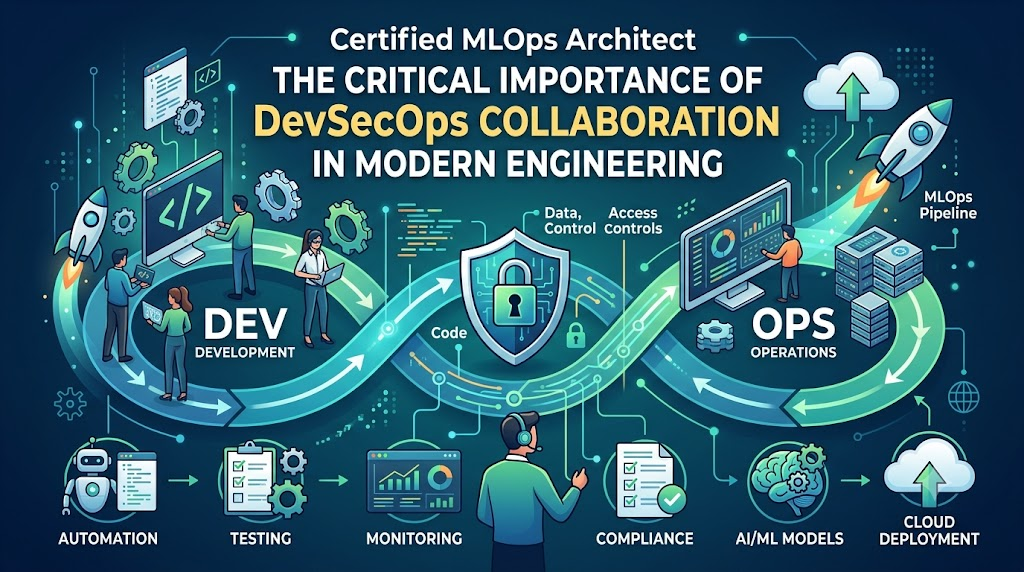
Introduction
In the current landscape of software engineering, the speed of delivery is often at odds with the necessity of security. Organizations are pressured to push updates daily, if not hourly, to remain competitive. Historically, this pressure created distinct, isolated departments: Development (Dev) focused on features, Operations (Ops) focused on uptime, and Security (Sec) focused on risk mitigation. This separation, while organized on paper, became the primary bottleneck for innovation.
When security checks are treated as a final “gate” before production, they inevitably cause delays, friction, and “blame-culture” incidents when vulnerabilities are discovered at the last minute. This is why modern organizations are shifting toward a culture of collaboration. By integrating security into the entire lifecycle, teams can move faster without sacrificing safety. At DevOpsSchool, we emphasize that this shift is not just about tools; it is about people working together. Understanding this paradigm is crucial for anyone involved in modern software delivery.
Understanding Dev, Sec, and Ops Teams
To build a collaborative culture, we must first understand the fundamental goals of each department:
- Development (Dev): Their primary goal is to build, iterate, and deliver new features to customers as quickly as possible. They focus on functionality, performance, and user experience.
- Security (Sec): They act as the guardians of the organization. Their goal is to identify risks, manage compliance, and ensure that data and infrastructure remain protected against threats.
- Operations (Ops): They are responsible for the “plumbing” of the software world. They ensure that systems are stable, scalable, and reliable. Their focus is on uptime and infrastructure management.
Think of it like building a house: The architect (Dev) wants a beautiful design, the inspector (Sec) ensures the building codes are met, and the maintenance crew (Ops) ensures the plumbing and electricity function perfectly. If they do not talk until the end of construction, the inspector might demand that the architect tear down walls to fix wiring—an expensive and slow process.
Why Teams Historically Worked in Silos
Historically, these teams operated in silos due to misaligned incentives and rigid organizational structures. Development was measured by feature velocity, Ops by system availability, and Security by the number of vulnerabilities blocked. Because these metrics rarely overlapped, a “throw-it-over-the-wall” mentality emerged.
For example, a developer might complete a feature and hand it to Ops for deployment. Ops, in turn, might pass it to Security for a compliance audit. If Security found a flaw, the cycle would restart, leading to massive delays. This isolation created a culture where teams viewed each other as obstacles rather than partners.
Problems Caused by Poor Collaboration
| Problem | Impact |
| Slow Releases | Features wait in queues for security audits. |
| Late Vulnerability Detection | Fixing bugs in production is 100x more expensive than in development. |
| Deployment Failures | Miscommunication between Dev and Ops leads to broken environments. |
| Blame Culture | Teams point fingers when systems fail or security incidents occur. |
| Increased Technical Debt | Security patches are skipped to meet deadlines, creating long-term risk. |
What DevSecOps Collaboration Really Means
DevSecOps collaboration is the practice of integrating security decisions and responsibilities into every stage of the software delivery lifecycle. It is not a tool you buy; it is a way of working.
Practical Workflow Example:
Instead of a security scan occurring once a month, automated security testing is integrated into the CI/CD pipeline. When a developer pushes code, the pipeline automatically checks for common vulnerabilities. If a risk is detected, the developer gets an alert immediately and can fix it while the code is still fresh in their mind. This shifts the focus from “policing” to “enabling.”
Why Collaboration Between Dev, Sec, and Ops Is Essential
When these teams align, the entire organization benefits:
- Faster Secure Delivery: Security becomes an automated step rather than a manual delay.
- Reduced Vulnerabilities: By catching issues early, the attack surface is minimized.
- Better Incident Response: When Dev, Sec, and Ops have shared context, they can troubleshoot and patch production issues much faster.
- Reliability: Security and stability are baked into the architecture, not added as an afterthought.
Role of Shift-Left Security in Collaboration
“Shift-left” means moving security testing to the earliest possible point in the development process.
- Developer Awareness: Developers learn to write secure code from the start.
- Earlier Testing: Security teams provide the guardrails and automated tools, allowing developers to self-test their code.
- Faster Fixes: Issues are identified in the IDE or during the build phase, preventing costly rework later.
Shared Responsibility in DevSecOps Culture
In a healthy DevSecOps environment, “Security is everyone’s responsibility” is more than a slogan. Developers take ownership of the code’s security, Operations ensure the infrastructure is hardened, and Security teams provide the expertise and tools to help the other two succeed. This shared ownership removes the “silo” barrier, as everyone is measured on the same outcome: delivering secure, reliable software.
Real-World Examples
Organization Without Collaboration:
A retail company releases a new mobile app update. Because Security was not involved until the final day, they find a critical vulnerability that exposes user data. The release is canceled, the team is forced to work all weekend, and the developers are frustrated because they have to rewrite completed features.
Organization With Strong DevSecOps Collaboration:
The same retail company uses automated security linting in their CI/CD process. During the development phase, the tool identifies the potential data exposure issue in real-time. The developer fixes the code within minutes. The release happens on schedule, the software is secure, and the team maintains a healthy work-life balance.
Benefits of Dev Sec Ops Collaboration
| Benefit | Impact |
| Faster Releases | Reduced feedback loops between teams. |
| Better Security | Continuous monitoring and proactive hardening. |
| Reduced Downtime | Security-aware operations reduce the risk of successful attacks. |
| Faster Troubleshooting | Unified logs and shared context during incidents. |
| Customer Trust | Consistent, safe, and reliable service delivery. |
Common Collaboration Mistakes Organizations Make
- Security as a Blocker: Treating security teams as the “department of no.”
- Poor Communication: Using different languages and metrics for success.
- Lack of Shared Ownership: Believing security is only the “Security Team’s job.”
- No Automation: Relying on manual checklists that slow down the process.
Checklist for Better Collaboration:
- [ ] Do all teams attend the same planning meetings?
- [ ] Is security integrated into the CI/CD pipeline?
- [ ] Are teams sharing a common set of KPIs?
- [ ] Is there a culture of blameless post-mortems?
- [ ] Are developers provided with security training?
Best Practices for Strong DevSecOps Collaboration
- Involve Security Early: Invite security experts to architectural design sessions.
- Improve Communication: Use shared dashboards and communication channels.
- Use Automation Wisely: Automate the repetitive tasks so teams can focus on complex threats.
- Share Ownership: Rotate team members across functional areas to build empathy.
- Encourage Continuous Learning: Foster an environment where staying updated on threats is part of the job.
Role of Automation in DevSecOps Collaboration
Automation is the bridge that allows these teams to work together efficiently. Without automation, scaling security across hundreds of microservices is impossible. By using tools for static analysis (SAST), software composition analysis (SCA), and infrastructure as code (IaC) scanning, teams can enforce standards automatically. This allows developers to move quickly while knowing they are operating within safe, pre-approved boundaries.
Role of DevOpsSchool in Learning DevSecOps Collaboration
DevOpsSchool serves as a vital hub for professionals seeking to master these collaborative practices. By focusing on the intersection of processes, culture, and technology, their educational approach helps learners understand how to integrate security automation into existing CI/CD workflows. They bridge the knowledge gap for beginners, providing the practical, real-world context needed to move beyond theory and into effective team management and cross-functional success.
Career Importance of DevSecOps Skills
The demand for professionals who understand DevSecOps is skyrocketing. Companies across industries—from banking to healthcare—are looking for:
- DevSecOps Engineers: Who can build secure, automated pipelines.
- Cloud Security Engineers: Who ensure that cloud infrastructure is hardened.
- Site Reliability Engineers (SREs): Who balance system reliability with security requirements.Learning these skills ensures your career remains relevant in an increasingly security-conscious job market.
Industries Benefiting From DevSecOps Collaboration
- Banking & Finance: High regulatory standards require continuous compliance.
- Healthcare: Protection of patient data is paramount and requires constant vigilance.
- SaaS Companies: Rapid deployment cycles necessitate embedded security.
- E-Commerce: Maintaining uptime and customer trust is essential for revenue.
- Telecom: Managing massive infrastructure requires integrated security and operations.
Future of Dev Sec Ops Collaboration
The future of this collaboration lies in AI-assisted security and deeper platform engineering integration. We will see more “self-healing” systems where the infrastructure can detect and mitigate threats in real-time. As the culture matures, the line between Dev, Sec, and Ops will continue to blur, evolving into a unified engineering practice where security is as fundamental as writing code.
FAQs
1. What is DevSecOps collaboration?
It is the integration of security practices and team collaboration throughout the software delivery lifecycle.
2. Why is security important in DevOps?
Security ensures that speed of delivery does not result in compromised systems or data breaches.
3. What is shift-left security?
The practice of moving security testing to the beginning of the development process.
4. Why do teams struggle with collaboration?
Usually due to misaligned incentives, different priorities, and cultural silos.
5. Does DevSecOps slow development?
Quite the opposite; it prevents the need for massive, late-stage fixes.
6. What tools support DevSecOps?
Pipeline automation tools, SAST/DAST scanners, and cloud security posture management tools.
7. Can beginners learn DevSecOps?
Yes, by focusing on understanding the CI/CD pipeline and basic security principles.
8. Why is teamwork important?
Software is too complex for one person or one team to manage alone.
9. What is a “blame-free” culture?
A culture where the focus is on learning from failures rather than punishing individuals.
10. How do I start with DevSecOps?
Start by learning basic CI/CD automation and integrating one simple security test into your pipeline.
11. Is DevSecOps only for large companies?
No, teams of any size benefit from secure, streamlined processes.
12. What is infrastructure as code?
Managing hardware and environment configurations through machine-readable definition files.
13. Does DevSecOps require new staff?
Usually, it requires retraining existing staff to embrace new responsibilities.
14. What are the first steps for a manager?
Break down communication barriers and align team success metrics.
15. Where can I find more resources?
DevOpsSchool offers courses and documentation to guide your journey.
Final Thoughts
True collaboration between Dev, Sec, and Ops is not an overnight transition. It requires patience, shared goals, and a commitment to continuous improvement. When you remove the barriers, you don’t just get better software; you get stronger, more resilient engineering teams. Security is most effective when it is a shared mindset, and when teams communicate, the friction disappears. Start small, automate where you can, and prioritize culture.
