Skip to content
Menu
DevSecOps Now!!!
  • About
  • Certifications
  • Contact
  • Courses
  • DevSecOps Consulting
  • DevSecOps Tools
  • Training
  • Tutorials
DevSecOps Now!!!

What is STRIDE?

Posted on January 24, 2023

Limited Time Offer!

For Less Than the Cost of a Starbucks Coffee, Access All DevOpsSchool Videos on YouTube Unlimitedly.
Master DevOps, SRE, DevSecOps Skills!

Enroll Now

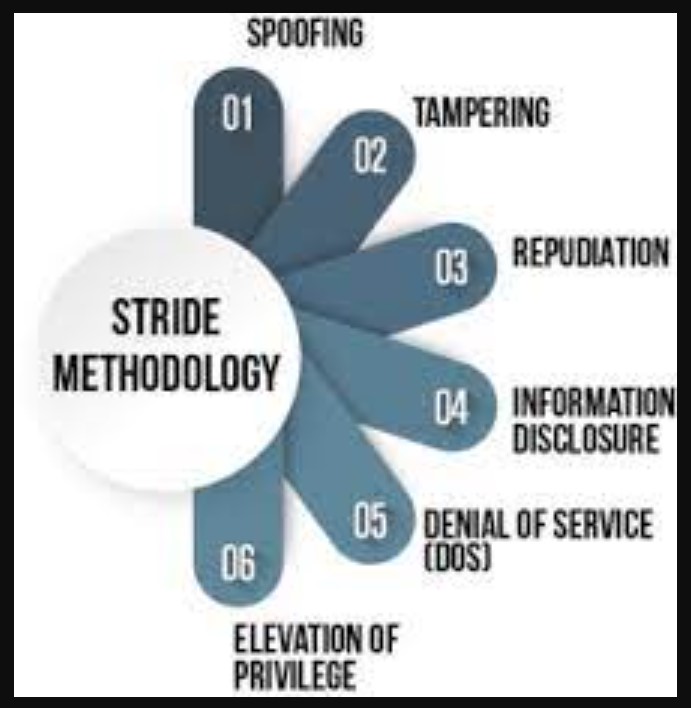
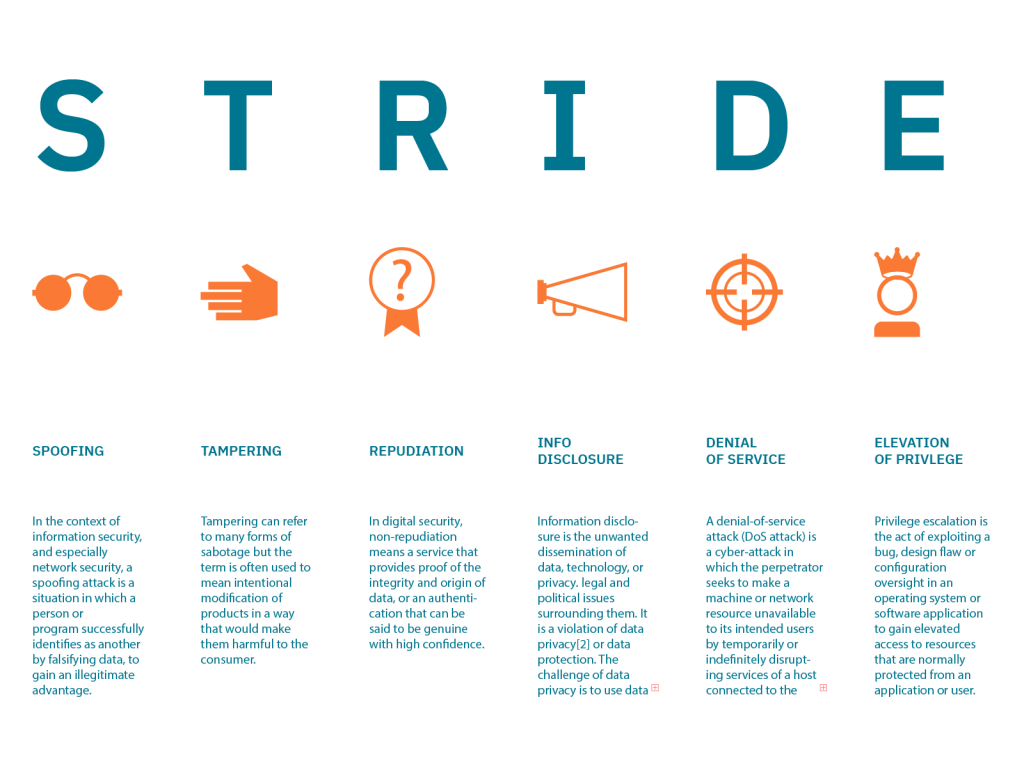
STRIDE is an acronym that stands for Spoofing, Tampering, Repudiation, Information Disclosure, Denial of Service, and Elevation of Privilege. It is a threat modeling framework used to identify and evaluate potential security threats to a system or application.

The acronym STRIDE represents the following threat categories:

  • Spoofing: Impersonating a legitimate user or system to gain access to resources or information.
  • Tampering: Modifying or altering data or system configurations.
  • Repudiation: Denying that an action was taken or that a transaction occurred.
  • Information Disclosure: Unauthorized access to or disclosure of sensitive information.
  • Denial of Service: Disrupting the availability of a system or service.
  • Elevation of Privilege: Gaining access to resources or privileges that a user should not have.

STRIDE can be used to identify potential threats and vulnerabilities, and to develop strategies to mitigate or prevent them. It is often used in the software development process, to ensure that security is considered throughout the development cycle.
Benefits of STRIDE?

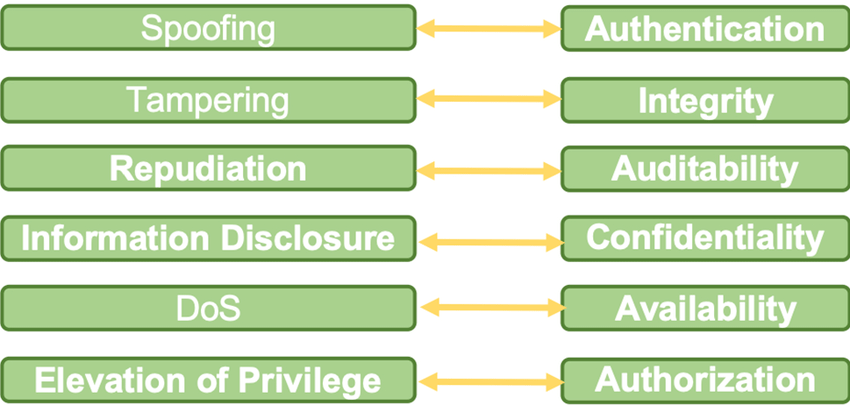
STRIDE is a useful tool for identifying and evaluating potential security threats to a system or application. The benefits of using the STRIDE framework include:

  • Systematic approach: STRIDE provides a systematic approach for identifying and evaluating potential security threats, which can help to ensure that all potential threats are considered.
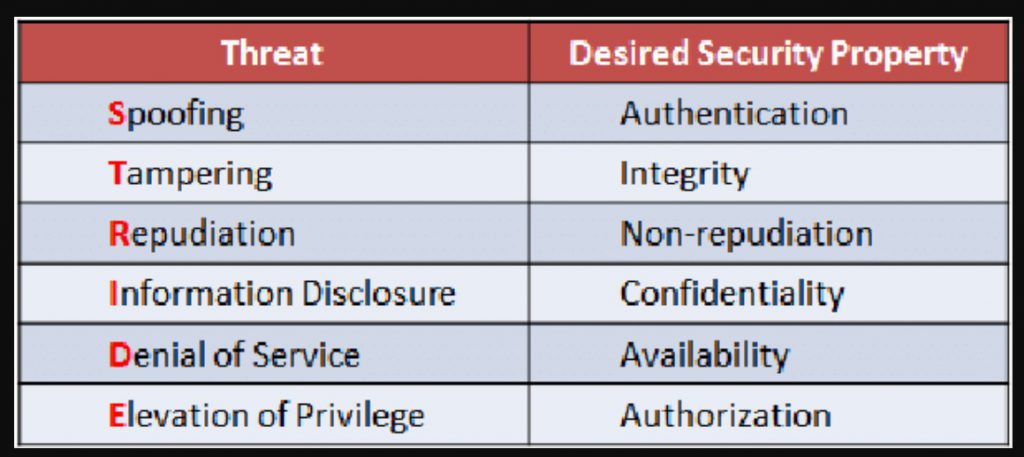
    Prioritization: By categorizing threats into specific categories, such as spoofing, tampering, and elevation of privilege, it allows to prioritize the threats that are most likely to occur and have the greatest impact.
  • Risk assessment: By identifying and evaluating potential threats, STRIDE can help to assess the risk associated with those threats and to develop strategies to mitigate or prevent them.
  • Communication: STRIDE can be used to communicate security risks and concerns to stakeholders, and to involve them in the threat modeling process.
  • Continuous improvement: By regularly reviewing and updating the threat model, STRIDE can help to ensure that security is continually improved over time.

STRIDE can also be used in conjunction with other threat modeling frameworks such as PASTA (Process for Attack Simulation and Threat Analysis) and Trike to identify security threats and improve the security of your systems and applications.
Overall, the use of STRIDE framework can help organization to achieve better security posture and reduce the attack surface.
How to implement STRIDE?
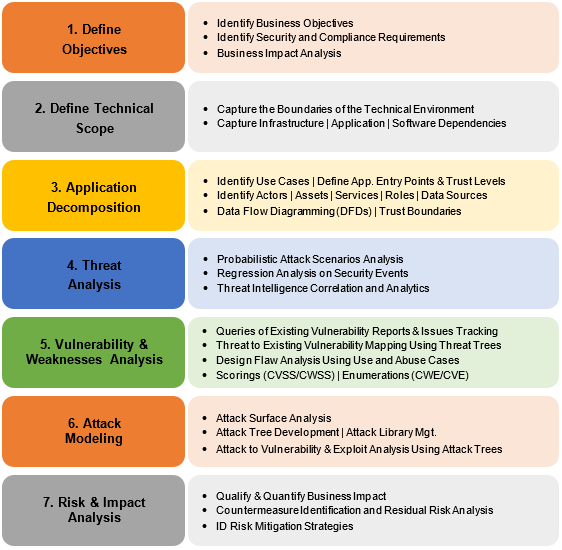
Implementing the STRIDE framework involves several steps:

  • Identify assets: Identify the assets that need to be protected, such as data, systems, and networks.
  • Identify threat actors: Identify the potential threat actors, such as internal employees, external attackers, or malicious insiders.
  • Identify threats: Use the STRIDE categories to identify potential threats that might affect the assets. For example, consider how an attacker might try to spoof a user identity, tamper with data, or perform a denial-of-service attack.
  • Evaluate risks: Evaluate the risks associated with each identified threat by considering the likelihood of the threat occurring and the impact if it does occur.
  • Develop mitigation strategies: Develop strategies to mitigate or prevent the identified threats. These might include technical controls, such as firewalls or intrusion detection systems, as well as operational controls, such as security policies or employee training.
  • Implementation: Implement the mitigation strategies and controls to reduce the risk of the identified threats.
  • Monitoring: Regularly monitor and review the system to ensure that the controls are functioning as intended and that new threats have not emerged.
  • Continuous Improvement: Continuously improve the security posture by reviewing the threat model and updating it as needed.
It’s important to involve all stakeholders in the process

Post Views: 2,452
Subscribe
Login
Notify of
guest
guest
0 Comments
Oldest
Newest Most Voted
Inline Feedbacks
View all comments
  • Certified AIOps Engineer: The Complete Career Path and Certification Guide
  • How to Rename Apache Virtual Host Files Safely (Step-by-Step Guide for Linux)
  • AIOps Foundation Certification: Everything You Need to Know to Get Certified
  • DevOps to Certified Site Reliability Professional: A Senior Mentor’s Guide
  • Certified Site Reliability Manager Training, Preparation, and Career Mapping
  • Certified Site Reliability Architect: The Complete Career Guide
  • What Is a VPN? A Complete Beginner-to-Advanced Tutorial
  • How to Install, Secure, and Tune MySQL 8.4 on Ubuntu 24.04 for Apache Event MPM and PHP-FPM
  • Complete Guide to Certified Site Reliability Engineer Career
  • Certified DevSecOps Professional Step by Step
  • Certified DevSecOps Manager: Complete Career Guide
  • Certified DevSecOps Engineer: Skills, Career Path and Certification Guide
  • Step-by-Step: Become a Certified DevSecOps Architect
  • Tuning PHP 8.3 for Apache Event MPM and PHP-FPM on Ubuntu: A Complete Step-by-Step Production Guide
  • Complete Step-by-Step Guide to Configure Apache Event MPM, Create index.php, Set Up VirtualHost, and Fix Ubuntu Default Page
  • Convert XAMPP Apache to Event MPM + System PHP-FPM
  • The Gateway to System Observability Engineering (MOE)
  • How to Finetune Apache and Prove It Works: A Real-World Guide to Testing Performance, Concurrency, HTTP/2, Memory, CPU, and Security
  • Building a High-Performance Apache Event MPM + PHP-FPM + MariaDB Stack (Advanced Server Optimization Guide)
  • Master Infrastructure as Code: The Complete Hashicorp Terraform Associate Guide
  • Building a High-Performance Apache Server with Event MPM + PHP-FPM (Step-by-Step Guide)
  • Is XAMPP Safer for Production Than Using Apache and PHP as Root? 2026 Practical Guide
  • Unlock Cloud Security Expertise with Certified Kubernetes Security Specialist (CKS)
  • How to Fix wpDiscuz Not Replacing Default WordPress Comments in Block Themes
  • Complete Guide to Certified Kubernetes Application Developer Certification
  • Overview of Certified Kubernetes Administrator (CKA) Certification
  • How to Install and Configure XAMPP on Ubuntu 24 Server (Latest Version – 2026 Complete Guide)
  • Mastering the Google Cloud Professional DevOps Engineer
  • Mastering Azure Cloud Security: The AZ-500 Path
  • Why AZ-400 is Essential for Global Cloud Engineering Roles

Recent Comments

  1. digital banking on Complete Tutorial: Setting Up Laravel Telescope Correctly (Windows + XAMPP + Custom Domain)
  2. SAHIL DHINGRA on How to Uninstall Xampp from your machine when it is not visible in Control panel programs & Feature ?
  3. Abhishek on MySQL: List of Comprehensive List of approach to secure MySQL servers.
  4. Kristina on Best practices to followed in .httacess to avoid DDOS attack?
  5. Roshan Jha on Git all Commands

Archives

  • March 2026
  • February 2026
  • January 2026
  • December 2025
  • November 2025
  • October 2025
  • September 2025
  • August 2025
  • July 2025
  • June 2025
  • May 2025
  • April 2025
  • March 2025
  • February 2025
  • January 2025
  • December 2024
  • November 2024
  • October 2024
  • September 2024
  • August 2024
  • July 2024
  • June 2024
  • May 2024
  • April 2024
  • March 2024
  • February 2024
  • January 2024
  • December 2023
  • November 2023
  • October 2023
  • September 2023
  • August 2023
  • July 2023
  • May 2023
  • April 2023
  • March 2023
  • February 2023
  • January 2023
  • December 2022

Categories

  • Ai
  • AI Blogging
  • AiOps
  • ajax
  • Android Studio
  • Antimalware
  • Antivirus
  • Apache
  • Api
  • API Security
  • Api Testing
  • APK
  • Aws
  • Bike Rental Services
  • ChatGPT
  • Code Linting
  • Composer
  • cPanel
  • Cyber Threat Intelligence
  • Cybersecurity
  • Data Loss Prevention
  • Database
  • dataops
  • Deception Technology
  • DeepSeek
  • Devops
  • DevSecOps
  • DevTools
  • Digital Asset Management
  • Digital Certificates
  • Docker
  • Drupal
  • emulator
  • Encryption Tools
  • Endpoint Security Tools
  • Error
  • facebook
  • Firewalls
  • Flutter
  • git
  • GITHUB
  • Google Antigravity
  • Google play console
  • Google reCAPTCHA
  • Gradle
  • Guest posting
  • health and fitness
  • IDE
  • Identity and Access Management
  • Incident Response
  • Instagram
  • Intrusion Detection and Prevention Systems
  • jobs
  • Joomla
  • Keycloak
  • Laravel
  • Law News
  • Lawyer Discussion
  • Legal Advice
  • Linkedin
  • Linkedin Api
  • Linux
  • Livewire
  • Medical Tourism
  • MlOps
  • MobaXterm
  • Mobile Device Management
  • Multi-Factor Authentication
  • MySql
  • Network Traffic Analysis tools
  • Paytm
  • Penetration Testing
  • php
  • PHPMyAdmin
  • Pinterest Api
  • Quora
  • SAST
  • SecOps
  • Secure File Transfer Protocol
  • Security Analytics Tools
  • Security Auditing Tools
  • Security Information and Event Management
  • Seo
  • Server Management Tools
  • Single Sign-On
  • Site Reliability Engineering
  • soft 404
  • software
  • SuiteCRM
  • SysOps
  • Threat Model
  • Twitter
  • Twitter Api
  • ubuntu
  • Uncategorized
  • Virtual Host
  • Virtual Private Networks
  • VPNs
  • Vulnerability Assessment Tools
  • Web Application Firewalls
  • Windows Processor
  • Wordpress
  • WSL (Windows Subsystem for Linux)
  • X.com
  • Xampp
  • Youtube
©2026 DevSecOps Now!!! | WordPress Theme: EcoCoded
wpDiscuz