Limited Time Offer!
For Less Than the Cost of a Starbucks Coffee, Access All DevOpsSchool Videos on YouTube Unlimitedly.
Master DevOps, SRE, DevSecOps Skills!
What is Cloud Detection and Response (CDR)?
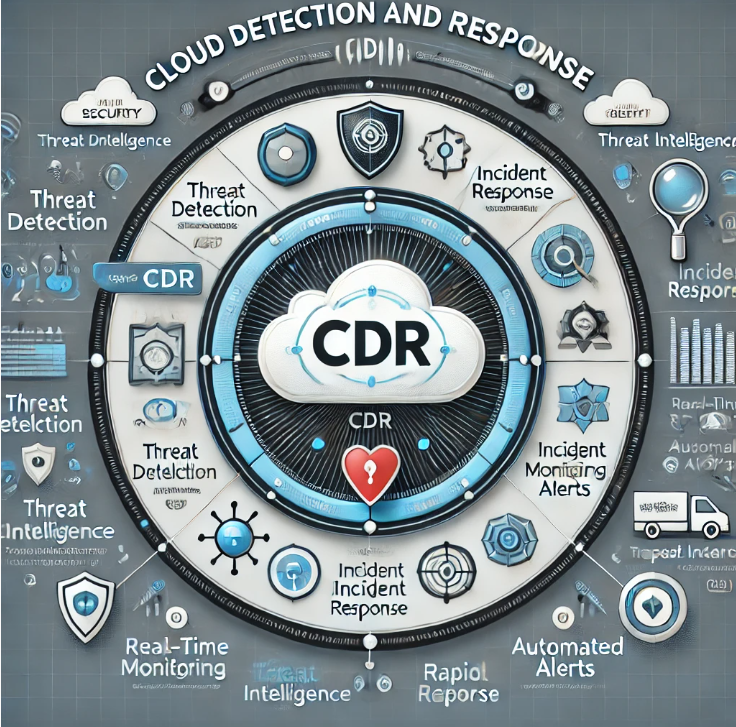
Cloud Detection and Response (CDR) is a concept, not a universally standardized technology, that refers to security practices and tools specifically designed to identify, investigate, and respond to security threats in cloud environments. While CDR isn’t a single, well-defined product category, it represents a growing area of focus within cloud security.
Cloud Detection and Response (CDR) is a cybersecurity strategy tailored for cloud environments, focusing on detecting, investigating, and responding to security incidents. It leverages continuous monitoring of cloud infrastructure, platforms, and applications to promptly identify and neutralize potential security threats. CDR goes beyond traditional security measures by integrating advanced threat detection, behavior analytics, real-time monitoring, and automated incident response to safeguard sensitive data and applications from cyber threats
Here’s a breakdown of the core functionalities:
- Threat Detection: CDR solutions leverage various techniques to detect suspicious activity in cloud environments. This can include log analysis, endpoint monitoring, vulnerability scanning, and threat intelligence feeds.
- Threat Investigation: Once a potential threat is identified, CDR tools can help security teams investigate the incident, gather evidence, and determine the scope of the attack.
- Threat Response: CDR can assist in automating or streamlining incident response processes, allowing security teams to take action to contain threats, mitigate damage, and remediate vulnerabilities.
It’s important to distinguish CDR from existing security tools:
- Security Information and Event Management (SIEM): SIEM solutions can be used for cloud security but have a broader scope, encompassing security events across an entire IT infrastructure, not just cloud environments.
- Cloud-Native Security Platforms (CNSP): CNSPs offer a range of security functionalities for cloud environments, but CDR specifically focuses on detection, investigation, and response.
Advantages of Implementing Cloud Detection and Response (CDR):
- Improved Security Posture: By proactively detecting and responding to threats, CDR can significantly improve the security posture of cloud environments.
- Enhanced Visibility: CDR tools provide greater visibility into cloud activity, helping security teams identify suspicious behavior and potential threats.
- Faster Incident Response: Automated or streamlined incident response processes enabled by CDR can help organizations contain threats and minimize damage.
- Reduced Costs: Early detection and response can prevent costly security incidents and data breaches.
- Compliance: CDR solutions can help organizations comply with security regulations that require robust cloud security measures.
Use Cases of Cloud Detection and Response (CDR):
- Identifying Misconfigurations: Cloud environments are complex and prone to misconfigurations that can create security vulnerabilities. CDR can help identify and address these misconfigurations.
- Detecting Malware: CDR tools can detect malware deployed within cloud environments and take steps to isolate and contain threats.
- Investigating Data Breaches: In the event of a data breach, CDR can help security teams investigate the incident, determine the scope of the attack, and identify compromised data.
- Responding to Ransomware Attacks: CDR can assist in detecting and responding to ransomware attacks, potentially preventing data encryption and minimizing disruption.
- Proactive Threat Hunting: CDR tools can be used for proactive threat hunting, allowing security teams to identify potential threats before they cause damage.
List of Tools and Services for Cloud Detection and Response (CDR) (Including Open-Source Tools):
While CDR isn’t a single product category, several cloud security solutions offer functionalities that align with the core principles of detection, investigation, and response. Here are some examples:
- CrowdStrike Falcon Cloud Orchestrator
- McAfee MVISION Cloud
- Palo Alto Networks Prisma Cloud
- Deepwatch Cloud Security
- Sysdig Secure
Open-Source Tools: While not specifically designed for CDR, some open-source security tools can be integrated into a broader CDR strategy. These might include:
- Security Onion: A free and open-source SIEM solution that can be used for log analysis and security event monitoring in cloud environments.
- Suricata: An open-source network intrusion detection system (NIDS) that can be used to detect suspicious network activity in cloud environments.
- Open-Auditing Project (OpenAudit): A framework for real-time continuous auditing that can be used to monitor cloud activity for potential security risks.
Additional Notes:
- The CDR landscape is evolving rapidly. New tools and features are constantly being developed. It’s important to evaluate your specific cloud security needs and choose tools that best address your requirements.
- CDR is not a silver bullet. It’s essential to have a comprehensive cloud security strategy that incorporates best practices for security configuration, access control, and data encryption in addition to detection and response capabilities.
- The effectiveness of CDR depends heavily on the expertise of your security team. Security professionals need to understand cloud security threats, be skilled in incident response, and be able to leverage CDR tools effectively.
List of Tools and Services for Cloud Detection and Response (CDR) including Open Source Tools
Several tools and services facilitate effective Cloud Detection and Response:
- CrowdStrike Falcon® Cloud Security: Offers comprehensive protection for cloud environments, integrating real-time monitoring, threat detection, and automated response capabilities (CrowdStrike).
- ExtraHop: Provides visibility and advanced threat detection capabilities across cloud and hybrid environments, utilizing out-of-band analysis and integration with native cloud services (Expert Insights).
- Microsoft Defender for Cloud: Ensures security across multi-cloud and hybrid environments with continuous monitoring and advanced threat protection capabilities (Expert Insights).
- Heimdal XDR: Integrates multiple cybersecurity technologies into a unified platform that provides visibility and control over IT infrastructure, simplifying cloud security management (Expert Insights).
