Limited Time Offer!
For Less Than the Cost of a Starbucks Coffee, Access All DevOpsSchool Videos on YouTube Unlimitedly.
Master DevOps, SRE, DevSecOps Skills!
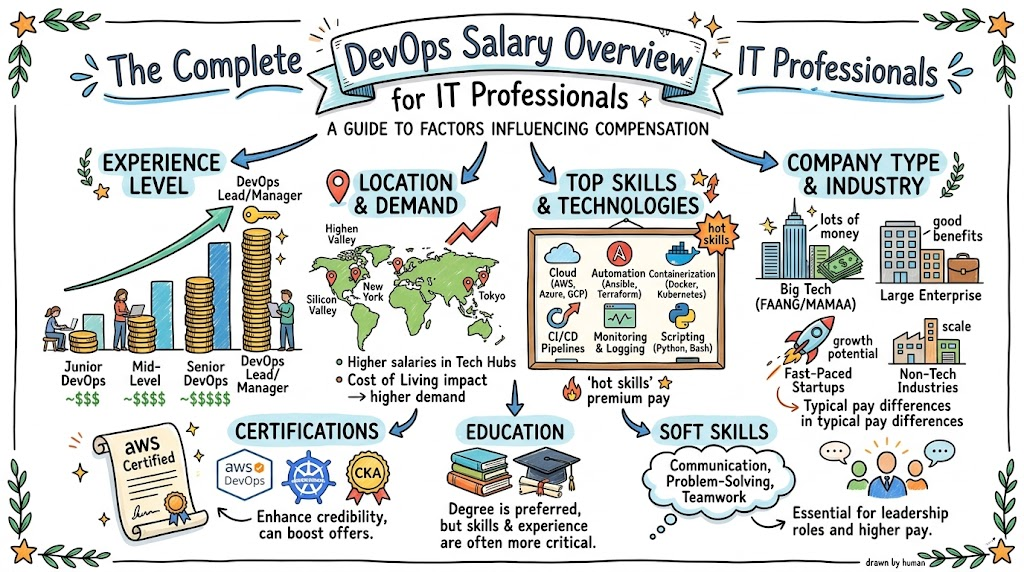
The landscape of technology compensation is changing. Today, a DevOps salary is no longer just about knowing specific tools; it is about managing business risk. Companies are increasingly looking for professionals who can tie their work directly to reliability, revenue uptime, and cost management. As cloud computing and automation continue to drive enterprise infrastructure, the demand for skilled DevOps, SRE, and Platform engineering professionals remains high.
This guide explores the realities of modern DevOps compensation, focusing on how you can grow your career by moving from simple implementation to owning reliability and platform strategy. Whether you are a fresher or an experienced professional looking to transition, understanding these market dynamics is the first step toward aligning your skills with high-paying roles.
Why DevOps Salaries Are High
DevOps compensation is currently driven by the business value of operational stability. The highest-paying roles are those that protect the bottom line. Factors driving these trends include:
- Business Risk Management: When your work directly impacts revenue uptime, regulatory exposure, or gross margins (like cloud bills), your compensation ceiling increases significantly.
- Platform Engineering Growth: Organizations are treating their internal infrastructure as a product. This shift requires engineers who can build “paved roads” for developers, increasing efficiency.
- Security and Reliability Focus: Companies are paying a premium for expertise in security platforms, policy-as-code, and reliability engineering (SLOs and error budgets).
- Automation and Toil Reduction: Businesses are actively moving away from manual operational tasks. Those who can design systems that reduce toil are highly valued.
- Global Demand for Skilled Professionals: While entry-level roles are becoming more competitive, the demand for senior professionals who can manage multi-cloud environments and complex architecture remains strong.
Who Should Read This Guide
This guide is designed for:
- Freshers entering the cloud and infrastructure space.
- Developers looking to move into DevOps or Platform Engineering.
- System Administrators wanting to pivot into modern automation.
- Cloud, SRE, and Platform Engineers aiming to optimize their career paths.
- DevSecOps Professionals focusing on secure SDLC and pipeline architecture.
DevOps Salary Overview
the market for DevOps salary and related roles is fragmenting into distinct segments. How much you earn often depends on the type of organization:
- Product Organizations: Often offer high compensation, frequently including equity.
- Enterprise/Regulated Organizations: Tend to prioritize stable base salaries and performance bonuses.
- Services/Outsourcing: Compensation is typically driven by specific rate cards and market availability.
Salaries increase as you move from “pipeline implementer” to “platform owner.” The most significant jumps occur when your role shifts from responding to alerts to designing systems that ensure operational resilience.
DevOps Salary by Experience Level
Salary growth is rarely linear; it is tied to the scope of influence you manage.
| Experience Level | Typical Role Focus | Skills Expected | Salary Potential |
| Junior | Task execution, learning on-call | Basic pipeline/infra changes | Baseline |
| Mid-Level | Independent delivery | CI/CD, cloud, monitoring | Moderate Growth |
| Senior | Design, incidents, mentoring | Architecture, reliability strategy | High |
| Staff/Architect | Cross-team strategy, standards | Reliability, platform engineering | Premium |
Highest Paying DevOps Roles
Different titles reflect different levels of ownership and risk. The following table illustrates the common market premiums associated with these roles.
| Role | Main Ownership | Salary Premium |
| DevOps Engineer | CI/CD, automation, deployment | Baseline |
| Site Reliability Engineer (SRE) | SLOs, incident response, reliability | +0–15% |
| Platform Engineer | Internal developer platform, adoption | +5–20% |
| DevSecOps Engineer | Policy-as-code, pipeline security | +10–30% |
| Security Platform Engineer | Scalable security, dev enablement | +15–35% |
| FinOps/Cost Engineer | Governance, capacity economics | +5–25% |
DevOps Salary by Skills
Salary growth is heavily linked to “premium” skills—those that address specific business pain points.
- High-Value Skills: Security platform design, policy-as-code, incident command, FinOps, and reliability engineering.
- Baseline Skills: General CI/CD implementation and basic Kubernetes operations are increasingly considered standard. To increase your salary, you must move beyond these basics into architecture and governance.
- Communication Skills: Your ability to explain technical decisions to non-technical stakeholders is a major factor in senior compensation.
DevOps Salary by Certification
While certifications can help validate a baseline, they rarely dictate salary on their own. In modern hiring, compensation is driven by evidence of operational outcomes—such as platform adoption, SLO improvements, or successful incident response—rather than just a list of certificates. Focus on certifications that provide deep architectural knowledge rather than just tool familiarity.
DevOps Salary by Region
Salary levels vary significantly by geography. Major tech hubs and economies with high infrastructure density typically offer higher base salaries.
- United States / Switzerland: Often represent the higher end of global salary bands.
- Europe / Canada / Singapore: Offer competitive ranges, with variations based on company type (product vs. service).
- Emerging Markets: Growing quickly, though compensation is often tied to the specific nature of the outsourcing or product work being done.
Note: Always research local currency bands, as cost-of-living adjustments and local tax structures significantly impact “take-home” pay.
Factors That Affect DevOps Salary
- Decision Rights: Great companies pay for your ability to make technical decisions, not just for performing tasks.
- Operational Outcome: Can you prove your work saved the company money or prevented downtime?
- Negotiation Strategy: Don’t just cite market averages. Negotiate based on your specific impact, the scarcity of your skill set (e.g., security or FinOps), and your history of leading reliability initiatives.
- On-Call Maturity: Organizations that have invested in toil reduction pay for reliability engineers. Those that have not may expect you to “pay” with burnout.
Roadmap for Better Salary Growth
To increase your market value, follow this progression:
- Junior Phase: Focus on mastering CI/CD, basic cloud infrastructure, and understanding the basics of on-call rotation.
- Mid-Level Phase: Move from “pipeline implementer” to owning reliability. Learn how to design for observability and cost-efficiency.
- Advanced Phase: Focus on Platform Engineering. Build internal tools that make life easier for developers. Learn how to lead incident responses and influence organizational technical direction.
FAQs
Is DevOps a high-paying career?
Yes, particularly for roles that manage business risk and reliability, such as SRE and Platform Engineering.
Which skill impacts salary the most?
Skills that tie to reliability, security, and cost engineering (FinOps) command the highest premiums.
Do certifications increase salary?
They help set a baseline, but compensation is driven more by your ability to demonstrate operational impact and architectural decision-making.
Does company type matter?
Yes. Product companies often provide more equity and growth potential than service-based outsourcing firms.
How do I grow my salary?
Move from responding to alerts to preventing them. Shift your focus from basic tool usage to platform ownership and reliability strategy.
Final Recommendation
To maximize your DevOps salary, focus on the outcome of your work. Tools change, but the need for reliable, secure, and cost-efficient infrastructure is constant. Invest your time in understanding how your code affects the business, learn how to manage technical risk, and always prioritize long-term architectural stability over quick fixes. Continuous learning, specifically in areas like platform product thinking and reliability engineering, is the most reliable way to ensure your career growth.
