Skip to content
Menu
DevSecOps Now!!!
  • About
  • Certifications
  • Contact
  • Courses
  • DevSecOps Consulting
  • DevSecOps Tools
  • Training
  • Tutorials
DevSecOps Now!!!

Site Reliability Engineering (SRE) Foundation certification

Posted on October 8, 2024

Limited Time Offer!

For Less Than the Cost of a Starbucks Coffee, Access All DevOpsSchool Videos on YouTube Unlimitedly.
Master DevOps, SRE, DevSecOps Skills!
Enroll Now

Introduction to Site Reliability Engineering (SRE) Foundation Certification

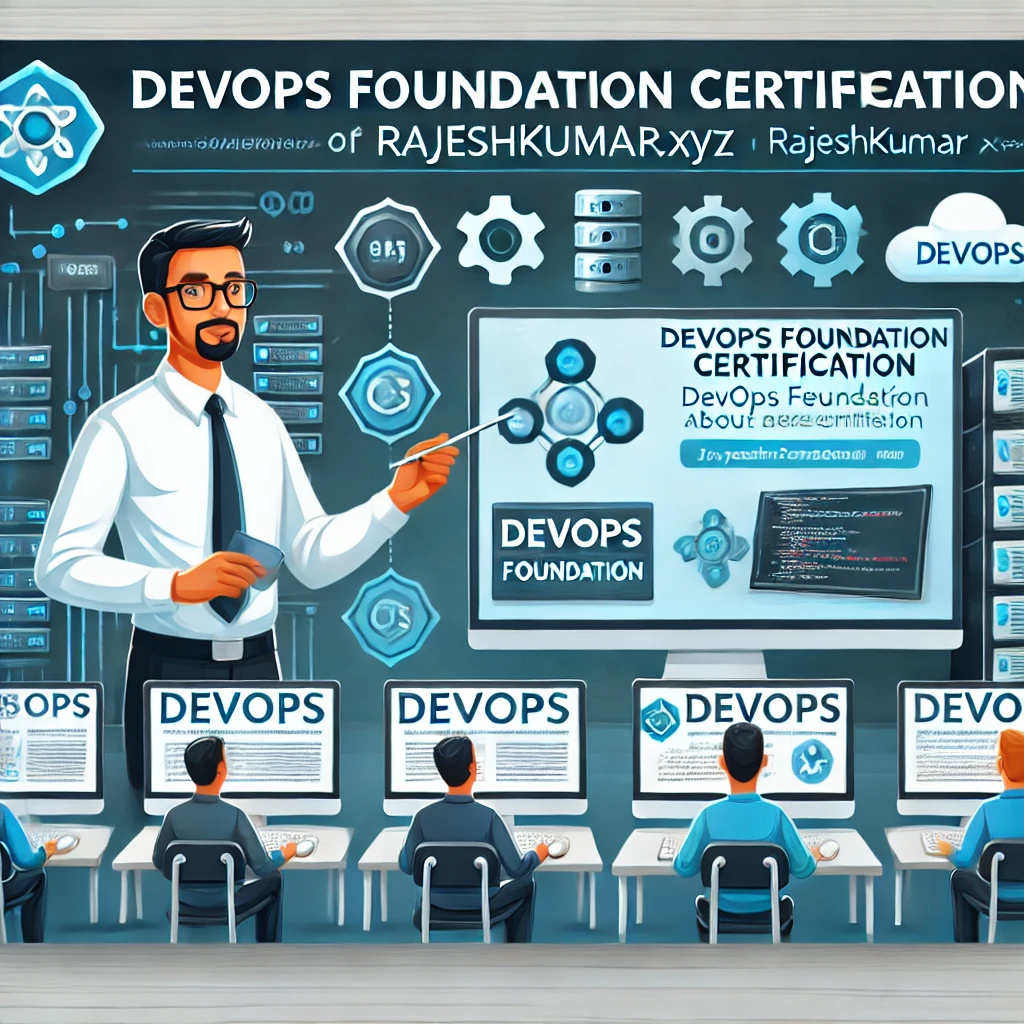
The Site Reliability Engineering (SRE) Foundation Certification by DevOpsSchool, in association with renowned trainer Rajesh Kumar from RajeshKumar.xyz, is designed to provide students with a deep understanding of the core principles and practices of SRE. This certification equips professionals with the skills needed to maintain, optimize, and automate the reliability of systems, while balancing the velocity of software delivery.

Why SRE Certification is Important?

The demand for Site Reliability Engineers has surged in the past decade as organizations strive to build scalable, reliable systems while accelerating product delivery. This SRE certification provides students with an industry-recognized credential that validates their ability to manage large-scale operations efficiently, automate routine processes, and adopt a proactive approach to managing failures.

Key benefits include:

  • Enhanced understanding of SRE principles
  • Practical skills for reducing system failures and downtime
  • Expertise in balancing reliability and innovation
  • Recognition as a certified SRE professional by DevOpsSchool

Course Features

  • Instructor-Led Training: Expert sessions delivered by Rajesh Kumar, an industry veteran.
  • Hands-On Labs: Practical exercises to solidify learning.
  • Certification Exam: Industry-recognized certification upon successful completion.
  • Comprehensive Study Materials: Access to downloadable course content and reference materials.
  • 24/7 Access: Online access to course content and materials post-training.

Certification Objectives

Upon completing the SRE Foundation Certification, participants will be able to:

  • Design SLAs (Service Level Agreements), SLOs (Service Level Objectives), and SLIs (Service Level Indicators).
  • Understand the core concepts of SRE and how they relate to DevOps.
  • Implement best practices for balancing reliability and operational costs.
  • Learn the art of managing system failures with automated incident responses.
  • Develop observability strategies to improve system health and performance.

Target Audience

This certification is ideal for:

  • Professionals seeking to advance their careers in system reliability and automation
  • DevOps Engineers
  • System Administrators
  • IT Operations Teams
  • Software Engineers
  • Individuals aspiring to become Site Reliability Engineers

Training Methodology

The SRE Foundation Certification is designed with a learner-centric approach, combining:

  • Instructor-led training with real-world scenarios
  • Hands-on labs that focus on practical application
  • Discussion forums for peer learning and collaborative problem-solving
  • Interactive Q&A sessions to clarify concepts and doubts

Certification Agenda

Day 1: Introduction to SRE and Reliability Engineering Concepts

  • Overview of SRE and its History
  • Understanding DevOps and SRE Relationship
  • Key Concepts: Reliability, Availability, and Scalability
  • Introduction to SLOs, SLIs, and SLAs

Day 2: SRE Practices and Tools

  • Error Budgets and Managing Trade-offs
  • Automation: Implementing Incident Responses
  • Monitoring and Observability Techniques
  • Key SRE Tools: Prometheus, Grafana, and more

Day 3: System Resilience and Incident Management

  • Building Resilient Systems with Redundancy
  • Best Practices for Incident Management and Postmortem Analysis
  • Automating Routine Operations to Minimize Human Intervention
  • Real-Life Case Studies on SRE Success

Day 4: Continuous Improvement and Cultural Aspects

  • Integrating SRE into Organizational Culture
  • Building an SRE Team: Roles and Responsibilities
  • Enhancing Collaboration between Development and Operations
  • Continuous Improvement Practices

Day 5: Advanced SRE Topics and Exam Preparation

  • Capacity Planning and Load Management
  • Performance Tuning and Optimization
  • Security Considerations in SRE
  • Exam Overview and Practice Tests

Lab Setup

Students will gain hands-on experience by working on real-time projects in a controlled lab environment. Topics include:

  • Setting up Monitoring Dashboards (Prometheus, Grafana)
  • Writing Automated Playbooks for Incident Management
  • Configuring SLAs, SLOs, and SLIs for a Live Application

Who will be the Trainer?

Rajesh Kumar, a certified expert in SRE and DevOps, will be the lead trainer for this certification. He has over 15 years of industry experience and has trained thousands of professionals in the field of reliability engineering and DevOps.

FAQs

What is the SRE Foundation Certification?

  • The SRE Foundation Certification is designed to provide a deep understanding of site reliability engineering principles and practices, helping professionals enhance system performance while managing operational risks.

What are the prerequisites for this course?

  • A basic understanding of DevOps and system administration is recommended, but not mandatory.

How is the certification exam structured?

  • The exam consists of multiple-choice questions that test both theoretical and practical knowledge.

What tools will be covered in this course?

  • Tools such as Prometheus, Grafana, and various automation frameworks for incident response and monitoring.

How to Enroll?

To register for the SRE Foundation Certification, visit the course page and follow the instructions for enrollment.

Post Views: 1,692
  • Certification Agenda
  • Certification Objectives
  • course
  • Course Features
  • Rajesh Kumar
  • Site Reliability Engineering
  • Site Reliability Engineering (SRE) Foundation certification
  • SRE
  • SRE Certification
  • SRE Certification Agenda
  • Target Audience
  • Trainer
  • Training Methodology
  • Who will be the Trainer
  • why SRE
  • Why SRE Certification is Important
Subscribe
Login
Notify of
guest
guest
0 Comments
Oldest
Newest Most Voted
Inline Feedbacks
View all comments
  • Certified AIOps Professional Program A Guide to Career Growth
  • Incorrect definition of table mysql.column_stats
  • Mautic and PHP 8.3 Compatibility Guide (2026)
  • Certified AIOps Engineer: The Complete Career Path and Certification Guide
  • How to Rename Apache Virtual Host Files Safely (Step-by-Step Guide for Linux)
  • AIOps Foundation Certification: Everything You Need to Know to Get Certified
  • DevOps to Certified Site Reliability Professional: A Senior Mentor’s Guide
  • Certified Site Reliability Manager Training, Preparation, and Career Mapping
  • Certified Site Reliability Architect: The Complete Career Guide
  • What Is a VPN? A Complete Beginner-to-Advanced Tutorial
  • How to Install, Secure, and Tune MySQL 8.4 on Ubuntu 24.04 for Apache Event MPM and PHP-FPM
  • Complete Guide to Certified Site Reliability Engineer Career
  • Certified DevSecOps Professional Step by Step
  • Certified DevSecOps Manager: Complete Career Guide
  • Certified DevSecOps Engineer: Skills, Career Path and Certification Guide
  • Step-by-Step: Become a Certified DevSecOps Architect
  • Tuning PHP 8.3 for Apache Event MPM and PHP-FPM on Ubuntu: A Complete Step-by-Step Production Guide
  • Complete Step-by-Step Guide to Configure Apache Event MPM, Create index.php, Set Up VirtualHost, and Fix Ubuntu Default Page
  • Convert XAMPP Apache to Event MPM + System PHP-FPM
  • The Gateway to System Observability Engineering (MOE)
  • How to Finetune Apache and Prove It Works: A Real-World Guide to Testing Performance, Concurrency, HTTP/2, Memory, CPU, and Security
  • Building a High-Performance Apache Event MPM + PHP-FPM + MariaDB Stack (Advanced Server Optimization Guide)
  • Master Infrastructure as Code: The Complete Hashicorp Terraform Associate Guide
  • Building a High-Performance Apache Server with Event MPM + PHP-FPM (Step-by-Step Guide)
  • Is XAMPP Safer for Production Than Using Apache and PHP as Root? 2026 Practical Guide
  • Unlock Cloud Security Expertise with Certified Kubernetes Security Specialist (CKS)
  • How to Fix wpDiscuz Not Replacing Default WordPress Comments in Block Themes
  • Complete Guide to Certified Kubernetes Application Developer Certification
  • Overview of Certified Kubernetes Administrator (CKA) Certification
  • How to Install and Configure XAMPP on Ubuntu 24 Server (Latest Version – 2026 Complete Guide)

Recent Comments

  1. digital banking on Complete Tutorial: Setting Up Laravel Telescope Correctly (Windows + XAMPP + Custom Domain)
  2. SAHIL DHINGRA on How to Uninstall Xampp from your machine when it is not visible in Control panel programs & Feature ?
  3. Abhishek on MySQL: List of Comprehensive List of approach to secure MySQL servers.
  4. Kristina on Best practices to followed in .httacess to avoid DDOS attack?
  5. Roshan Jha on Git all Commands

Archives

  • April 2026
  • March 2026
  • February 2026
  • January 2026
  • December 2025
  • November 2025
  • October 2025
  • September 2025
  • August 2025
  • July 2025
  • June 2025
  • May 2025
  • April 2025
  • March 2025
  • February 2025
  • January 2025
  • December 2024
  • November 2024
  • October 2024
  • September 2024
  • August 2024
  • July 2024
  • June 2024
  • May 2024
  • April 2024
  • March 2024
  • February 2024
  • January 2024
  • December 2023
  • November 2023
  • October 2023
  • September 2023
  • August 2023
  • July 2023
  • May 2023
  • April 2023
  • March 2023
  • February 2023
  • January 2023
  • December 2022

Categories

  • Ai
  • AI Blogging
  • AiOps
  • ajax
  • Android Studio
  • Antimalware
  • Antivirus
  • Apache
  • Api
  • API Security
  • Api Testing
  • APK
  • Aws
  • Bike Rental Services
  • ChatGPT
  • Code Linting
  • Composer
  • cPanel
  • Cyber Threat Intelligence
  • Cybersecurity
  • Data Loss Prevention
  • Database
  • dataops
  • Deception Technology
  • DeepSeek
  • Devops
  • DevSecOps
  • DevTools
  • Digital Asset Management
  • Digital Certificates
  • Docker
  • Drupal
  • emulator
  • Encryption Tools
  • Endpoint Security Tools
  • Error
  • facebook
  • Firewalls
  • Flutter
  • git
  • GITHUB
  • Google Antigravity
  • Google play console
  • Google reCAPTCHA
  • Gradle
  • Guest posting
  • health and fitness
  • IDE
  • Identity and Access Management
  • Incident Response
  • Instagram
  • Intrusion Detection and Prevention Systems
  • jobs
  • Joomla
  • Keycloak
  • Laravel
  • Law News
  • Lawyer Discussion
  • Legal Advice
  • Linkedin
  • Linkedin Api
  • Linux
  • Livewire
  • Mautic
  • Medical Tourism
  • MlOps
  • MobaXterm
  • Mobile Device Management
  • Multi-Factor Authentication
  • MySql
  • Network Traffic Analysis tools
  • Paytm
  • Penetration Testing
  • php
  • PHPMyAdmin
  • Pinterest Api
  • Quora
  • SAST
  • SecOps
  • Secure File Transfer Protocol
  • Security Analytics Tools
  • Security Auditing Tools
  • Security Information and Event Management
  • Seo
  • Server Management Tools
  • Single Sign-On
  • Site Reliability Engineering
  • soft 404
  • software
  • SuiteCRM
  • SysOps
  • Threat Model
  • Twitter
  • Twitter Api
  • ubuntu
  • Uncategorized
  • Virtual Host
  • Virtual Private Networks
  • VPNs
  • Vulnerability Assessment Tools
  • Web Application Firewalls
  • Windows Processor
  • Wordpress
  • WSL (Windows Subsystem for Linux)
  • X.com
  • Xampp
  • Youtube
©2026 DevSecOps Now!!! | WordPress Theme: EcoCoded
wpDiscuz