Limited Time Offer!
For Less Than the Cost of a Starbucks Coffee, Access All DevOpsSchool Videos on YouTube Unlimitedly.
Master DevOps, SRE, DevSecOps Skills!
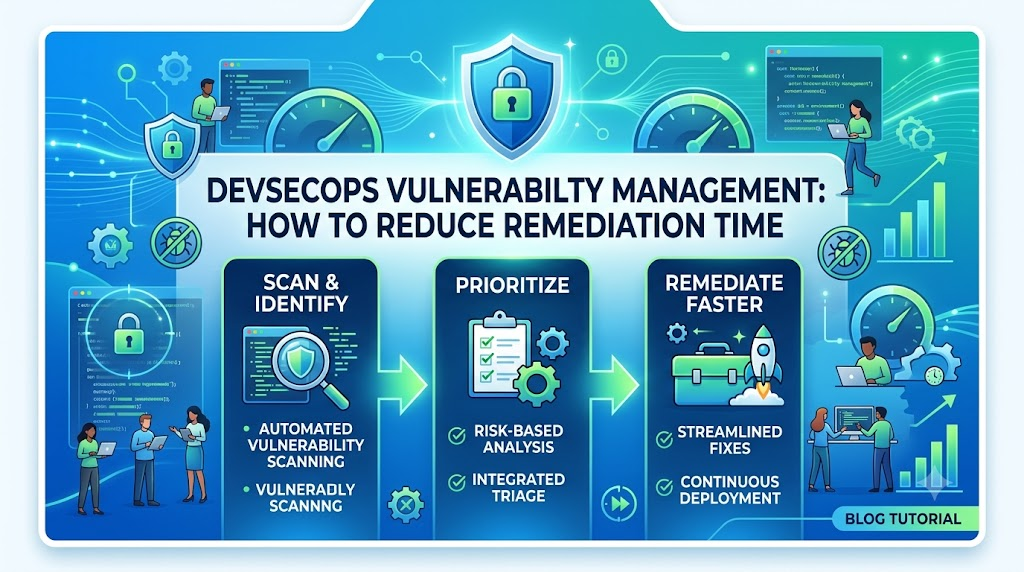
Software vulnerabilities are an unavoidable reality of modern engineering. As software delivery cycles accelerate from quarterly releases to daily deployments, the speed at which engineering teams identify, assess, and resolve security defects directly determines an organization’s exposure to security incidents. When vulnerabilities linger in production environments, they present open attack surfaces that expose sensitive customer data, intellectual property, and core infrastructure to exploitation.
In traditional software development models, security testing is treated as a final gatekeeper. Issues are discovered late in the development cycle, passed between disconnected teams via spreadsheets or static PDF reports, and debated over weeks before anyone writes a patch. These operational friction points inflate resolution timelines, delay product releases, and burn out engineering resources.
DevSecOps fundamentally changes this dynamic. By embedding security practices directly into daily software development and continuous integration/continuous delivery (CI/CD) workflows, organizations eliminate manual handoffs, identify security flaws at their point of origin, and streamline the path from discovery to verified resolution. This guide examines the mechanics of vulnerability remediation time, details why legacy approaches fall behind, and demonstrates how practical DevSecOps methods shorten remediation cycles without compromising operational stability.
What Is Vulnerability Remediation Time?
Vulnerability remediation time measures the duration required for an engineering and security team to neutralize an identified security weakness. To track this metric accurately, organizations must establish clear operational boundaries for where the process begins and ends.
[ Discovery Timestamp ]  --->  [ Triage & Fix Implementation ]  --->  [ Validation & Closure Timestamp ]
|<----------------------------- Total Remediation Time ------------------------------------------->|
Starting and Ending Points of Remediation
- The Clock Starts: The remediation timer begins when a vulnerability is officially detected and recorded in an organization’s tracking system—whether flagged by an automated pipeline scanner, an internal audit, or an external disclosure.
- What Counts as Remediation: Remediation means eliminating the underlying vulnerability. This typically involves updating a flawed dependency, modifying source code, or altering infrastructure-as-code configurations. In situations where an immediate code fix is impossible, an approved compensating control—such as a specific Web Application Firewall (WAF) rule or network segmentation policy—may serve as temporary remediation.
- Validation Confirms Resolution: Submitting a pull request or deploying code does not complete remediation. The remediation clock stops only when automated tests, security scans, or security engineers verify that the defect is absent from the target environment and has introduced no functional regressions.
Discovery Time vs. Remediation Time
It is critical to distinguish vulnerability discovery time (the duration an issue exists undetected in a codebase or runtime environment) from vulnerability remediation time (the time elapsed between identification and confirmed fix). An organization might fix vulnerabilities within 48 hours of detection, but if its testing mechanisms take six months to uncover those flaws, the total exposure window remains dangerously broad. Both metrics matter, but they reflect different operational capabilities.
Mean Time to Remediate (MTTR) for Vulnerabilities
In application security and vulnerability management, Mean Time to Remediate (MTTR) represents the average duration required to resolve vulnerabilities within a defined reporting period:
This security metric should not be confused with the traditional Site Reliability Engineering (SRE) metric: Mean Time to Recover/Restore (MTTR), which tracks how quickly an operational service recovers from an unplanned outage or infrastructure failure.
Calculation Example
Consider a development team that resolves three vulnerabilities during a single sprint:
- Vulnerability A: Discovered on Day 1, validated and closed on Day 4 (3 days).
- Vulnerability B: Discovered on Day 2, validated and closed on Day 8 (6 days).
- Vulnerability C: Discovered on Day 3, validated and closed on Day 15 (12 days).
Remediation duration must always be evaluated in context. A 7-day average remediation time might represent acceptable performance for low-severity cosmetic flaws, but it introduces substantial risk if the backlog contains actively exploited remote code execution vulnerabilities on internet-facing systems.
What Is DevSecOps?
DevSecOps is the cultural, architectural, and operational integration of security practices into every phase of the software development lifecycle (SDLC). Rather than treating security as an isolated audit performed by an external team right before a release, DevSecOps establishes security as a shared responsibility across development, operations, and security teams.
The core tenets of DevSecOps include:
- Shift-Left Security: Moving security assessments, design reviews, and automated testing to the earliest practical stages of development, including IDEs and pull requests.
- Automated Security Testing: Embedding automated security gates directly into CI/CD pipelines to evaluate source code, open-source packages, containers, and infrastructure configurations.
- Shared Ownership: Fostering collaboration where developers are empowered with clear context to write secure code, operations teams maintain secure deployment environments, and security engineers provide guardrails and architectural guidance.
- Continuous Feedback and Monitoring: Supplying engineers with immediate, actionable security data during active development while continuously monitoring production runtimes for newly emerging threats.
- Risk-Based Prioritization: Focusing remediation energy on issues that present credible business risk rather than treating every scanner alert as an emergency.
DevSecOps is not a single product, appliance, or vendor suite. It is a cohesive operating model combining repeatable processes, targeted automation, clear communication, and engineering discipline.
Why Traditional Vulnerability Remediation Is Often Slow
In legacy software environments, the path from discovering a vulnerability to deploying a fix is fraught with delays. Understanding these failure modes clarifies why DevSecOps focuses heavily on process flow and automation:
- End-of-Cycle Testing: In traditional waterfall or loose agile workflows, comprehensive security reviews take place days or weeks before a scheduled production deployment. Identifying structural security flaws at this late stage requires developers to stop current initiatives, reload historical context, and execute complex refactoring under severe deadline pressure.
- Manual Scanning and Reporting: Traditional security workflows often rely on scheduled, manual scans run by security teams outside the developer toolchain. Findings are compiled into lengthy static spreadsheets or PDF audit reports that must be translated into development tickets.
- Alert Fatigue and False Positives: Uncalibrated scanners flood backlogs with hundreds of low-impact alerts, theoretical issues, and outright false positives. When engineers must sift through dozens of non-issues to find one valid security defect, triage stalls and real risks are overlooked.
- Ambiguous Ownership: Security reports often land in a centralized inbox without explicit routing. Determining whether an issue belongs to the frontend team, backend team, infrastructure squad, or an external vendor consumes days of organizational back-and-forth.
- Context Deficits: Vulnerability reports sent to developers often contain abstract risk descriptions without code-level traces, reproduction steps, or remediation advice. Developers are forced to spend valuable hours researching how to patch the issue safely.
- Slow Approval and Rigid Change Control: Bureaucratic change review boards (CABs) and batch-oriented deployment schedules prevent simple security patches from reaching production swiftly, even after a developer has verified the code fix.
- Inadequate Regression Testing: Teams that lack comprehensive automated test suites hesitate to update vulnerable open-source dependencies out of fear that a version bump will break production features.
How DevSecOps Helps Reduce Vulnerability Remediation Time
DevSecOps directly resolves these legacy friction points by replacing manual handoffs with automation, shared workflows, and contextual risk analysis.
1. Early Vulnerability Detection
By shifting security checks into local IDEs, pre-commit hooks, and pull request reviews, engineers catch vulnerabilities while actively writing code. Detecting an input validation flaw or an insecure API call within minutes of drafting it allows the original author to address it immediately, avoiding Jira ticket creation, triage reviews, and context-switching costs.
2. Automated Security Testing in CI/CD
Integrating automated security tooling directly into build and integration pipelines ensures that every code change is assessed against baseline security policies. Builds can run Static Application Security Testing (SAST), Software Composition Analysis (SCA), and secret scanning in parallel. When scans run automatically on every branch, issues are identified within the context of recent pull requests rather than discovered months later during an audit.
3. Risk-Based Vulnerability Prioritization
Modern DevSecOps workflows reject the idea of addressing every Common Vulnerability Scoring System (CVSS) score chronologically. Instead, teams incorporate contextual factors:
- Exploitability: Is there an active, weaponized exploit in the wild (e.g., tracked via the Known Exploited Vulnerabilities catalog)?
- Asset Exposure: Is the vulnerable service reachable from the public internet, or is it isolated within an internal, non-routable network segment?
- Reachability Analysis: Does the application code invoke the vulnerable method within a flagged third-party library, or is the affected library function completely uncalled?
- Business Impact: Does the affected system handle regulated customer data, or is it an ephemeral internal test instance?
This contextual approach ensures engineering teams focus their immediate efforts on vulnerabilities that create real operational risk, dramatically shrinking the remediation timeline for high-consequence flaws.
4. Clear Ownership and Accountability
DevSecOps architectures utilize metadata, repository ownership files (such as CODEOWNERS), and automated ticketing rules to route pipeline findings directly to the development team responsible for that specific service. Alerts arrive as actionable tasks within the team’s standard backlog, complete with severity classifications, clear escalation rules, and assigned remediation service level agreements (SLAs).
5. Developer-Friendly Security Feedback
Rather than sending an alert stating “Insecure Cryptographic Storage detected,” integrated DevSecOps tooling highlights the exact line of code, explains why the pattern is flawed, provides a secure syntax alternative, and links to approved internal libraries. This allows developers to fix issues without having to become full-time cryptography researchers.
6. Automated Dependency and Patch Management
Third-party libraries account for a substantial percentage of modern application footprints. Automated dependency monitoring tools continuously scan dependency manifests, track Software Bills of Materials (SBOMs), and automatically generate pull requests that increment vulnerable packages to secure, patched versions. When backed by comprehensive unit and integration tests, reviewing and merging security patches requires minimal developer intervention.
7. Standardized Remediation Workflows
Documented, repeatable remediation playbooks remove ambiguity. When a Critical vulnerability is confirmed, predefined service level objectives dictate response expectations (e.g., Critical issues remediated within 48 hours; High within 14 days). Standardized procedures outline who approves emergency changes, how hotfixes are merged, and which communication channels are used.
8. Continuous Monitoring and Feedback
Production environments are dynamic: new Common Vulnerabilities and Exposures (CVEs) are published daily for software that was considered secure when deployed. DevSecOps incorporates continuous runtime monitoring of container images, cloud infrastructure-as-code, and running workloads. When a new vulnerability is disclosed, teams discover instantly which running workloads contain the affected component.
9. Automated Validation and Retesting
A vulnerability is not resolved simply because an engineer marks a ticket “closed.” DevSecOps workflows require pipeline re-execution to verify that the scan no longer detects the issue in the target branch and that integration test suites pass without regressions. This prevents premature ticket closures and eliminates re-work.
The DevSecOps Vulnerability Remediation Workflow
A resilient DevSecOps remediation lifecycle moves systematically from discovery to verified closure without unnecessary delays:
[1. Detect]        ---> Automated scan flags defect in PR or build pipeline.
[2. Deduplicate]   ---> Tooling filters duplicates and known false positives.
[3. Prioritize]    ---> Contextual engine weighs severity, exploitability, and exposure.
[4. Assign]        ---> Finding routes automatically to code owner's backlog.
[5. Set SLA]       ---> System establishes remediation deadline based on risk profile.
[6. Investigate]   ---> Developer reviews code-level location and contextual guidance.
[7. Implement]     ---> Fix, update, or compensating mitigation is drafted.
[8. Test]          ---> CI pipeline runs automated functional and security scans.
[9. Validate]      ---> Security checks confirm vulnerability is absent.
[10. Record]       ---> Ticket closes automatically; MTTR metrics update.
- Detect: An automated security check (such as SAST, SCA, or secret scanning) identifies a potential vulnerability during development or continuous integration.
- Validate and Deduplicate: Centralized security management platforms cross-reference the finding against historical records, eliminating duplicates and known false positives to prevent alert clutter.
- Assess and Prioritize: The vulnerability is evaluated using contextual data—including exploit maturity, reachable code paths, asset criticality, and existing network controls.
- Assign Ownership: Using repository ownership rules, the issue is routed directly to the engineering team maintaining the component, avoiding manual handoffs.
- Establish SLA: The system applies a risk-based remediation timeline (e.g., 48 hours for an exploitable public-facing flaw) to establish clear delivery expectations.
- Investigate Root Cause: The developer inspects the flagged line of code, supported by automated remediation advice and reproduction steps provided directly within their IDE or Git platform.
- Implement Fix: The engineer updates the dependency, refactors the vulnerable code, or introduces an approved architectural control on a feature branch.
- Automated Pipeline Testing: The developer opens a pull request, triggering an automated CI pipeline that runs unit tests, integration suites, and targeted security scans.
- Validate Resolution: The security scanner verifies that the specific vulnerability signature is gone and that no secondary security regressions were introduced.
- Record and Close: The pull request merges, the tracking ticket closes automatically via pipeline webhooks, and organizational MTTR metrics update in real time.
Important Tools That Support Faster Remediation
DevSecOps relies on complementary tool categories that automate discovery, triage, and validation throughout the lifecycle. Tooling alone is not a strategy, but when integrated into continuous delivery pipelines, these categories eliminate manual overhead:
| Tool Category | Primary Role in the Pipeline | How It Accelerates Remediation | Representative Examples |
| Static Application Security Testing (SAST) | Analyzes proprietary source code for security flaws without executing the application. | Pinpoints exact files, line numbers, and data flow paths directly in developer pull requests. | SonarQube, Checkmarx |
| Software Composition Analysis (SCA) | Scans dependencies, package managers, and binaries for known CVEs and license risks. | Generates automated pull requests with version bumps to patch vulnerable libraries quickly. | Snyk, OWASP Dependency-Check |
| Dynamic Application Security Testing (DAST) | Evaluates running web applications by simulating external attacks against exposed interfaces. | Confirms whether theoretical code vulnerabilities are actually exploitable in runtime configurations. | OWASP ZAP |
| Secret Scanning | Scans code repositories, commit histories, and configurations for exposed API keys and credentials. | Prevents hardcoded credentials from entering version control, avoiding costly credential revocation cycles. | GitGuardian, Trufflehog, GitHub Secret Scanning |
| Infrastructure as Code (IaC) & Container Scanners | Checks Terraform, CloudFormation, Helm charts, and Dockerfiles for misconfigurations and base image flaws. | Detects cloud and container misconfigurations before infrastructure is provisioned. | Trivy, Checkov |
| CI/CD Platforms | Orchestrates build, test, and release automation. | Executes security scanners systematically on every commit without manual operator intervention. | Jenkins, GitLab CI/CD, GitHub Actions |
| Vulnerability Management Platforms | Aggregates, correlates, and deduplicates findings from multiple security scanners. | Consolidates thousands of raw scanner alerts into prioritized, actionable developer tickets. | DefectDojo, ThreadFix |
Measuring Vulnerability Remediation Performance
Organizations cannot improve what they do not measure. Evaluating DevSecOps performance requires a balanced set of metrics that account for speed, consistency, backlog size, and validation quality.
| Metric | Definition | Calculation Method | Why It Matters | Important Interpretation Notes |
| Mean Time to Remediate (MTTR) | The average time required to resolve vulnerabilities during a defined period. | $\frac{\text{Total remediation duration of resolved vulnerabilities}}{\text{Number of resolved vulnerabilities}}$ | Provides a high-level baseline of overall remediation velocity across teams. | Averages are easily skewed by a handful of long-neglected defects or high volumes of trivial fixes. |
| Median Remediation Time | The middle value in a sorted list of remediation durations. | Identify the 50th percentile of resolved vulnerability turnaround times. | Eliminates outlier distortion to reflect typical developer experience. | Useful to compare alongside MTTR to assess process consistency. |
| Remediation SLA Compliance | The percentage of vulnerabilities fixed within their defined policy deadlines. | $(\frac{\text{Vulnerabilities fixed within SLA window}}{\text{Total vulnerabilities due for resolution}}) \times 100$ | Measures operational adherence to risk management commitments. | High compliance with an overly generous SLA can mask serious business risk. |
| Open Vulnerability Backlog | The total volume of active, unresolved vulnerabilities. | Count of unresolved findings, segmented by severity, exploitability, and age. | Highlights accumulation of security debt across codebases. | Backlogs can grow temporarily when scanning coverage expands; growth does not always indicate failing remediation. |
| Aged Vulnerability Rate | The proportion of open vulnerabilities exceeding maximum age limits. | $(\frac{\text{Open vulnerabilities exceeding age threshold}}{\text{Total open vulnerabilities}}) \times 100$ | Pinpoints forgotten or structurally difficult security defects that linger in production. | Persistent aged vulnerabilities often indicate architectural bottlenecks or missing code ownership. |
| Fix Validation Success Rate | The percentage of remediation attempts that pass verification on the first run. | $(\frac{\text{Fixes passing validation on initial scan}}{\text{Total remediation validation attempts}}) \times 100$ | Evaluates fix quality and flags incomplete patches or regressions. | A low rate points to insufficient developer guidance, poor reproduction details, or missing local testing tools. |
These metrics must be evaluated collectively. For example, a dropping MTTR accompanied by a ballooning Aged Vulnerability Rate often indicates that an engineering team is resolving simple, low-effort issues while ignoring complex, high-risk security flaws.
Practical Example: Reducing Vulnerability Remediation Delays
To illustrate how DevSecOps practices accelerate remediation, consider this realistic, illustrative scenario involving a core payment processing microservice.
The Scenario
A widely used open-source JSON serialization library releases an emergency security advisory for an actively exploited remote code execution vulnerability (CVSS 9.8). The payment service uses this library to parse transaction requests.
Traditional Workflow (Total Time: ~27 Business Days)
[Day 1: Audit Scan] -> [Day 6: PDF Report] -> [Day 11: Triage/Route] -> [Day 16: Dev Backlog] -> [Day 22: Code Patch] -> [Day 27: Deploy]

DevSecOps Workflow (Total Time: ~20 Hours)
[Hour 0: SCA Alert] -> [Hour 1: Context/Route] -> [Hour 4: Auto PR & Tests] -> [Hour 16: Review & Merge] -> [Hour 20: Auto Deploy & Verify]
Traditional Workflow (Illustrative Timeline)
- Day 1 (Detection): The monthly infrastructure vulnerability scan runs on the first of the month and flags the outdated library.
- Day 6 (Processing): Security analysts review the raw scan reports, eliminate irrelevant items, and export a spreadsheet of high-severity findings.
- Day 11 (Triage & Assignment): The security team presents the finding to engineering leadership during a bi-weekly sync. Leadership manually tracks down the team that originally wrote the payment service.
- Day 16 (Investigation): A payment service developer receives a Jira ticket. Because the ticket only lists the CVE number and CVE score, the developer spends half a day confirming where the dependency is imported and whether it breaks existing code.
- Day 22 (Implementation & Conflict): The developer bumps the library version, but the upgrade introduces a minor syntax deprecation that breaks transaction logging. The developer writes a custom adapter, but must wait for the next scheduled sprint release.
- Day 27 (Validation & Release): The change passes change review board (CAB) approval, deploys to production, and is marked resolved after the next monthly security scan confirms the vulnerability is absent.Total Elapsed Time: ~27 business days.
DevSecOps Workflow (Illustrative Timeline)
- Hour 0 (Continuous Detection): The SCA tool monitors upstream advisory feeds, identifies the payment microservice’s dependency on the vulnerable library, and flags that the component is exposed to public HTTP traffic.
- Hour 1 (Automated Prioritization & Routing): The platform correlates the advisory with active exploit data, marks the finding as an immediate Critical priority, and routes a notification directly to the payment team’s communications channel and backlog using repository metadata.
- Hour 4 (Automated Fix Generation): The SCA tool automatically generates a pull request that upgrades the library to the patched minor version.
- Hour 6 (Automated Pipeline Verification): The CI pipeline builds the application, executes unit and integration tests, and runs container security checks. Pipeline results demonstrate that all functional test cases pass without breaking changes.
- Hour 16 (Peer Review): A senior payment service engineer reviews the pull request, verifies the automated test results, and approves the merge.
- Hour 20 (Automated Deployment & Verification): The CD pipeline automatically deploys the updated microservice to staging and production. An automated post-deployment security scan verifies that the vulnerable signature is absent, and the issue is closed.Total Elapsed Time: ~20 hours.
Workflow Comparison
| Dimension | Traditional Approach (Illustrative) | DevSecOps Approach (Illustrative) |
| Detection Trigger | Scheduled monthly scan | Continuous feed ingestion and commit-level checks |
| Triage & Delivery | Manual export to spreadsheet; bi-weekly review | Automated contextual scoring; direct Slack/Jira routing |
| Priority Model | Static CVSS score alone | Exploitability, reachability, exposure, and asset value |
| Ownership | Debated across teams manually | Assigned automatically via CODEOWNERS metadata |
| Implementation | Manual research, coding, and conflict resolution | Automated dependency update pull request |
| Testing & Verification | Manual staging deployment and next scan cycle | Automated CI/CD test suites and immediate re-scans |
| Closure Tracking | Manual spreadsheet update | Automated webhook closure upon successful pipeline run |
Best Practices for Reducing Vulnerability Remediation Time
Achieving sustainable reductions in remediation timelines requires engineering discipline and process refinement:
- Implement Security Checks Early: Configure lightweight SAST and secret scanning rules inside developer IDEs and pre-commit hooks to catch flaws before code is pushed to remote repositories.
- Balance Pipeline Gates with Developer Speed: Avoid running deep, multi-hour security analysis scans on every commit. Run fast, delta-based scans on pull requests, reserving comprehensive, deep-flow analysis for nightly builds to keep CI pipelines rapid.
- Prioritize Context Over Severity: Evaluate vulnerabilities using runtime reachability and threat intelligence rather than relying exclusively on base CVSS scores. Focus team resources on vulnerabilities that are actively exploitable in your specific architecture.
- Define Clear Ownership with Service Catalogs: Maintain clear metadata mapping services, repositories, and cloud resources to specific engineering squads so alerts route to the right owners immediately.
- Enforce Realistic, Risk-Based SLAs: Establish clear remediation deadlines (e.g., Critical: 48 hours; High: 14 days; Medium: 30 days; Low: 90 days), with documented escalation paths for overdue issues.
- Provide Actionable Guidance: Ensure security findings include reproduction steps, code locations, and approved remediation snippets rather than generic vulnerability definitions.
- Automate Dependency Upgrades: Use automated dependency tools to keep packages current through small, frequent version bumps, preventing the high-friction “mega-upgrades” that introduce breaking changes.
- Mandate Verification Before Closure: Never close a vulnerability ticket based solely on a developer’s confirmation. Require an automated scanner re-run or pipeline check to verify resolution.
- Conduct Blameless Root Cause Reviews: Regularly review recurring vulnerability classes (e.g., repeated SQL injection or permissive IAM policies). Use these insights to build secure code libraries, update architectural templates, and provide targeted training.
- Recognize the Need for Human Expertise: Automation excels at identifying known signatures, outdated packages, and syntax misconfigurations. Complex business-logic flaws, authorization bypasses, and architectural weaknesses still require expert manual code reviews and penetration testing.
Common Mistakes to Avoid
Many organizations adopt security tools but fail to see improvements in their remediation metrics. Common pitfalls include:
- Deploying Scanners Without Clear Workflows: Adding security scanners to pipelines without establishing triage procedures, ownership rules, or remediation SLAs simply produces large backlogs that teams ignore. Fix: Establish end-to-end triage, assignment, and escalation workflows before turning on automated pipeline gates.
- Relying Exclusively on Base CVSS Scores: Treating an internal, unexploitable CVSS 9.0 defect as more urgent than an actively exploited CVSS 7.5 vulnerability on an internet-facing host misallocates critical engineering time. Fix: Incorporate threat intelligence (such as EPSS and CISA KEV) and asset exposure into prioritization.
- Overwhelming Developers with Unfiltered Alerts: Dumping hundreds of raw, uncurated scanner notifications into a team’s backlog causes alert fatigue and delays real fixes. Fix: Fine-tune scanner rulesets, silence low-confidence checks, and eliminate false positives before sending issues to developers.
- Routing Findings to the Wrong Teams: Sending infrastructure flaws to application teams or third-party library vulnerabilities to platform engineers wastes days in re-assignment loops. Fix: Map code ownership precisely using
CODEOWNERSfiles and integrated service catalogs. - Treating Code Submission as Verified Remediation: Closing security tickets when a developer submits a pull request—without verifying that the code built, passed tests, deployed, and resolved the issue—leaves environments vulnerable. Fix: Tie ticket closure directly to post-deployment verification scans.
- Merging Automated Patches Without Tests: Merging automated dependency updates without robust automated test suites leads to production outages, which causes teams to abandon automated updates entirely. Fix: Invest in strong integration test suites so teams can merge dependency updates with confidence.
- Focusing Solely on Average Remediation Time: Relying only on MTTR can obscure critical long-term risks, as a high volume of quickly patched minor issues can hide dangerous vulnerabilities that linger for months. Fix: Track Median Remediation Time, Aged Vulnerability Rates, and Open Backlogs alongside MTTR.
How DevOpsSchool Relates to DevSecOps Learning
Transitioning from traditional, siloed security operations to modern DevSecOps requires engineering teams to build new competencies across multiple disciplines. Organizations must cultivate practical skills spanning continuous integration, pipeline automation, infrastructure as code, containerized architectures, and automated testing strategies.
DevOpsSchool operates as an established training and education platform specializing in DevOps, DevSecOps, cloud engineering, and modern infrastructure practices. The platform provides structured technical training designed to help software engineers, security professionals, operations specialists, and engineering managers understand how automated delivery pipelines and security controls operate in real-world environments.
By engaging with focused technical curricula that cover CI/CD implementation, secure configuration management, container security, and automated scanning workflows, practitioners gain practical insight into how security tools integrate into development lifecycles. This hands-on understanding helps organizations design realistic remediation workflows, minimize operational friction between development and security teams, and build reliable software delivery pipelines.
Frequently Asked Questions (FAQs)
How does DevSecOps reduce vulnerability remediation time?
DevSecOps reduces remediation time by catching security issues earlier in the development lifecycle, automating testing within CI/CD pipelines, removing manual triage handoffs, prioritizing flaws based on actual exploitability, and providing developers with contextual remediation guidance directly in their existing workflows.
What is vulnerability remediation time?
Vulnerability remediation time is the total duration between the official detection of a security vulnerability and the confirmed, verified deployment of a fix or compensating mitigation that neutralizes the risk.
What is the difference between vulnerability detection time and remediation time?
Detection time measures how long a vulnerability exists in a codebase or runtime environment before being discovered. Remediation time measures how long it takes to fix and verify the vulnerability after it has been identified.
How does shift-left security help developers?
Shift-left security provides developers with immediate feedback on code defects, secrets, or vulnerable dependencies while they are actively working in their IDE or pull request. Fixing an issue at this stage avoids context-switching, reduces ticketing overhead, and prevents deployment delays.
Which DevSecOps tools support faster vulnerability remediation?
Key categories include Static Application Security Testing (SAST), Software Composition Analysis (SCA), Dynamic Application Security Testing (DAST), secret scanning, container/infrastructure scanners, CI/CD orchestration engines, and centralized vulnerability management dashboards.
How is Mean Time to Remediate (MTTR) calculated?
MTTR is calculated by dividing the sum of all remediation durations for vulnerabilities resolved during a given timeframe by the total number of vulnerabilities resolved in that period.
Why is vulnerability prioritization important?
Modern software systems generate far more scanner alerts than engineering teams can remediate simultaneously. Prioritizing by severity, exploitability, asset exposure, and business impact ensures teams resolve the most dangerous risks first instead of spending limited time on theoretical issues.
Can automated security testing eliminate manual security reviews?
No. Automated tools excel at detecting known patterns, syntax misconfigurations, exposed credentials, and known CVEs. However, manual security reviews, architectural threat modeling, and penetration testing remain essential for identifying complex business-logic flaws and broken access controls.
How can teams measure improvement in remediation time?
Teams should monitor a balanced set of metrics, including Mean Time to Remediate (MTTR), Median Remediation Time, SLA Compliance Rate, Aged Vulnerability Rate, Open Vulnerability Backlog, and Fix Validation Success Rate over time.
Does faster remediation always mean better security?
Not necessarily. If an engineering team rushes fixes without testing, they may introduce functional regressions or apply superficial patches that fail to address the root cause. Furthermore, a low MTTR means little if detection tools are missing critical vulnerabilities. Speed must always be paired with thorough validation and comprehensive test coverage.
Final Thoughts
Reducing vulnerability remediation time is an essential requirement for maintaining resilient software in an era of continuous delivery and automated threat reconnaissance. When security is treated as an afterthought, remediation becomes an expensive, slow, and frustrating process characterized by high-pressure firefighting, delayed product releases, and prolonged exposure windows.
DevSecOps offers a disciplined, sustainable alternative. By combining early detection, automated pipeline testing, contextual risk prioritization, clear code ownership, and automated validation, organizations can transition from fragmented, reactive fixes to an efficient, repeatable remediation lifecycle.
Ultimately, effective DevSecOps is not merely about closing security tickets faster—it is about resolving the right risks promptly, ensuring fixes are robust, and establishing security as an integrated quality standard throughout the entire software lifecycle. Through practical training, process discipline, and collaborative tooling, engineering organizations can deliver secure, resilient software at the speed their business demands.
