Limited Time Offer!
For Less Than the Cost of a Starbucks Coffee, Access All DevOpsSchool Videos on YouTube Unlimitedly.
Master DevOps, SRE, DevSecOps Skills!
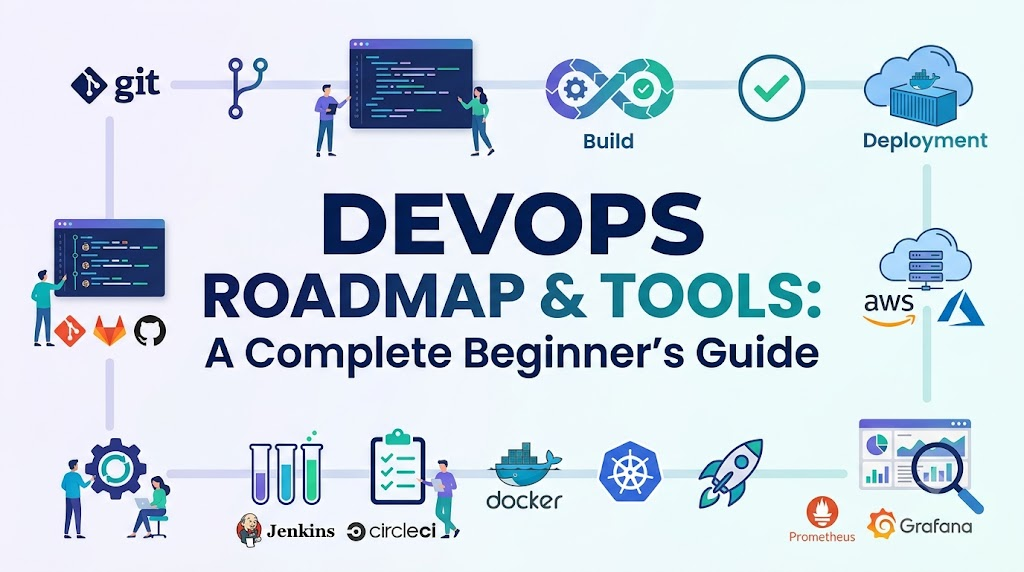
Moving code from a developer’s laptop to a production environment used to be a nerve-wracking process filled with finger-pointing, broken builds, and midnight emergency patches. Today, the competitive landscape demands speed without sacrificing stability. That is where DevOps comes in.
To thrive in modern software development, teams need to unify their workflows, automate repetitive tasks, and master the best DevOps tools. Whether you are taking your first steps with a DevOps tutorial for beginners or you are an experienced systems engineer looking to optimize your delivery pipeline, understanding this ecosystem is key to building resilient infrastructure.
Let’s break down the essential strategies, tools, and career roadmaps required to master the modern DevOps landscape.
Why Modern Software Delivery Demands DevOps
In traditional environments, software development (Dev) and IT operations (Ops) lived in isolated silos. Developers wanted to push new features quickly, while operations focused on maintaining system stability. These conflicting goals naturally created friction.
DevOps bridges this gap by introducing a culture of shared responsibility, automation, and continuous feedback. By automating code integrations, testing infrastructure, and monitoring deployments, companies can launch features in minutes rather than months.
The Rise of Platform Engineering and SRE
The industry is moving beyond basic automation. Roles like Site Reliability Engineering (SRE)—which applies software engineering principles to operations problems—and Platform Engineering are booming. Platform engineers build internal developer platforms (IDPs) to give development teams self-service capabilities, reducing cognitive load and letting them focus purely on writing code.
The Complete DevOps Roadmap: From Basics to Advanced Architectures
Becoming a successful engineer in this space requires a structured learning path. A solid DevOps roadmap focuses on building core competencies sequentially, rather than trying to learn every tool at once.
+------------------------+      +------------------------+      +------------------------+
| 1. Core Foundations     | ---> | 2. Containers & CI/CD  | ---> | 3. IaC & Orchestration |
| Linux, Git, Networking |      | Docker, Jenkins, CI    |      | Terraform, Kubernetes  |
+------------------------+      +------------------------+      +------------------------+
                                                                            |
                                                                            v
+------------------------+      +------------------------+      +------------------------+
| 6. Platform & DORA     | <--- | 5. Cloud Platforms     | <--- | 4. Observability       |
| Engineering Optimization|      | AWS, Azure, GCP        |      | Prometheus, Grafana    |
+------------------------+      +------------------------+      +------------------------+
Phase 1: Foundational Systems & Scripting
Before touching complex cloud orchestrators, you must master the command line. Linux is the backbone of the internet, powering the vast majority of cloud servers and containers. You should be comfortable with bash scripting, process management, and networking basics (SSH, DNS, TCP/IP). In parallel, learn version control using Git to manage codebase history and collaborations.
Phase 2: Mastering Continuous Integration & Continuous Delivery (CI/CD)
CI/CD is the engine of the entire methodology. Continuous Integration ensures that code changes from multiple developers are automatically built, tested, and merged into a central repository. Continuous Delivery takes it a step further by automating the release of validated code to production-ready environments. Tools like Jenkins, GitHub Actions, and GitLab CI act as the orchestrators of these automated pipelines.
Phase 3: Containerization & Microservices
Shipping applications packed inside virtual machines is slow and heavy. Containers solve the “it works on my machine” problem by packaging an application together with all its dependencies, libraries, and configuration files. Docker is the industry standard for creating these lightweight, portable container images, enabling microservices to run consistently across development, testing, and production environments.
If you are looking for a guided path through these phases, exploring a comprehensive DevOps tutorial for beginners on resources like BestDevOps.com provides hands-on labs that turn theory into practical experience.
Core Pillars of the Ecosystem
To design elite software supply chains, you need to understand the fundamental building blocks that support modern technical operations.
1. Infrastructure as Code (IaC)
Treating your infrastructure the exact same way you treat application code changes everything. Instead of manually clicking around a cloud console to provision virtual servers or databases, IaC uses declarative configuration files. This means your infrastructure can be versioned, peer-reviewed, and rolled back easily.
- Terraform: Excellent for cloud-agnostic infrastructure provisioning.
- Ansible: Perfect for configuration management and software installation across existing servers.
2. Container Orchestration
While Docker manages individual containers, large enterprise systems use hundreds or thousands of them simultaneously. Container orchestrators manage scaling, load balancing, networking, and self-healing (restarting dead containers automatically). Kubernetes (K8s) is the undisputed industry standard for running these distributed applications at scale.
3. Cloud Computing & Multicloud Strategies
Modern infrastructure lives in the cloud. Whether your team relies on Amazon Web Services (AWS), Microsoft Azure, or Google Cloud Platform (GCP), understanding how to map local configurations to managed cloud services is a required skill. Many enterprises deploy multicloud strategies to ensure high availability and avoid vendor lock-in.
4. Continuous Observability & DevSecOps
You cannot fix what you cannot see. Monitoring and Observability involve collecting logs, metrics, and traces from your applications to pinpoint performance bottlenecks before users notice them. Concurrently, shifting security left—known as DevSecOps—integrates automated security vulnerability scanning directly into the early stages of the CI/CD pipeline.
Comparing the Best DevOps Tools
Choosing the right tool stack depends heavily on your team’s size, architecture, and cloud environment. Below is a quick breakdown of how industry-leading tools compare across core categories:
| Category | Tool | Primary Use Case | Key Strength |
| Source Control | Git / GitHub | Code hosting and version tracking | Standard for industry collaboration and pull requests |
| CI/CD Pipeline | Jenkins | Heavyweight pipeline automation | Massive plugin ecosystem, highly customizable |
| CI/CD Pipeline | GitHub Actions | Cloud-native automation | Deep, seamless integration directly with Git repositories |
| Containerization | Docker | Application packaging | Lightweight, highly portable environment isolation |
| Orchestration | Kubernetes | Managing container clusters | Automated scaling, self-healing, and service discovery |
| Infrastructure (IaC) | Terraform | Declarative cloud provisioning | Cloud-agnostic state management |
| Configuration | Ansible | Server setup and patching | Agentless architecture, uses simple YAML playbooks |
| Observability | Prometheus | Metric collection and alerting | Powerful time-series database optimized for microservices |
Accelerating Team Performance: DORA Metrics Tools
High-performing engineering teams don’t just guess how efficient they are—they measure it. The DevOps Research and Assessment (DORA) group identified four critical metrics that cleanly separate elite engineering teams from low performers.
The 4 Essential DORA Metrics
- Deployment Frequency: How often does your team successfully release code to production?
- Lead Time for Changes: How long does it take for a commit to go from the developer’s laptop to production?
- Change Failure Rate: What percentage of deployments cause a failure in production requiring an immediate rollback or hotfix?
- Time to Restore Service: How long does it take to recover from a production failure or outage?
To track these numbers without manual spreadsheet overhead, engineering organizations use dedicated DORA metrics tools like Apache DevLake, LinearB, or native analytics panels built directly into GitLab and GitHub Enterprise. These tools tap straight into your Git history and deployment pipelines to show you exactly where your delivery bottlenecks live.
Common Challenges & How to Fix Them
Challenge 1: Pipeline Sprawl and Fragile Builds
As engineering teams grow, they often end up with dozens of custom, undocumented Jenkins or GitHub Actions pipelines. If one script breaks, the entire deployment stops.
- The Fix: Treat your pipelines as code. Use shared, versioned templates or reusable workflows across the organization to enforce a uniform, standard build process.
Challenge 2: Persistent State and the “Configuration Drift” Nightmare
When engineers log directly into production servers via SSH to quickly tweak a configuration file or fix a minor bug, the actual server environment drifts away from the source code configuration.
- The Fix: Enforce absolute immutability. Revoke direct write access to infrastructure. If a change needs to happen, it must be updated inside the Terraform or Ansible code and deployed via the CI/CD pipeline.
Concrete Example: Building a Secure CI/CD Pipeline
Let’s look at a practical, real-world example of how these tools piece together to build a robust, secure deployment pipeline for a modern Node.js web application.
[Developer Push]
       │
       ▼
 1. Code Lint & Unit Test (npm test)
       │
       ▼
 2. Security Scan (Trivy / SonarQube)
       │
       ▼
 3. Build Docker Image & Tag Version
       │
       ▼
 4. Push Image to Container Registry (AWS ECR)
       │
       ▼
 5. Deploy to Cluster (Kubernetes GitOps Sync via ArgoCD)
By ensuring that code passes every single validation check automatically, teams eliminate the human error associated with manual server updates.
Career Insights: Skills, Certifications, and Salaries
Demand for engineering talent in this space remains exceptionally high. Organizations are actively looking for professionals who can marry software development methodologies with system design principles.
Key DevOps Engineer Skills to Develop
To land top-tier roles, focus on building a robust blend of technical and architectural skills:
- Proficient coding in Python, Go, or Bash.
- Deep knowledge of cloud architectural design patterns (caching, CDNs, load balancing).
- Hands-on experience debugging live distributed system failures under pressure.
- Strong soft skills to effectively break down communication barriers between Dev and Ops teams.
The Value of the Best DevOps Certifications
While hands-on experience is always the ultimate resume builder, earning recognized industry credentials proves your foundational knowledge to technical recruiters. Highly regarded pathways include:
- AWS Certified DevOps Engineer – Professional: Validates provisioning, managing, and operating cloud systems on AWS.
- Certified Kubernetes Administrator (CKA): Proves hands-on ability to build, manage, and troubleshoot live production Kubernetes clusters.
- HashiCorp Certified: Terraform Associate: Confirms structural knowledge of infrastructure as code patterns.
Understanding DevOps Engineer Salary Realities
Because this role directly impacts how fast a business can ship revenue-generating features, compensation scales quickly with experience.
- Entry-Level: Emerging engineers focusing on writing basic pipeline scripts and managing code repositories frequently command entry-level salaries ranging from $85,000 to $115,000 annually.
- Senior / Lead Engineers: Experts capable of architecting multi-region cloud infrastructures, managing Kubernetes clusters, and setting up DORA metrics tools often secure base salaries between $140,000 and $195,000+, depending on geographic location and industry.
To maximize your market value and practice your skills, it is crucial to work on real-world DevOps projects—such as configuring automated zero-downtime rolling updates or setting up centralized logging infrastructure. You can find excellent project ideas, study guides for the best DevOps course selections, and comprehensive career advice directly on platforms like BestDevOps.com.
Frequently Asked Questions
1. What is the single best DevOps course for absolute beginners?
There isn’t one solitary course that fits everyone, but beginners should look for programs that emphasize core Linux administration, Git fundamentals, and basic containerization with Docker before trying to tackle advanced topics like Kubernetes. Platforms like BestDevOps.com provide structured curricula to keep your learning path organized.
2. Do I need to learn how to code to become a successful DevOps engineer?
Yes, basic coding skills are highly important. While you do not necessarily need to build complex application features like a frontend developer, you must be comfortable writing automation scripts, handling APIs, and writing configurations in languages like Python, Go, or Bash.
3. What is the difference between DevOps and Site Reliability Engineering (SRE)?
DevOps is a broad cultural philosophy focused on breaking down organizational silos and streamlining the software delivery lifecycle. SRE is a specific implementation of that philosophy, using software engineering methodologies to solve operational and system reliability problems.
4. How long does it take to learn the core DevOps engineer skills from scratch?
For individuals with a background in IT or software development, mastering the foundational tool stack typically takes 6 to 9 months of dedicated study. For complete tech newcomers, it may take a year or more to build comfort across networking, Linux, cloud platforms, and automation tools.
5. Why should my engineering team invest in DORA metrics tools?
Tracking DORA metrics takes the guesswork out of process optimization. By analyzing data on change failure rates and lead times, leadership can pinpoint the exact workflow blockers slowing down deployments, allowing teams to rely on concrete facts rather than feelings.
6. What are some good initial DevOps projects to add to my portfolio?
Start by containerizing a multi-tier web application using Docker Compose. Next, automate its deployment using a GitHub Actions pipeline that pushes to a public cloud provider. Finally, use Terraform to deploy the cloud infrastructure automatically.
7. How should I prepare for common DevOps interview questions?
Focus your preparation on systemic troubleshooting scenarios, architectural trade-offs (such as choosing between self-hosted systems or managed cloud services), and explaining the inner workings of CI/CD lifecycles. Practicing real-world DevOps interview questions on specialized career prep hubs will significantly boost your confidence.
8. Is Kubernetes always required for modern infrastructure setups?
No. While Kubernetes is incredibly powerful for complex, high-scale microservices, it comes with significant operational overhead. Smaller applications often run perfectly on simpler managed services like AWS ECS, Google Cloud Run, or simple virtual server configurations.
Key Takeaways
- Automation is Vital: If you have to perform an infrastructure task manually more than twice, automate it using code.
- Silos Cut Efficiency: True DevOps is a cultural shift of open communication, not just a collection of software tools.
- Observe Everything: Implement monitoring early in your pipeline development to capture errors long before they hit production users.
- Measure Progress: Leverage DORA metrics to cleanly evaluate, track, and scale your team’s software delivery performance.
Conclusion & Next Steps
Mastering the ecosystem requires a deliberate mix of hands-on technical skills, systemic architecture design, and a culture of continuous learning. By methodically following a structured roadmap, mastering core configuration tools, and continually testing your skills on live projects, you position yourself at the absolute forefront of modern software engineering.
Ready to take your cloud career to the next level? Visit BestDevOps.com to explore curated tutorials, comprehensive certification guides, and community-driven roadmaps designed to help you excel in the fast-evolving world of cloud automation.
