Limited Time Offer!
For Less Than the Cost of a Starbucks Coffee, Access All DevOpsSchool Videos on YouTube Unlimitedly.
Master DevOps, SRE, DevSecOps Skills!
Introduction
AIOps, short for Artificial Intelligence for IT Operations, represents a transformative approach to managing and optimizing modern IT infrastructures. It leverages advanced machine learning and artificial intelligence techniques to automate and enhance various aspects of IT operations, including monitoring, event correlation, anomaly detection, and root cause analysis. By harnessing the power of AI, AIOps empowers organizations to proactively identify and resolve IT incidents, improve system performance, and optimize resource utilization. This innovative approach not only helps in reducing the burden on IT teams but also enables them to focus on strategic initiatives and innovation, ultimately leading to greater efficiency, reliability, and agility in the ever-evolving landscape of IT operations. As businesses increasingly rely on complex and dynamic IT environments, the adoption of AIOps is becoming imperative for staying competitive and ensuring seamless service delivery.
What is aiops?
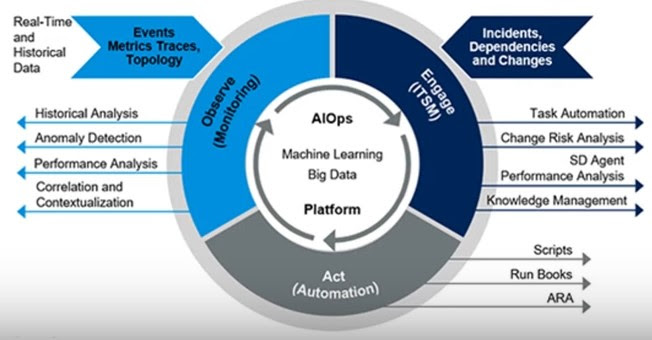
AIOps, or Artificial Intelligence for IT Operations, is a technology-driven approach that combines artificial intelligence (AI) and machine learning (ML) with traditional IT operations processes. It is designed to enhance and automate various aspects of managing and optimizing IT infrastructure and services. AIOps leverages advanced algorithms to analyze large volumes of data generated by IT systems, applications, and networks. By doing so, it can proactively identify and resolve issues, detect anomalies, and provide valuable insights to improve the overall performance and reliability of IT operations. This approach helps organizations streamline their workflows, reduce downtime, and improve the efficiency of IT teams, ultimately leading to better service delivery and enhanced customer experiences.
Why We need aiops?
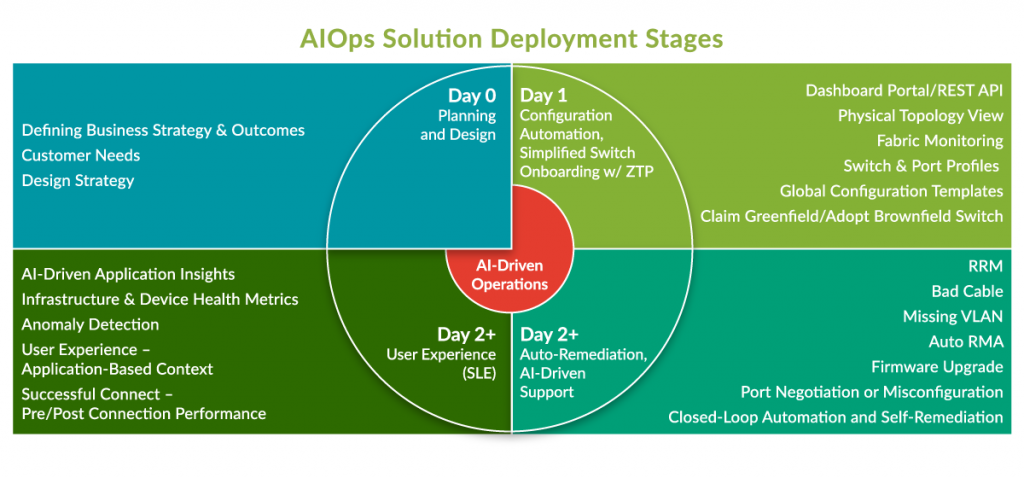
AIOps addresses the growing complexity and scale of modern IT environments. Here are several compelling reasons why organizations need AIOps:
- Managing Complexity: Today’s IT infrastructures are incredibly complex, involving a multitude of interconnected systems, applications, and services. AIOps helps in understanding and managing this complexity by automating routine tasks and providing insights into performance and issues.
- Handling Big Data: The volume of data generated by IT systems is immense. AIOps uses AI and machine learning algorithms to process and analyze this data in real-time, allowing for faster and more accurate decision-making.
- Proactive Issue Detection: AIOps can predict and identify potential issues before they impact services or users. This proactive approach helps in preventing downtime and minimizing the impact of incidents.
- Efficiency and Automation: AIOps automates routine tasks, freeing up IT teams to focus on more strategic initiatives. This can lead to increased efficiency and productivity.
- Root Cause Analysis: It’s crucial to quickly identify the underlying cause of IT incidents. AIOps can analyze complex, interdependent systems to pinpoint the root cause, expediting the resolution process.
- Optimizing Resource Allocation: AIOps helps in optimizing resource allocation by providing insights into resource utilization patterns. This can lead to cost savings and improved performance.
- Enhanced Customer Experience: By proactively identifying and addressing issues, AIOps helps in ensuring uninterrupted services. This translates to a better experience for customers and users.
- Scalability: As organizations grow, so do their IT needs. AIOps provides a scalable solution that can adapt to changing requirements without compromising performance.
- Compliance and Security: AIOps can monitor for security threats and compliance violations in real-time. This helps in maintaining a secure IT environment and ensuring compliance with industry regulations.
- Staying Competitive: In today’s fast-paced business environment, agility and responsiveness are critical. AIOps enables organizations to adapt quickly to changing conditions and stay ahead of the competition.
What is the Advantage of aiops?
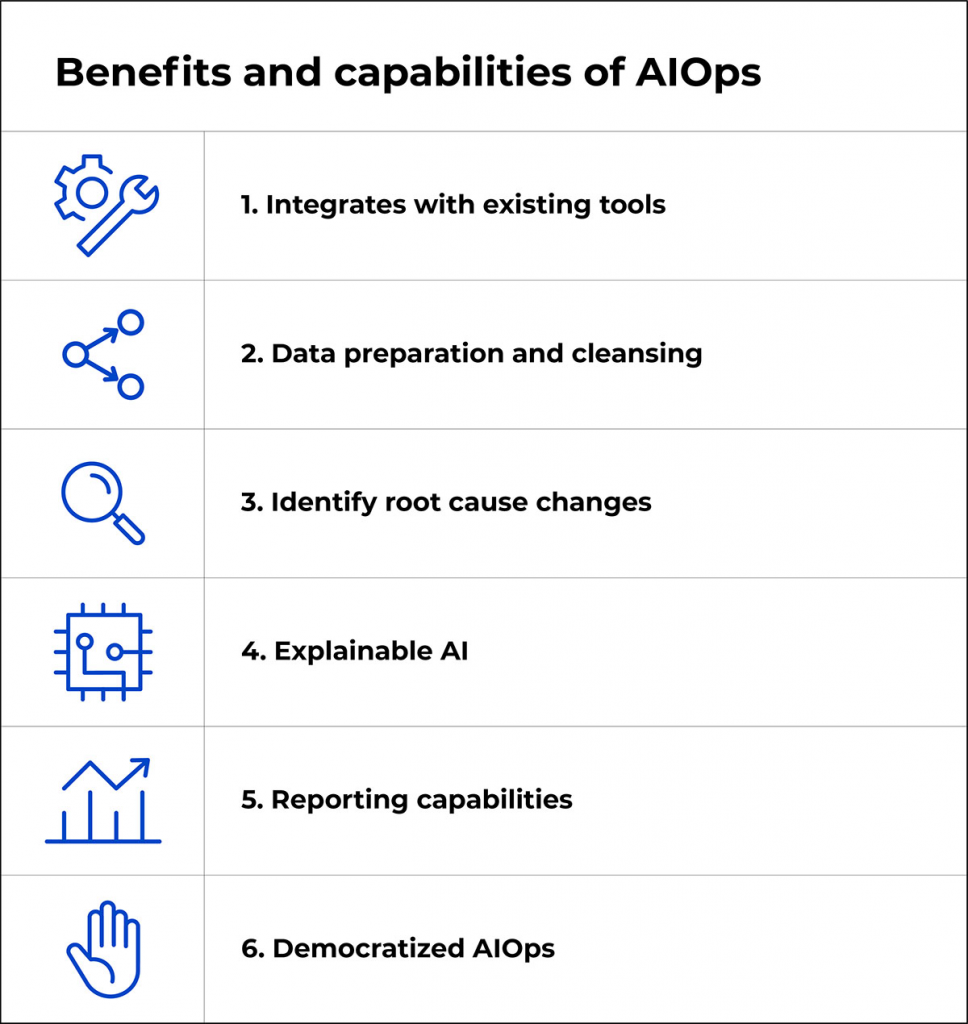
The advantages of AIOps, or Artificial Intelligence for IT Operations, are manifold and transformative for modern organizations. One of its paramount benefits lies in its ability to proactively detect and resolve IT issues before they impact services or users. By leveraging advanced machine learning algorithms, AIOps automates routine tasks, liberating IT teams from time-consuming operations and allowing them to focus on strategic initiatives. This leads to heightened efficiency, improved productivity, and ultimately, cost savings. Furthermore, AIOps excels in root cause analysis, swiftly pinpointing the underlying issues in complex IT ecosystems, which in turn accelerates the resolution process. The technology also fosters a superior customer experience by ensuring uninterrupted services, bolstering satisfaction and loyalty. Scalability and adaptability are inherent to AIOps, providing organizations with the flexibility to meet evolving IT requirements. Its capacity for predictive analytics empowers teams to foresee and prevent potential problems, contributing to a more resilient IT environment. Ultimately, AIOps equips organizations with a competitive edge, enabling them to respond to challenges swiftly and deliver superior services in today’s dynamic business landscape.
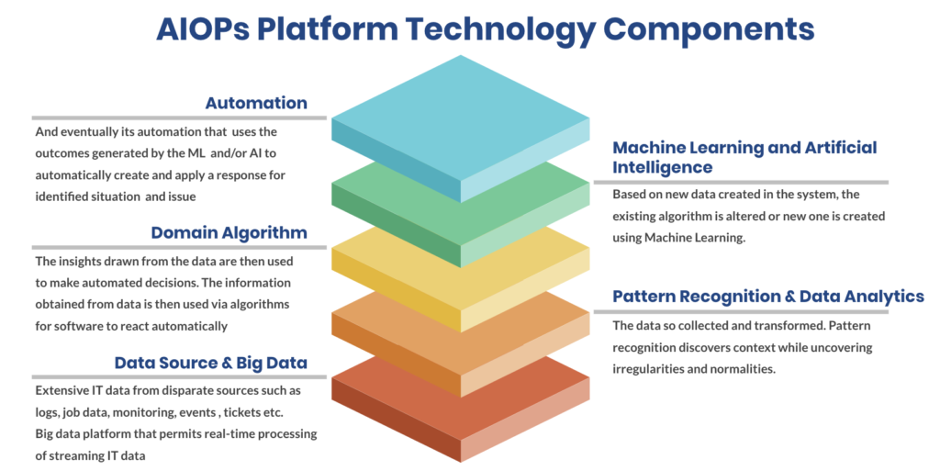
The advantages of AIOps (Artificial Intelligence for IT Operations) are numerous and significant. Here are some key benefits:
- Proactive Issue Resolution: AIOps enables the proactive identification and resolution of IT issues before they impact services or users. This helps in reducing downtime and minimizing the impact of incidents.
- Automated Routine Tasks: AIOps automates repetitive and time-consuming tasks, allowing IT teams to focus on more strategic initiatives. This leads to increased productivity and efficiency.
- Efficient Resource Utilization: By providing insights into resource utilization patterns, AIOps helps in optimizing resource allocation. This can lead to cost savings and improved performance.
- Root Cause Analysis: AIOps can quickly identify the root cause of IT incidents in complex, interdependent systems. This expedites the resolution process and minimizes disruptions.
- Improved Customer Experience: AIOps helps in ensuring uninterrupted services, leading to a better experience for customers and users. This can enhance customer satisfaction and loyalty.
- Scalability and Flexibility: AIOps solutions are designed to scale with the organization’s needs. They can adapt to changing requirements and support the growth of IT infrastructures.
- Enhanced Security and Compliance: AIOps can monitor for security threats and compliance violations in real-time. This helps in maintaining a secure IT environment and ensuring compliance with industry regulations.
- Data-Driven Insights: AIOps leverages advanced analytics to process and analyze large volumes of data generated by IT systems. This provides valuable insights that can inform decision-making and improve overall operations.
- Faster Incident Response: AIOps automates incident detection and response, allowing for faster reaction times. This is crucial for minimizing the impact of incidents on business operations.
- Predictive Analytics: AIOps can predict potential issues based on historical data and patterns. This allows for proactive measures to be taken, preventing problems before they occur.
- Reduced Alert Fatigue: AIOps can filter and correlate alerts, reducing the noise and helping IT teams focus on critical issues. This improves alert management and response times.
- Competitive Advantage: Organizations that implement AIOps gain a competitive edge by being more agile, responsive, and efficient in their IT operations. This can lead to improved customer satisfaction and market position.
What is the feature of aiops?
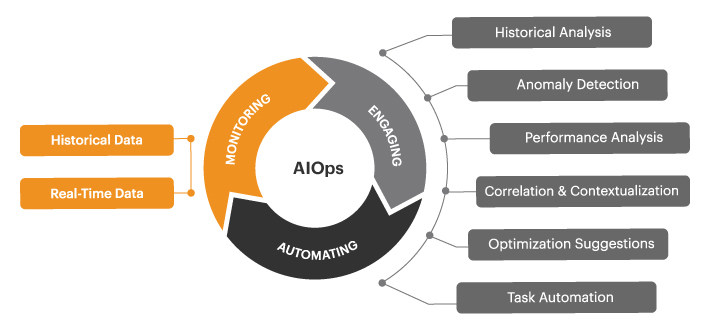
The features of AIOps, or Artificial Intelligence for IT Operations, encompass a powerful set of capabilities that revolutionize the management of modern IT environments. One key feature is proactive incident management, where AIOps uses advanced algorithms to predict and prevent IT incidents before they occur. This capability significantly reduces downtime and minimizes the impact on operations. Another crucial aspect is automated alerting and response, wherein AIOps filters through a barrage of alerts, prioritizes them based on severity, and automates responses to routine issues, allowing IT teams to focus on more complex tasks. AIOps also excels in anomaly detection, swiftly identifying deviations from expected behavior within IT systems and applications. This enables rapid investigation and resolution of potential issues, bolstering system reliability. Root cause analysis is another standout feature, wherein AIOps digs into complex, interdependent systems to pinpoint the exact source of problems, expediting the resolution process. Additionally, AIOps offers advanced analytics and reporting capabilities, providing valuable insights into system performance, resource utilization, and operational trends. This helps in informed decision-making and optimization of IT resources. Lastly, AIOps is designed for scalability, ensuring it can adapt to the evolving needs of an organization’s IT infrastructure. These features collectively empower organizations to streamline their IT operations, enhance reliability, and ultimately deliver superior services to their customers and end-users.
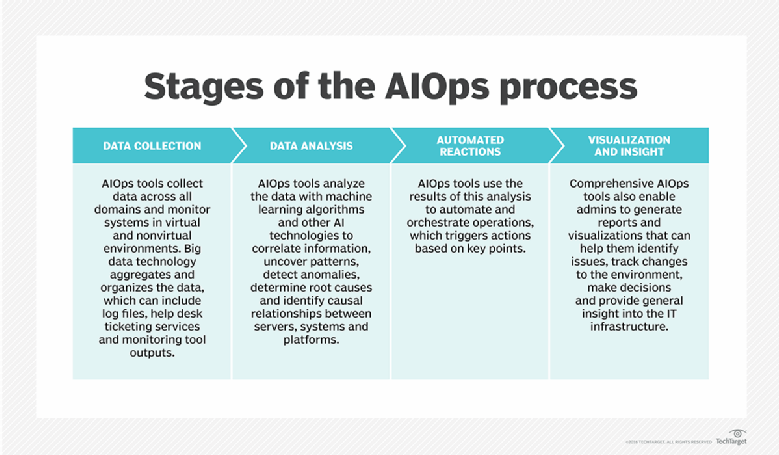
AIOps, or Artificial Intelligence for IT Operations, encompasses several key features that distinguish it as a transformative approach to managing IT environments:
- Proactive Incident Management: AIOps employs advanced algorithms to predict and prevent IT incidents before they occur, reducing downtime and minimizing disruptions.
- Automated Alerting and Response: It filters and prioritizes alerts, automating responses to routine issues. This frees up IT teams to focus on more complex tasks and strategic initiatives.
- Anomaly Detection: AIOps excels in identifying deviations from expected behavior within IT systems and applications, enabling rapid investigation and resolution of potential issues.
- Root Cause Analysis: It investigates complex, interdependent systems to pinpoint the exact source of problems, expediting the resolution process and preventing recurrence.
- Advanced Analytics and Reporting: AIOps provides valuable insights into system performance, resource utilization, and operational trends. This informs decision-making and resource optimization.
- Capacity Planning and Optimization: It helps in forecasting resource needs based on historical data and trends, allowing for efficient allocation of resources and cost savings.
- Change Impact Analysis: AIOps assesses the potential impact of changes to the IT environment, ensuring that updates and modifications won’t cause unintended disruptions.
- Incident Correlation and Aggregation: It identifies and groups related incidents, reducing alert fatigue and providing a holistic view of the operational environment.
- Integration with ITSM Tools: AIOps seamlessly integrates with IT Service Management tools, streamlining incident management, change management, and other IT processes.
- Scalability and Adaptability: AIOps solutions are designed to scale with an organization’s IT infrastructure, accommodating growth and evolving needs.
- Security and Compliance Monitoring: AIOps can monitor for security threats and compliance violations, contributing to a more secure and regulatory-compliant IT environment.
- Predictive Analytics and Forecasting: It leverages historical data and patterns to predict potential issues, allowing for proactive measures to prevent problems before they occur.
What is the Top 10 Use cases of aiops?
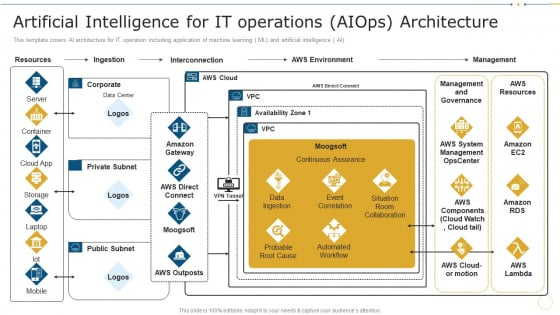
AIOps, or Artificial Intelligence for IT Operations, offers a diverse range of critical use cases that revolutionize how organizations manage their IT environments. Firstly, it excels in proactive incident management, predicting and preventing potential IT issues before they can disrupt services. Automated alerting and response streamlines the handling of alerts, allowing IT teams to focus on more strategic tasks. Anomaly detection identifies unusual patterns in system behavior, enabling rapid response to potential problems. Root cause analysis swiftly pinpoints the source of complex issues, expediting resolutions. Capacity planning and optimization ensures resources are efficiently allocated. Change impact analysis assesses potential disruptions from updates. Incident correlation and aggregation reduce alert fatigue, providing a comprehensive operational view. Performance monitoring and optimization keeps systems running smoothly. Security and compliance monitoring enhances system security. Lastly, predictive analytics and forecasting enable proactive measures to prevent future issues. Collectively, these use cases showcase how AIOps transforms IT operations, enhancing efficiency, security, and reliability.
The application of AIOps (Artificial Intelligence for IT Operations) spans various critical aspects of IT management. Here are the top 10 use cases:
- Proactive Incident Management: AIOps can predict and prevent IT incidents before they occur, reducing downtime and minimizing disruptions to services.
- Automated Alerting and Response: It filters through a barrage of alerts, prioritizes them, and automates responses to routine issues, allowing IT teams to focus on more complex tasks.
- Anomaly Detection: AIOps excels in identifying unusual patterns or deviations from expected behavior within IT systems and applications, enabling rapid investigation and resolution.
- Root Cause Analysis: It quickly and accurately identifies the underlying cause of IT incidents in complex, interdependent systems, expediting the resolution process.
- Capacity Planning and Optimization: AIOps helps in forecasting resource needs based on historical data and trends, allowing for efficient allocation of resources and cost savings.
- Change Impact Analysis: It assesses the potential impact of changes to the IT environment, ensuring that updates and modifications won’t cause unintended disruptions.
- Incident Correlation and Aggregation: AIOps identifies and groups related incidents, reducing alert fatigue and providing a holistic view of the operational environment.
- Performance Monitoring and Optimization: It continuously monitors system performance, identifies bottlenecks, and provides recommendations for optimization to ensure optimal performance.
- Security and Compliance Monitoring: AIOps can monitor for security threats and compliance violations in real-time, contributing to a more secure and regulatory-compliant IT environment.
- Predictive Analytics and Forecasting: By leveraging historical data and patterns, AIOps can predict potential issues and trends, allowing for proactive measures to prevent problems before they occur.
How to Implement aiops?
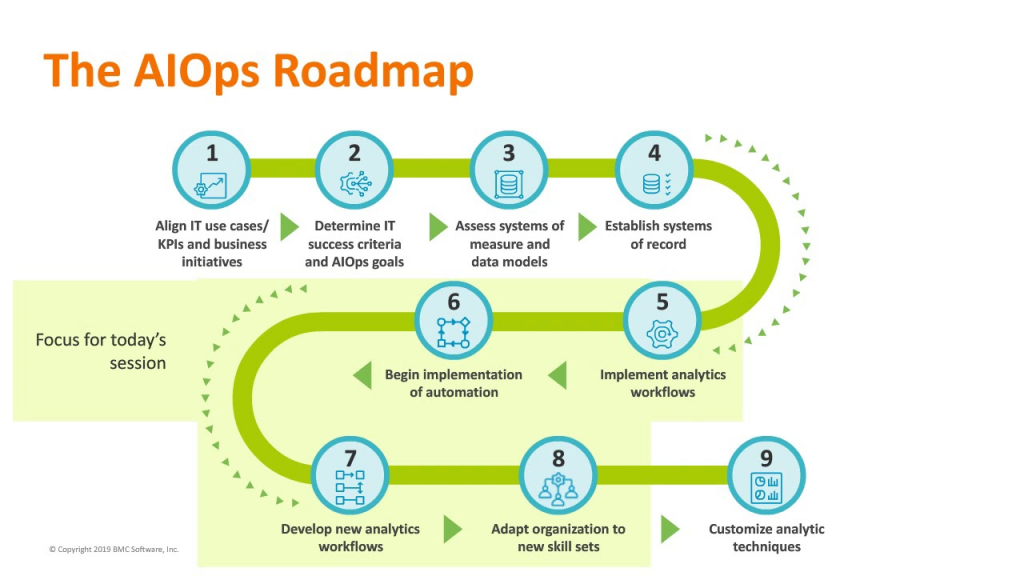
Implementing AIOps, or Artificial Intelligence for IT Operations, involves a strategic and systematic approach. Here are the steps to effectively implement AIOps:
- Define Objectives and Goals: Clearly articulate the specific challenges or areas you aim to address with AIOps. Whether it’s incident management, performance optimization, or security enhancement, having well-defined goals is crucial.
- Assess Current State: Evaluate your existing IT infrastructure, tools, and processes. Identify where AIOps can have the most impact and how it can seamlessly integrate with your current systems.
- Select an AIOps Platform or Solution: Choose a platform or solution that aligns with your organization’s requirements. Consider factors like scalability, machine learning capabilities, and compatibility with existing IT tools.
- Integrate Data Sources: Aggregate data from various sources including monitoring tools, logs, and performance metrics. Ensure data quality by cleaning and normalizing it for accurate analysis.
- Implement Machine Learning Models: Develop or deploy machine learning models and algorithms tailored to your specific use cases. These models will analyze the data to identify patterns, anomalies, and potential issues.
- Set up Automated Workflows and Responses: Define rules and thresholds for triggering alerts or automated actions based on AIOps insights. This can include incident response, resource allocation, or preventive measures.
- Train IT Teams: Provide training on using the AIOps platform effectively. This includes interpreting AIOps insights, understanding alerts, and utilizing automation features.
- Monitor and Fine-Tune: Regularly monitor the performance of the AIOps system. Assess its effectiveness in real-world scenarios and adjust algorithms or configurations as needed for optimal results.
- Measure Impact: Evaluate key performance indicators (KPIs) related to incident resolution time, system uptime, and overall operational efficiency. Use these metrics to demonstrate the value of AIOps to stakeholders.
- Iterate and Improve: Continuously iterate on your AIOps implementation. Stay updated with the latest advancements in AIOps technology and adjust your strategies accordingly to maximize its benefits.
How to Get certified in aiops?
By DevOpsSchool.com : –
- Visit the Website: Go to the DevOpsSchool.com website and navigate to their courses or certification section.
- Search for AIOps Courses: Look for specific courses related to AIOps. These courses may have different levels (beginner, intermediate, advanced) and may cover various aspects of AIOps.
- Review Course Content: Before enrolling, review the course content, syllabus, and any prerequisites. Make sure it covers the topics you’re interested in and matches your skill level.
- Enroll in the Course: Once you’ve selected a suitable course, you can typically enroll directly on the website. This may involve creating an account or logging in if you already have one.
- Participate in the Course: Engage actively with the course material. This may involve watching video lectures, completing assignments, and participating in discussions or quizzes.
- Complete Assignments and Assessments: Most courses will have assignments or assessments to evaluate your understanding of the material. Make sure to complete these as they contribute to your final certification.
- Attend Live Sessions : Some courses may include live sessions, webinars, or workshops. Participate in these if they’re available.
- Pass the Final Exam : Depending on the course, there may be a final exam or evaluation. Ensure you prepare thoroughly for this step.
- Receive Certification: Once you successfully complete the course requirements, you’ll receive a certification from DevOpsSchool.com. This can serve as proof of your AIOps knowledge and skills.
- Update Your Resume and LinkedIn Profile: Add your new certification to your resume and LinkedIn profile to showcase your expertise in AIOps.
By scmGalaxy.com:-
- Visit the Website: Go to the scmGalaxy.com website and navigate to their courses or certification section.
- Search for AIOps Courses: Look for specific courses related to AIOps. These courses may have different levels (beginner, intermediate, advanced) and may cover various aspects of AIOps.
- Review Course Content: Before enrolling, review the course content, syllabus, and any prerequisites. Make sure it covers the topics you’re interested in and matches your skill level.
- Enroll in the Course: Once you’ve selected a suitable course, you can typically enroll directly on the website. This may involve creating an account or logging in if you already have one.
- Participate in the Course: Engage actively with the course material. This may involve watching video lectures, completing assignments, and participating in discussions or quizzes.
- Complete Assignments and Assessments: Most courses will have assignments or assessments to evaluate your understanding of the material. Make sure to complete these as they contribute to your final certification.
- Attend Live Sessions: Some courses may include live sessions, webinars, or workshops. Participate in these if they’re available.
- Pass the Final Exam : Depending on the course, there may be a final exam or evaluation. Ensure you prepare thoroughly for this step.
- Receive Certification: Once you successfully complete the course requirements, you’ll receive a certification from scmGalaxy.com. This can serve as proof of your AIOps knowledge and skills.
- Update Your Resume and LinkedIn Profile: Add your new certification to your resume and LinkedIn profile to showcase your expertise in AIOps.
By BestDevOps.com :-
- Visit the Website: Go to the BestDevOps.com website and navigate to their courses or certification section.
- Search for AIOps Courses: Look for specific courses related to AIOps. These courses may cover different levels (beginner, intermediate, advanced) and various aspects of AIOps.
- Review Course Content: Before enrolling, carefully review the course content, syllabus, and any prerequisites. Ensure that the course covers the topics you’re interested in and is suitable for your skill level.
- Enroll in the Course: Once you’ve selected a suitable course, you can typically enroll directly on the website. This may involve creating an account or logging in if you already have one.
- Participate Actively: Engage with the course material actively. This may involve watching video lectures, completing assignments, and participating in discussions or quizzes.
- Complete Assignments and Assessments: Most courses will have assignments or assessments to evaluate your understanding of the material. Make sure to complete these, as they often contribute to your final certification.
- Attend Live Sessions : Some courses may include live sessions, webinars, or workshops. Participate in these if they’re available.
- Pass the Final Exam : Depending on the course, there may be a final exam or evaluation. Ensure you prepare thoroughly for this step.
- Receive Certification: Once you successfully complete the course requirements, you’ll receive a certification from BestDevOps.com. This certification serves as proof of your AIOps knowledge and skills.
- Update Your Resume and LinkedIn Profile: Add your new certification to your resume and LinkedIn profile to showcase your expertise in AIOps.
By Cotocus.com :-
- Visit the Website: Go to the Cotocus.com website and navigate to their courses or certification section.
- Search for AIOps Courses: Look for specific courses related to AIOps. These courses may cover different levels (beginner, intermediate, advanced) and various aspects of AIOps.
- Review Course Content: Before enrolling, carefully review the course content, syllabus, and any prerequisites. Ensure that the course covers the topics you’re interested in and is suitable for your skill level.
- Enroll in the Course: Once you’ve selected a suitable course, you can typically enroll directly on the website. This may involve creating an account or logging in if you already have one.
- Participate Actively: Engage with the course material actively. This may involve watching video lectures, completing assignments, and participating in discussions or quizzes.
- Complete Assignments and Assessments: Most courses will have assignments or assessments to evaluate your understanding of the material. Make sure to complete these, as they often contribute to your final certification.
- Attend Live Sessions : Some courses may include live sessions, webinars, or workshops. Participate in these if they’re available.
- Pass the Final Exam : Depending on the course, there may be a final exam or evaluation. Ensure you prepare thoroughly for this step.
- Receive Certification: Once you successfully complete the course requirements, you’ll receive a certification from Cotocus.com. This certification serves as proof of your AIOps knowledge and skills.
- Update Your Resume and LinkedIn Profile: Add your new certification to your resume and LinkedIn profile to showcase your expertise in AIOps.
How to Learn aiops?
Learning AIOps, or Artificial Intelligence for IT Operations, involves a structured approach to understanding and implementing this transformative technology. Start by familiarizing yourself with the fundamental concepts of IT operations, including system monitoring, incident management, and resource optimization. Next, delve into the principles of machine learning and data analysis, as these are foundational to AIOps. There are various online platforms, courses, and certifications available from reputable organizations and educational institutions that offer in-depth AIOps training. Hands-on experience is invaluable, so consider setting up a lab environment or using simulation tools to practice implementing AIOps solutions. Stay updated with industry trends and emerging technologies in AIOps by following blogs, forums, and attending webinars or conferences. Engage in practical projects, such as deploying AIOps solutions in real-world scenarios, to gain practical experience. Additionally, participating in communities or forums dedicated to AIOps can provide opportunities for networking and learning from experts in the field. Remember, continuous learning and staying curious about new developments in AIOps will be essential for mastering this dynamic and evolving domain.


Wow, superb weblog format! How lengthy have you ever been blogging for?
you make blogging glance easy. The overall look of
your website is great, let alone the content!
You can see similar: sklep internetowy and here ecommerce