Skip to content
Menu
DevSecOps Now!!!
  • About
  • Certifications
  • Contact
  • Courses
  • DevSecOps Consulting
  • DevSecOps Tools
  • Training
  • Tutorials
DevSecOps Now!!!

Essential DevOps Practices for High-Performance Software Delivery

Posted on January 28, 2025

Limited Time Offer!

For Less Than the Cost of a Starbucks Coffee, Access All DevOpsSchool Videos on YouTube Unlimitedly.
Master DevOps, SRE, DevSecOps Skills!
Enroll Now

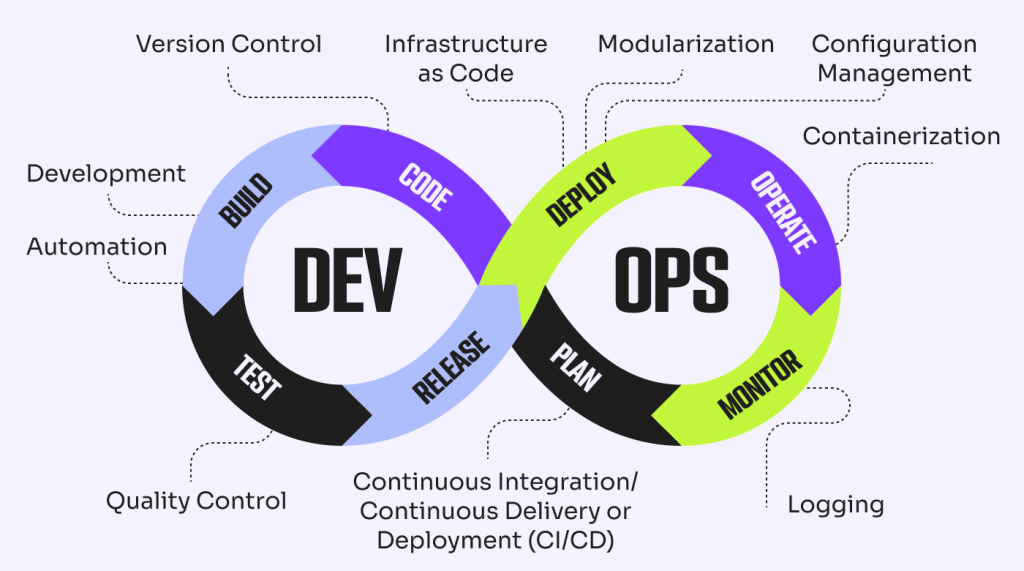
In today’s fast-paced digital world, businesses must deliver software quickly, reliably, and securely. This is where DevOps comes in—a culture and set of practices that bridge the gap between development and IT operations to streamline workflows and accelerate releases. However, simply adopting DevOps is not enough; organizations must implement the right DevOps practices to truly reap its benefits.

In this blog, we’ll explore some of the most effective DevOps practices that help teams automate processes, improve collaboration, and achieve high-performance software delivery.


1. Continuous Integration (CI) and Continuous Deployment (CD)
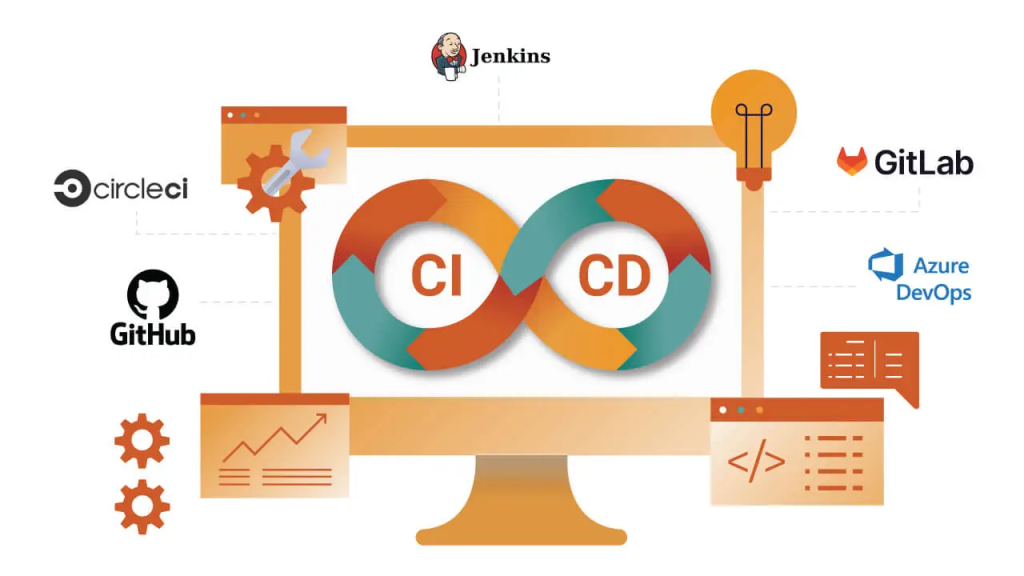
One of the most fundamental principles of DevOps is Continuous Integration (CI) and Continuous Deployment (CD), often referred to as CI/CD. This practice ensures that developers frequently integrate their code into a shared repository, where it is automatically tested and deployed.

With CI/CD, teams can:

✅ Catch bugs early with automated testing before they reach production
✅ Reduce time-to-market by automating code deployments
✅ Improve collaboration between developers and IT teams

For example, using tools like Jenkins, GitHub Actions, GitLab CI/CD, and Azure DevOps, companies can set up an automated pipeline that tests and deploys new updates without manual intervention. This means faster, safer, and more frequent releases.


2. Infrastructure as Code (IaC) – Automating Infrastructure Management
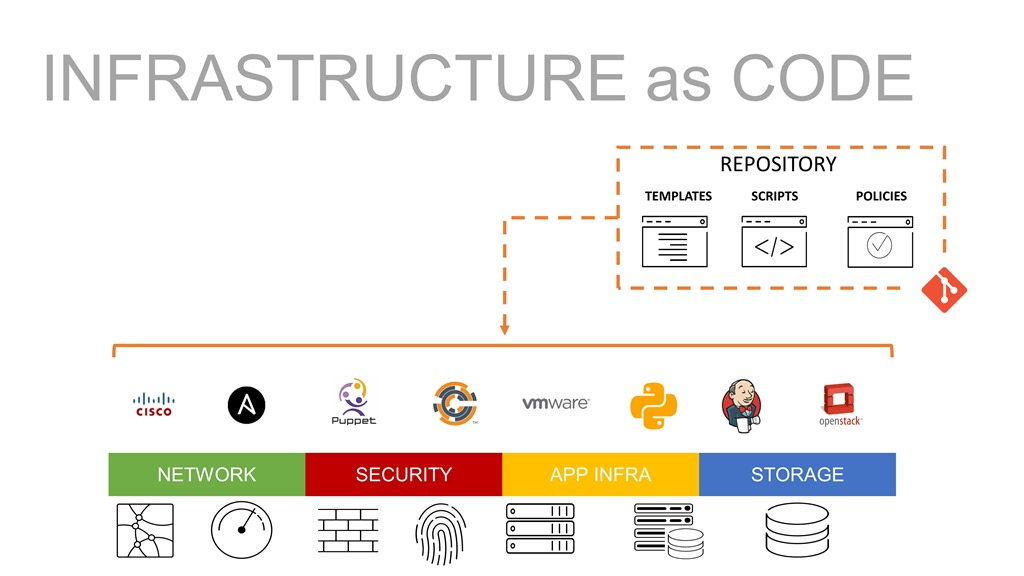
Gone are the days when IT teams manually set up servers and networking configurations. With Infrastructure as Code (IaC), infrastructure is managed using code, making deployments faster, more reliable, and scalable.

By implementing Infrastructure as Code, teams can:

✅ Automate the provisioning of servers, databases, and networks
✅ Maintain consistency across environments (dev, test, and production)
✅ Quickly scale infrastructure up or down as needed

Popular IaC tools include:

  • Terraform – A powerful tool for automating multi-cloud deployments
  • Ansible – Used for configuration management and server automation
  • AWS CloudFormation – A native AWS service for infrastructure automation

Imagine deploying a new cloud environment with just a few lines of code instead of manually configuring each server—this is the power of IaC!


3. Microservices Architecture – Breaking Down Monolithic Apps
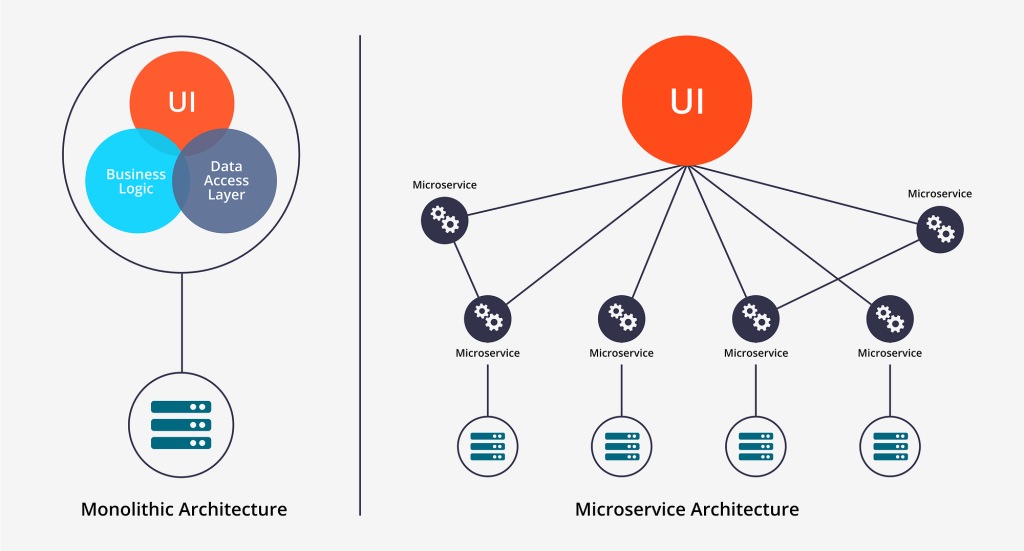
Traditionally, applications were built as large, monolithic structures, making them difficult to scale and update. Microservices architecture solves this by breaking applications into smaller, independent services that communicate with each other.

Adopting microservices allows teams to:

✅ Deploy and update services independently without affecting the whole application
✅ Improve scalability by distributing workloads across multiple services
✅ Enhance fault tolerance—if one service fails, others remain unaffected

To manage microservices effectively, teams use:

  • Docker – For containerizing applications
  • Kubernetes – For orchestrating and managing containers
  • Helm – For managing Kubernetes applications

Netflix, Amazon, and Uber are great examples of companies that successfully run their platforms using microservices, enabling them to scale rapidly and deploy updates seamlessly.


4. Monitoring and Logging – Keeping an Eye on Performance
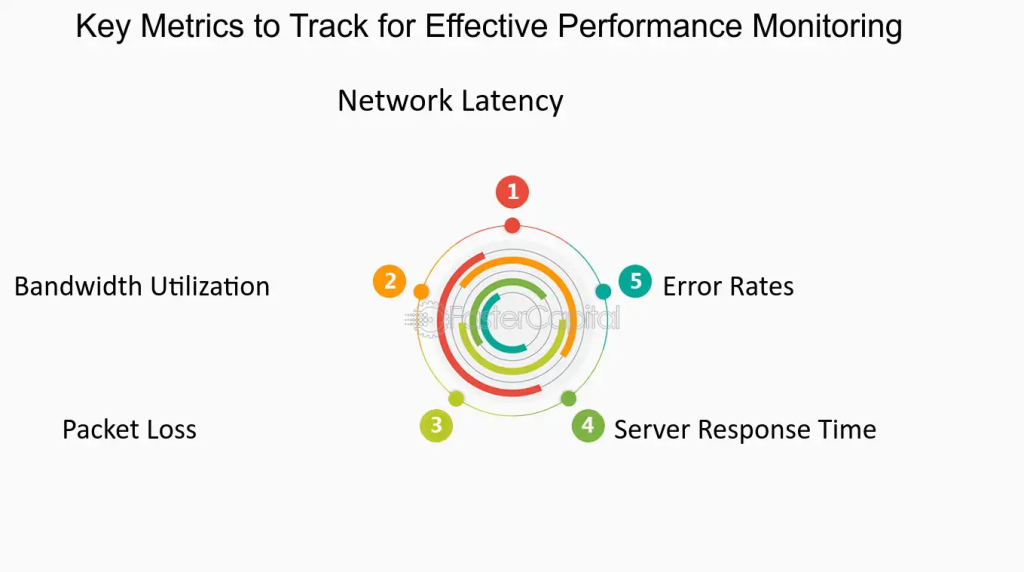
Imagine launching a new software update and suddenly facing unexpected downtime or performance issues—this is why monitoring and logging are essential.

By implementing monitoring and logging, DevOps teams can:

✅ Detect system failures in real-time and respond proactively
✅ Analyze logs to troubleshoot issues before they impact users
✅ Optimize performance by understanding resource usage trends

Popular monitoring and logging tools include:

  • Prometheus & Grafana – Used for real-time system monitoring and visualization
  • ELK Stack (Elasticsearch, Logstash, Kibana) – A powerful tool for log management
  • Datadog & Splunk – Cloud-based solutions for monitoring and security analytics

With proper monitoring, businesses can avoid costly downtimes and provide a seamless user experience.


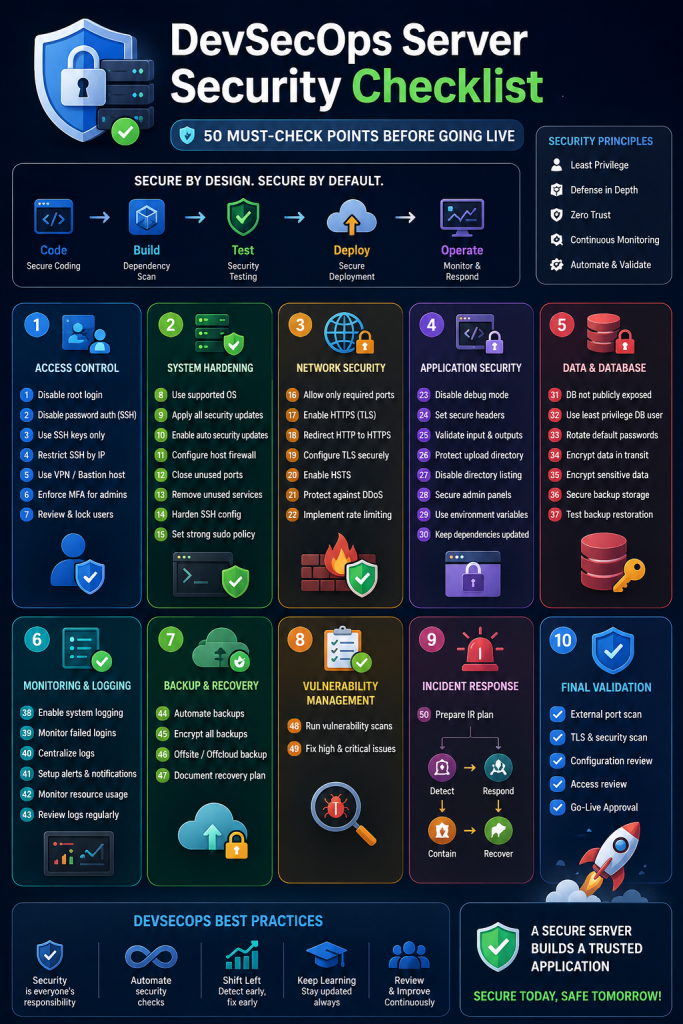
5. Security in DevOps – DevSecOps for a Secure Pipeline
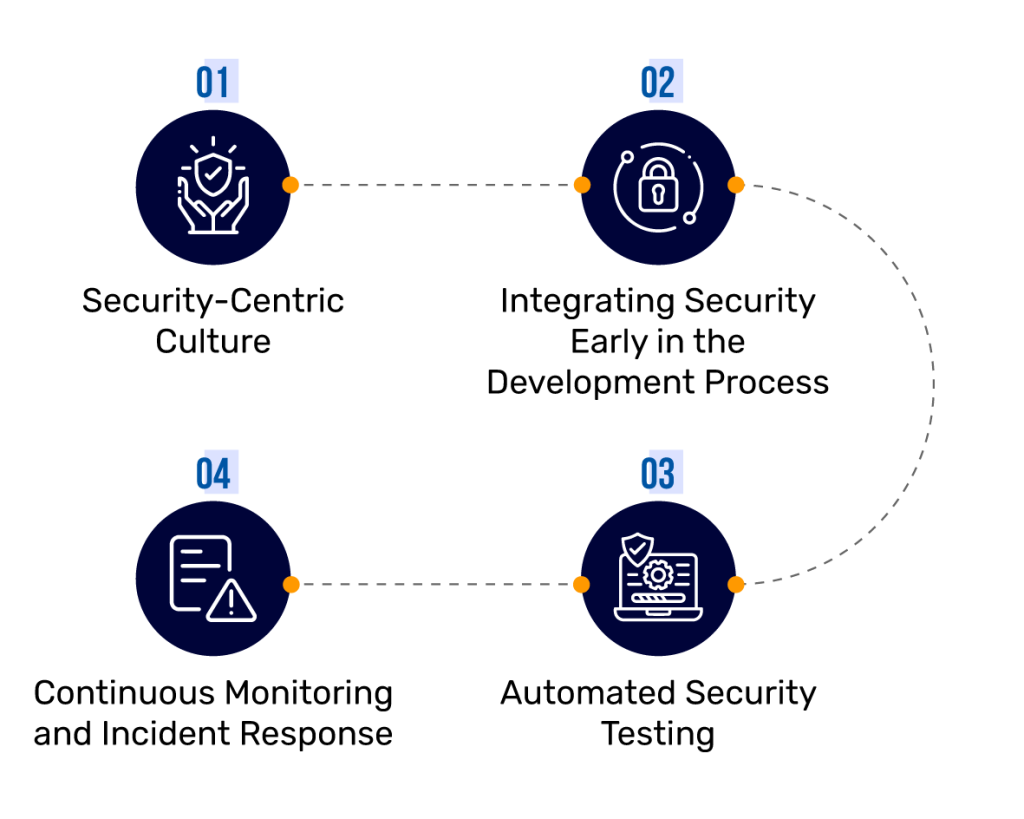
Security is often treated as an afterthought, but in DevOps, it must be an integral part of the development process—this is where DevSecOps comes in.

With DevSecOps, security is embedded at every stage of the development lifecycle. This means:

✅ Automated security scanning for vulnerabilities in code and dependencies
✅ Implementing SAST (Static Application Security Testing) and DAST (Dynamic Application Security Testing)
✅ Using secret management tools like HashiCorp Vault to secure credentials

By making security a shared responsibility, teams can reduce the risk of breaches and ensure compliance with industry standards.


6. Site Reliability Engineering (SRE) – Ensuring Stability
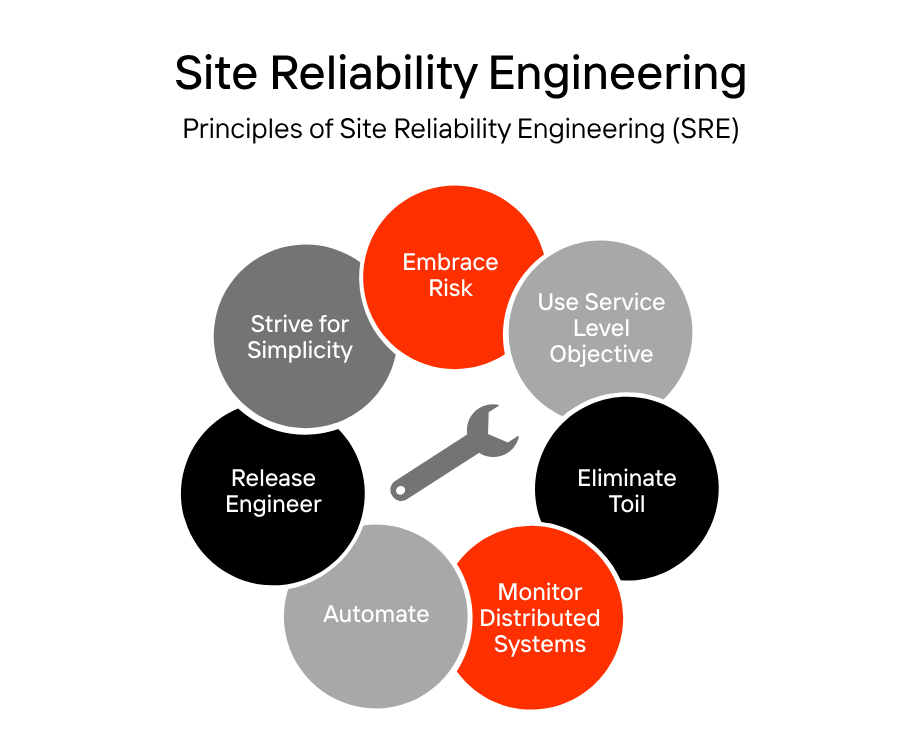
As applications grow in complexity, ensuring high availability and reliability becomes crucial. This is where Site Reliability Engineering (SRE) comes in—a practice that applies software engineering principles to IT operations.

With SRE, teams focus on:

✅ Incident management and quick recovery from failures
✅ Defining Service Level Objectives (SLOs) and Service Level Agreements (SLAs)
✅ Automating routine operational tasks to reduce manual workload

Think of SRE as the guardian of system reliability, ensuring users always have a smooth experience.


Implement DevOps Best Practices Today!

DevOps is not just about using tools—it’s about adopting the right DevOps practices to drive efficiency, automation, and collaboration. By implementing CI/CD pipelines, Infrastructure as Code, microservices, monitoring, security, and SRE, organizations can transform the way they build and deploy software.

If you’re looking to take your DevOps strategy to the next level, start integrating these best practices today! 🚀

Looking for a deep dive into DevOps methodologies? Explore the best DevOps practices and get started on your journey toward DevOps excellence!

Post Views: 851
  • cicd
  • Devops
  • DevOps Practices
  • DevOps Practices for High-Performance
  • DevOps Practices for High-Performance Software
  • devops with security
  • DevSecOps
  • High-Performance
  • High-Performance Software Delivery
  • Performance Software Delivery
Subscribe
Login
Notify of
guest
guest
0 Comments
Oldest
Newest Most Voted
Inline Feedbacks
View all comments
  • Codex vs Claude: A Complete Practical Guide for Modern Developers (2026)
  • Certified AIOps Professional Program A Guide to Career Growth
  • Keycloak Multi-Client Architecture with Project-Based Email Validation (Student, Trainer, Company, Consulting)
  • Incorrect definition of table mysql.column_stats
  • Mautic and PHP 8.3 Compatibility Guide (2026)
  • Certified AIOps Engineer: The Complete Career Path and Certification Guide
  • How to Rename Apache Virtual Host Files Safely (Step-by-Step Guide for Linux)
  • AIOps Foundation Certification: Everything You Need to Know to Get Certified
  • DevOps to Certified Site Reliability Professional: A Senior Mentor’s Guide
  • Certified Site Reliability Manager Training, Preparation, and Career Mapping
  • Certified Site Reliability Architect: The Complete Career Guide
  • What Is a VPN? A Complete Beginner-to-Advanced Tutorial
  • How to Install, Secure, and Tune MySQL 8.4 on Ubuntu 24.04 for Apache Event MPM and PHP-FPM
  • Complete Guide to Certified Site Reliability Engineer Career
  • Certified DevSecOps Professional Step by Step
  • Certified DevSecOps Manager: Complete Career Guide
  • Certified DevSecOps Engineer: Skills, Career Path and Certification Guide
  • Step-by-Step: Become a Certified DevSecOps Architect
  • Tuning PHP 8.3 for Apache Event MPM and PHP-FPM on Ubuntu: A Complete Step-by-Step Production Guide
  • Complete Step-by-Step Guide to Configure Apache Event MPM, Create index.php, Set Up VirtualHost, and Fix Ubuntu Default Page
  • Convert XAMPP Apache to Event MPM + System PHP-FPM
  • The Gateway to System Observability Engineering (MOE)
  • How to Finetune Apache and Prove It Works: A Real-World Guide to Testing Performance, Concurrency, HTTP/2, Memory, CPU, and Security
  • Building a High-Performance Apache Event MPM + PHP-FPM + MariaDB Stack (Advanced Server Optimization Guide)
  • Master Infrastructure as Code: The Complete Hashicorp Terraform Associate Guide
  • Building a High-Performance Apache Server with Event MPM + PHP-FPM (Step-by-Step Guide)
  • Is XAMPP Safer for Production Than Using Apache and PHP as Root? 2026 Practical Guide
  • Unlock Cloud Security Expertise with Certified Kubernetes Security Specialist (CKS)
  • How to Fix wpDiscuz Not Replacing Default WordPress Comments in Block Themes
  • Complete Guide to Certified Kubernetes Application Developer Certification

Recent Comments

  1. digital banking on Complete Tutorial: Setting Up Laravel Telescope Correctly (Windows + XAMPP + Custom Domain)
  2. SAHIL DHINGRA on How to Uninstall Xampp from your machine when it is not visible in Control panel programs & Feature ?
  3. Abhishek on MySQL: List of Comprehensive List of approach to secure MySQL servers.
  4. Kristina on Best practices to followed in .httacess to avoid DDOS attack?
  5. Roshan Jha on Git all Commands

Archives

  • April 2026
  • March 2026
  • February 2026
  • January 2026
  • December 2025
  • November 2025
  • October 2025
  • September 2025
  • August 2025
  • July 2025
  • June 2025
  • May 2025
  • April 2025
  • March 2025
  • February 2025
  • January 2025
  • December 2024
  • November 2024
  • October 2024
  • September 2024
  • August 2024
  • July 2024
  • June 2024
  • May 2024
  • April 2024
  • March 2024
  • February 2024
  • January 2024
  • December 2023
  • November 2023
  • October 2023
  • September 2023
  • August 2023
  • July 2023
  • May 2023
  • April 2023
  • March 2023
  • February 2023
  • January 2023
  • December 2022

Categories

  • Ai
  • AI Blogging
  • AiOps
  • ajax
  • Android Studio
  • Antimalware
  • Antivirus
  • Apache
  • Api
  • API Security
  • Api Testing
  • APK
  • Aws
  • Bike Rental Services
  • ChatGPT
  • Code Linting
  • Composer
  • cPanel
  • Cyber Threat Intelligence
  • Cybersecurity
  • Data Loss Prevention
  • Database
  • dataops
  • Deception Technology
  • DeepSeek
  • Devops
  • DevSecOps
  • DevTools
  • Digital Asset Management
  • Digital Certificates
  • Docker
  • Drupal
  • emulator
  • Encryption Tools
  • Endpoint Security Tools
  • Error
  • facebook
  • Firewalls
  • Flutter
  • git
  • GITHUB
  • Google Antigravity
  • Google play console
  • Google reCAPTCHA
  • Gradle
  • Guest posting
  • health and fitness
  • IDE
  • Identity and Access Management
  • Incident Response
  • Instagram
  • Intrusion Detection and Prevention Systems
  • jobs
  • Joomla
  • Keycloak
  • Laravel
  • Law News
  • Lawyer Discussion
  • Legal Advice
  • Linkedin
  • Linkedin Api
  • Linux
  • Livewire
  • Mautic
  • Medical Tourism
  • MlOps
  • MobaXterm
  • Mobile Device Management
  • Multi-Factor Authentication
  • MySql
  • Network Traffic Analysis tools
  • Paytm
  • Penetration Testing
  • php
  • PHPMyAdmin
  • Pinterest Api
  • Quora
  • SAST
  • SecOps
  • Secure File Transfer Protocol
  • Security Analytics Tools
  • Security Auditing Tools
  • Security Information and Event Management
  • Seo
  • Server Management Tools
  • Single Sign-On
  • Site Reliability Engineering
  • soft 404
  • software
  • SuiteCRM
  • SysOps
  • Threat Model
  • Twitter
  • Twitter Api
  • ubuntu
  • Uncategorized
  • Virtual Host
  • Virtual Private Networks
  • VPNs
  • Vulnerability Assessment Tools
  • Web Application Firewalls
  • Windows Processor
  • Wordpress
  • WSL (Windows Subsystem for Linux)
  • X.com
  • Xampp
  • Youtube
©2026 DevSecOps Now!!! | WordPress Theme: EcoCoded
wpDiscuz