Limited Time Offer!
For Less Than the Cost of a Starbucks Coffee, Access All DevOpsSchool Videos on YouTube Unlimitedly.
Master DevOps, SRE, DevSecOps Skills!
What is ITOps?
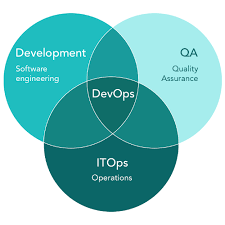
Definition of ITOps
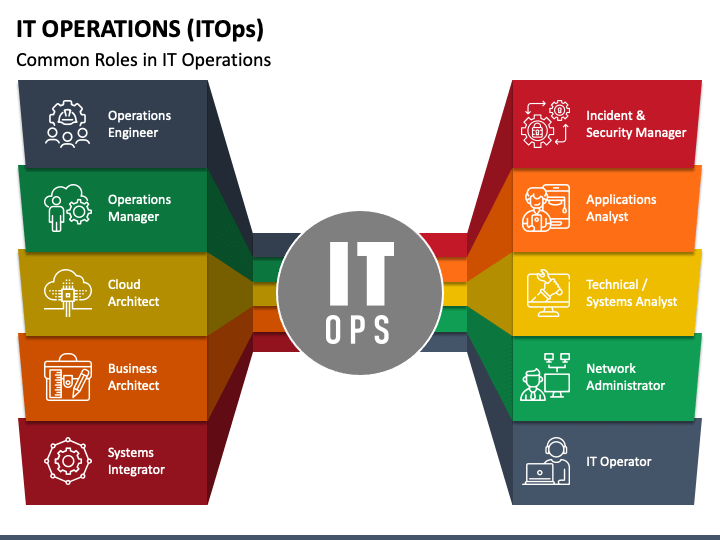
ITOps (IT Operations) refers to the processes, tools, and best practices used to manage and maintain an organization’s IT infrastructure. It is responsible for ensuring the availability, performance, and security of IT systems, including hardware, software, cloud environments, and networking resources.
ITOps forms the backbone of IT service delivery, supporting business operations by monitoring, troubleshooting, optimizing performance, and securing IT assets.
Key Responsibilities of ITOps
- Infrastructure Management: Overseeing servers, storage, and networking components.
- Network Administration: Managing internet, intranet, LAN, WAN, and connectivity services.
- IT Service Management (ITSM): Handling user requests, incidents, and IT helpdesk functions.
- Security & Compliance: Protecting data and IT assets from cyber threats.
- Performance Monitoring & Optimization: Ensuring IT resources operate efficiently.
- Cloud & Virtualization Management: Administering cloud platforms and virtual environments.
- Backup & Disaster Recovery: Ensuring business continuity through failover strategies.
- Automation & AI Operations (AIOps): Leveraging AI and machine learning to streamline IT processes.
How ITOps Differs from DevOps?
| Aspect | ITOps | DevOps |
|---|---|---|
| Primary Focus | IT Infrastructure, Security, and Services | Continuous Software Development & Deployment |
| Responsibility | Network, Cloud, Hardware, Security, ITSM | CI/CD Pipelines, Automation, and Development |
| Key Goals | Stability, Performance, Uptime | Speed, Innovation, Agility |
| Team Involved | IT Administrators, Security, Helpdesk | Developers, Testers, DevOps Engineers |
| Process Approach | ITIL, Service Management | Agile, CI/CD, Automation |
Why Do We Need ITOps?
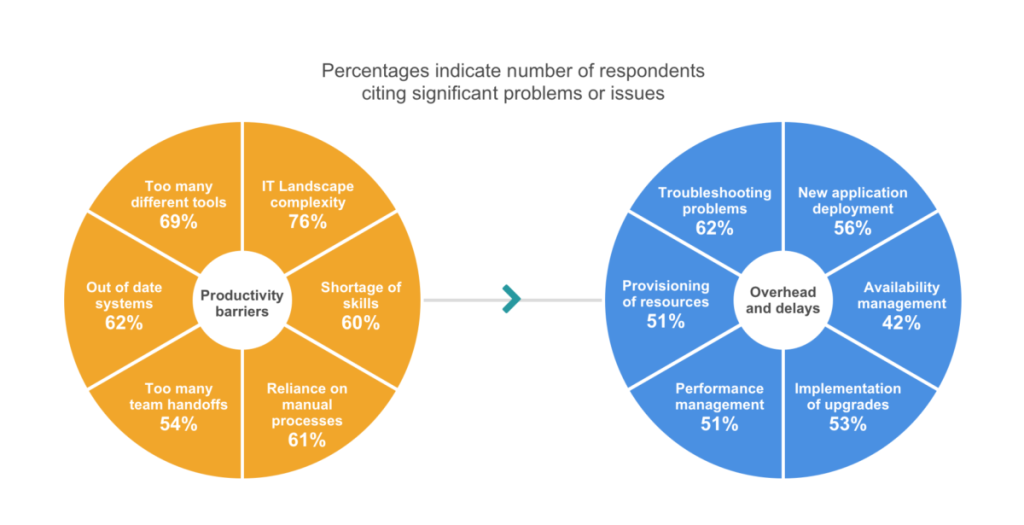
ITOps plays a crucial role in ensuring that an organization’s technology ecosystem runs smoothly, efficiently, and securely. Here’s why it is essential:
Business Continuity & System Reliability
- Ensures 24/7 uptime for critical IT systems.
- Prevents downtime through proactive monitoring and incident response.
Cybersecurity & Compliance
- Protects against cyber threats, ransomware, phishing, and data breaches.
- Ensures compliance with GDPR, HIPAA, PCI-DSS, and other regulatory standards.
Resource Optimization & Cost Savings
- Maximizes server utilization, reduces cloud costs, and optimizes IT assets.
- Automates repetitive IT tasks, reducing manual labor costs.
Scalability & Cloud Management
- Supports hybrid cloud, multi-cloud, and on-premise infrastructure.
- Facilitates easy scaling of IT resources on demand.
Faster Incident Resolution & Troubleshooting
- Uses AI-driven monitoring to detect issues before they impact users.
- Reduces Mean Time to Repair (MTTR) by automating incident response.
Enhancing Employee Productivity
- Ensures seamless IT service delivery for employees.
- Provides fast IT support and issue resolution.
What is the Advantages of ITOps?
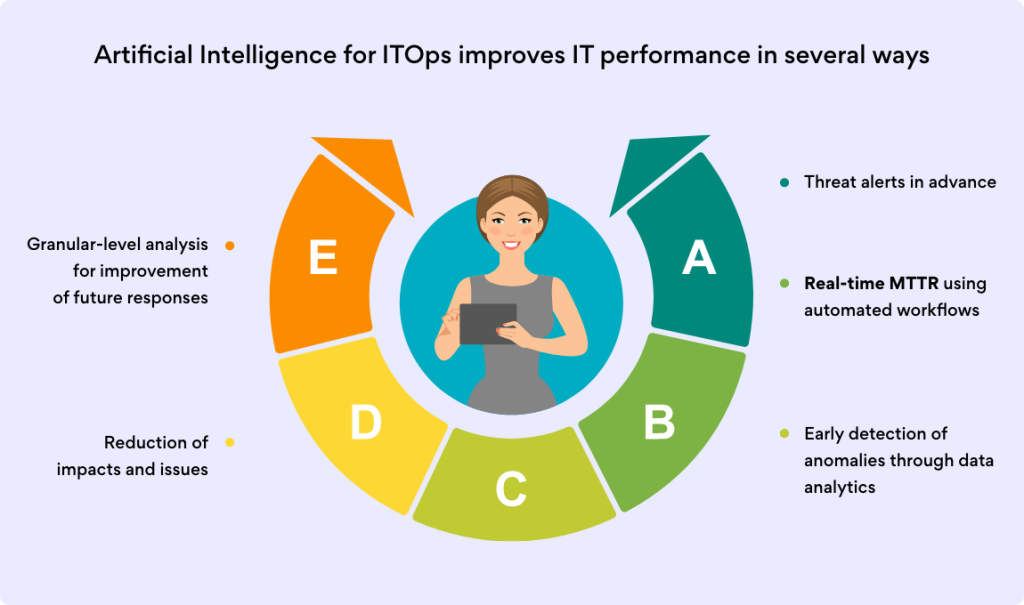
Adopting ITOps strategies provides numerous benefits, including:
1. High Availability & Performance
- Ensures smooth operation of applications, databases, and IT services.
- Uses real-time monitoring to prevent slowdowns and crashes.
2. Proactive Issue Resolution
- AI-driven predictive maintenance prevents failures before they happen.
- Automated alerts enable IT teams to react swiftly.
3. Cost Reduction & Resource Optimization
- Avoids unnecessary cloud over-provisioning.
- Reduces hardware expenses through virtualization and automation.
4. Cybersecurity & Compliance
- Implements firewalls, encryption, and threat detection.
- Ensures compliance with industry security frameworks.
5. Automation & AIOps
- Uses AI and automation to handle routine IT processes.
- Reduces manual workload, allowing IT teams to focus on innovation.
6. IT Governance & Risk Management
- Ensures IT services align with business goals.
- Reduces downtime risks and security vulnerabilities.
What is the feature of Features of ITOps?
Modern IT Operations solutions come with advanced features that help IT teams manage complex environments. Some of the core features include:
1. AI-Powered Monitoring & Observability
- Uses AI & ML to analyze logs, metrics, and events.
- Predicts failures and recommends proactive actions.
2. Incident Management & ITSM
- Provides helpdesk ticketing and automated troubleshooting.
- Supports self-service portals for users to resolve minor issues.
3. Cloud & Hybrid Infrastructure Management
- Manages AWS, Azure, Google Cloud, and on-premise IT assets.
- Supports containerized workloads using Kubernetes & Docker.
4. Security & Threat Management
- Implements SIEM (Security Information and Event Management).
- Conducts automated vulnerability scanning.
5. Backup & Disaster Recovery
- Supports real-time data replication and recovery.
- Ensures business continuity planning (BCP).
What is the Top 10 Use cases of ITOps?
ITOps supports a variety of critical business functions across industries. Some of the most common use cases include:
| Use Case | Description |
|---|---|
| 1. IT Infrastructure Management | Managing servers, storage, and network components for smooth operations. |
| 2. Cybersecurity & Threat Intelligence | Protecting IT systems from malware, ransomware, and hacking attempts. |
| 3. Cloud Cost Optimization | Reducing cloud expenses by managing resources effectively. |
| 4. Incident Detection & Response | AI-driven alerts for detecting anomalies and failures. |
| 5. Disaster Recovery Planning | Ensuring business continuity by maintaining failover systems. |
| 6. DevOps Support | Assisting DevOps teams in CI/CD pipelines, testing, and deployments. |
| 7. IT Asset Management | Tracking software licenses, hardware lifecycles, and compliance. |
| 8. Hybrid Cloud Management | Managing multi-cloud and on-premise IT environments. |
| 9. AI-Powered Automation | Using AI & ML for self-healing IT environments. |
| 10. User Experience Monitoring | Analyzing IT performance impact on end-users. |
How to Implement ITOps?
The successful adoption of ITOps involves several key steps:
Step 1: Assess IT Infrastructure
- Conduct an IT audit to analyze current infrastructure.
- Identify gaps in network, storage, computing, and security.
Step 2: Implement ITSM & Monitoring Tools
- Deploy tools like ServiceNow, Datadog, Splunk, SolarWinds.
- Enable real-time dashboards for tracking system health.
Step 3: Automate IT Processes
- Use RPA (Robotic Process Automation) to reduce manual IT tasks.
- Implement AI-driven monitoring & alerts.
Step 4: Strengthen IT Security
- Deploy firewalls, SIEM, threat intelligence.
- Implement Zero Trust Security models.
Step 5: Enable Cloud & Hybrid IT Management
- Adopt cloud-native and hybrid cloud management tools.
- Utilize Kubernetes for container orchestration.
Step 6: Train IT Teams & Optimize Governance
- Conduct IT skill development programs.
- Implement a governance framework aligned with ITIL best practices.
Step 7: Continuous Monitoring & Optimization
- Leverage AI-based analytics for system performance improvement.
- Continuously refine IT strategies for scalability & efficiency.
Conclusion
ITOps is an indispensable pillar of modern IT management. It ensures business continuity, security, cost optimization, and scalability. By integrating AI-driven automation, cloud management, and cybersecurity, organizations can transform their IT operations and drive innovation.
