
Skip to content
Menu
DevSecOps Now!!!
  • About
  • Certifications
  • Contact
  • Courses
  • DevSecOps Consulting
  • DevSecOps Tools
  • Training
  • Tutorials
DevSecOps Now!!!

What is CNAPP?

Posted on July 2, 2024

Limited Time Offer!

For Less Than the Cost of a Starbucks Coffee, Access All DevOpsSchool Videos on YouTube Unlimitedly.
Master DevOps, SRE, DevSecOps Skills!

Enroll Now

What is CNAPP?

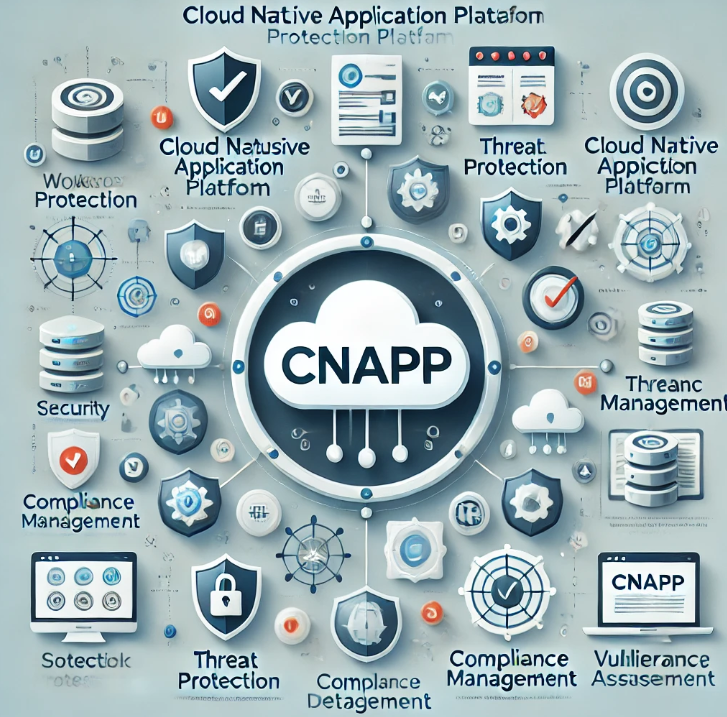
CNAPP (Cloud Native Application Protection Platform) is a relatively new and evolving concept in cloud security. It refers to a suite of integrated security tools designed to protect cloud-native applications throughout their lifecycle, from development to deployment and runtime. CNAPPs aim to address the unique security challenges associated with modern cloud-native architectures like microservices, containers, and serverless functions.

Benefits of Implementing CNAPP:

  • Unified Security Management: CNAPPs consolidate various security functionalities into a single platform, simplifying security management for cloud-native applications.
  • Improved Security Posture: By offering a comprehensive set of security tools, CNAPPs can help organizations strengthen the security posture of their cloud-native applications.
  • Shift Left Security: CNAPPs can integrate security features into the CI/CD pipeline, enabling a “shift left” security approach where security considerations are addressed from the beginning of the development process.
  • Automated Security: CNAPPs automate various security tasks, such as vulnerability scanning, threat detection, and incident response, freeing up security teams to focus on more strategic initiatives.
  • Compliance Adherence: CNAPPs can help organizations comply with security regulations and industry standards by providing features for access control, data encryption, and audit logging.
Use Cases of CNAPP:

  • Securing Containerized Applications: Many cloud-native applications leverage containers. CNAPPs offer functionalities like container image scanning for vulnerabilities, runtime security for containerized workloads, and container orchestration security.
  • Protecting Serverless Functions: Serverless functions are another popular cloud-native paradigm. CNAPPs can provide security features for serverless functions, such as code scanning for vulnerabilities and access control for serverless resources.
  • Enhancing API Security: APIs are critical components of many cloud-native applications. CNAPPs can offer functionalities for API security, including API discovery, vulnerability scanning, and API access control.
  • Microwaste Management: Microwaste refers to unused or unmaintained container images and serverless functions. CNAPPs can help identify and remove microwaste, improving security and resource efficiency.
  • Cloud Workload Protection Platform (CWPP) Integration: Some CNAPPs integrate with CWPP solutions, providing broader security coverage for cloud infrastructure and workloads alongside application security.

List of Tools and Services for CNAPP (Including Open-Source Tools):

While CNAPP is a maturing space, several vendors offer solutions that encompass various aspects of cloud-native application security. Here are some examples:

  • Aqua Security Cloud Native Platform: A comprehensive CNAPP offering that includes container security, serverless security, API security, and workload protection.
  • Palo Alto Networks Prisma Cloud: Provides a cloud native security platform with features for container security, API security, and cloud workload protection.
  • Sysdig Secure: A cloud security platform with functionalities for container security, Kubernetes security, and workload protection, applicable to securing cloud-native applications.
  • StackRox KubeArmor: Focuses on runtime security for containers and Kubernetes environments, a key component of CNAPP functionality.

Open-Source Tools:

While there isn’t a single, comprehensive open-source CNAPP solution, some open-source tools can be integrated to address specific aspects of cloud-native application security:

  • Aqua Trivy: Open-source vulnerability scanner for container images, Dockerfiles, and Kubernetes objects.
  • Falco: Open-source runtime security tool for containers, providing intrusion detection and runtime threat protection.
  • Open Policy Agent (OPA): Open-source framework for enforcing policies at different stages of the application lifecycle, relevant for securing cloud-native deployments.

List of Tools and Services for CNAPP including Open Source Tools

Here are some notable CNAPP tools and services:

  • Wiz: Offers a comprehensive platform unifying multiple security functions like container and Kubernetes security, vulnerability management, and compliance management​ (Codeless)​.
  • Prisma Cloud by Palo Alto Networks: Known for its robust features that support serverless and containerized applications, ensuring thorough cloud-native application protection​ (Codeless)​.
  • CrowdStrike Falcon Cloud Security: Integrates various security technologies for enhanced protection across cloud environments​ (Codeless)​.
  • Microsoft Defender for Cloud: Provides broad multi-cloud defenses, integrating various security technologies to offer comprehensive protection​ (Codeless)​.
  • Sysdig Secure: Combines cloud detection and response with CNAPP capabilities for extensive security coverage​ (Codeless)​.
Post Views: 1,574
Subscribe
Login
Notify of
guest
guest
0 Comments
Oldest
Newest Most Voted
Inline Feedbacks
View all comments
  • What Is a VPN? A Complete Beginner-to-Advanced Tutorial
  • How to Install, Secure, and Tune MySQL 8.4 on Ubuntu 24.04 for Apache Event MPM and PHP-FPM
  • Complete Guide to Certified Site Reliability Engineer Career
  • Certified DevSecOps Professional Step by Step
  • Certified DevSecOps Manager: Complete Career Guide
  • Certified DevSecOps Engineer: Skills, Career Path and Certification Guide
  • Step-by-Step: Become a Certified DevSecOps Architect
  • Tuning PHP 8.3 for Apache Event MPM and PHP-FPM on Ubuntu: A Complete Step-by-Step Production Guide
  • Complete Step-by-Step Guide to Configure Apache Event MPM, Create index.php, Set Up VirtualHost, and Fix Ubuntu Default Page
  • Convert XAMPP Apache to Event MPM + System PHP-FPM
  • The Gateway to System Observability Engineering (MOE)
  • How to Finetune Apache and Prove It Works: A Real-World Guide to Testing Performance, Concurrency, HTTP/2, Memory, CPU, and Security
  • Building a High-Performance Apache Event MPM + PHP-FPM + MariaDB Stack (Advanced Server Optimization Guide)
  • Master Infrastructure as Code: The Complete Hashicorp Terraform Associate Guide
  • Building a High-Performance Apache Server with Event MPM + PHP-FPM (Step-by-Step Guide)
  • Is XAMPP Safer for Production Than Using Apache and PHP as Root? 2026 Practical Guide
  • Unlock Cloud Security Expertise with Certified Kubernetes Security Specialist (CKS)
  • How to Fix wpDiscuz Not Replacing Default WordPress Comments in Block Themes
  • Complete Guide to Certified Kubernetes Application Developer Certification
  • Overview of Certified Kubernetes Administrator (CKA) Certification
  • How to Install and Configure XAMPP on Ubuntu 24 Server (Latest Version – 2026 Complete Guide)
  • Mastering the Google Cloud Professional DevOps Engineer
  • Mastering Azure Cloud Security: The AZ-500 Path
  • Why AZ-400 is Essential for Global Cloud Engineering Roles
  • Webp format is not supported by PHP installation.
  • Reconfigure PHP 8.2.12 for XAMPP WITH WebP
  • How to Fix “WebP Format is Not Supported by PHP Installation” in XAMPP/LAMPP (Complete 2026 Guide)
  • Fixing WebP Format Is Not Supported by PHP Installation in XAMPP (Ubuntu 24) – Complete Step-by-Step Guide
  • Azure Solutions Architect Advice for Senior Leads
  • Step-by-Step: Building Your First Data Pipeline on AWS

Recent Comments

  1. digital banking on Complete Tutorial: Setting Up Laravel Telescope Correctly (Windows + XAMPP + Custom Domain)
  2. SAHIL DHINGRA on How to Uninstall Xampp from your machine when it is not visible in Control panel programs & Feature ?
  3. Abhishek on MySQL: List of Comprehensive List of approach to secure MySQL servers.
  4. Kristina on Best practices to followed in .httacess to avoid DDOS attack?
  5. Roshan Jha on Git all Commands

Archives

  • March 2026
  • February 2026
  • January 2026
  • December 2025
  • November 2025
  • October 2025
  • September 2025
  • August 2025
  • July 2025
  • June 2025
  • May 2025
  • April 2025
  • March 2025
  • February 2025
  • January 2025
  • December 2024
  • November 2024
  • October 2024
  • September 2024
  • August 2024
  • July 2024
  • June 2024
  • May 2024
  • April 2024
  • March 2024
  • February 2024
  • January 2024
  • December 2023
  • November 2023
  • October 2023
  • September 2023
  • August 2023
  • July 2023
  • May 2023
  • April 2023
  • March 2023
  • February 2023
  • January 2023
  • December 2022

Categories

  • Ai
  • AI Blogging
  • AiOps
  • ajax
  • Android Studio
  • Antimalware
  • Antivirus
  • Apache
  • Api
  • API Security
  • Api Testing
  • APK
  • Aws
  • Bike Rental Services
  • ChatGPT
  • Code Linting
  • Composer
  • cPanel
  • Cyber Threat Intelligence
  • Cybersecurity
  • Data Loss Prevention
  • Database
  • dataops
  • Deception Technology
  • DeepSeek
  • Devops
  • DevSecOps
  • DevTools
  • Digital Asset Management
  • Digital Certificates
  • Docker
  • Drupal
  • emulator
  • Encryption Tools
  • Endpoint Security Tools
  • Error
  • facebook
  • Firewalls
  • Flutter
  • git
  • GITHUB
  • Google Antigravity
  • Google play console
  • Google reCAPTCHA
  • Gradle
  • Guest posting
  • health and fitness
  • IDE
  • Identity and Access Management
  • Incident Response
  • Instagram
  • Intrusion Detection and Prevention Systems
  • jobs
  • Joomla
  • Keycloak
  • Laravel
  • Law News
  • Lawyer Discussion
  • Legal Advice
  • Linkedin
  • Linkedin Api
  • Linux
  • Livewire
  • Medical Tourism
  • MlOps
  • MobaXterm
  • Mobile Device Management
  • Multi-Factor Authentication
  • MySql
  • Network Traffic Analysis tools
  • Paytm
  • Penetration Testing
  • php
  • PHPMyAdmin
  • Pinterest Api
  • Quora
  • SAST
  • SecOps
  • Secure File Transfer Protocol
  • Security Analytics Tools
  • Security Auditing Tools
  • Security Information and Event Management
  • Seo
  • Server Management Tools
  • Single Sign-On
  • Site Reliability Engineering
  • soft 404
  • software
  • SuiteCRM
  • SysOps
  • Threat Model
  • Twitter
  • Twitter Api
  • ubuntu
  • Uncategorized
  • Virtual Host
  • Virtual Private Networks
  • VPNs
  • Vulnerability Assessment Tools
  • Web Application Firewalls
  • Windows Processor
  • Wordpress
  • WSL (Windows Subsystem for Linux)
  • X.com
  • Xampp
  • Youtube
©2026 DevSecOps Now!!! | WordPress Theme: EcoCoded
wpDiscuz