
Limited Time Offer!
For Less Than the Cost of a Starbucks Coffee, Access All DevOpsSchool Videos on YouTube Unlimitedly.
Master DevOps, SRE, DevSecOps Skills!
Introduction
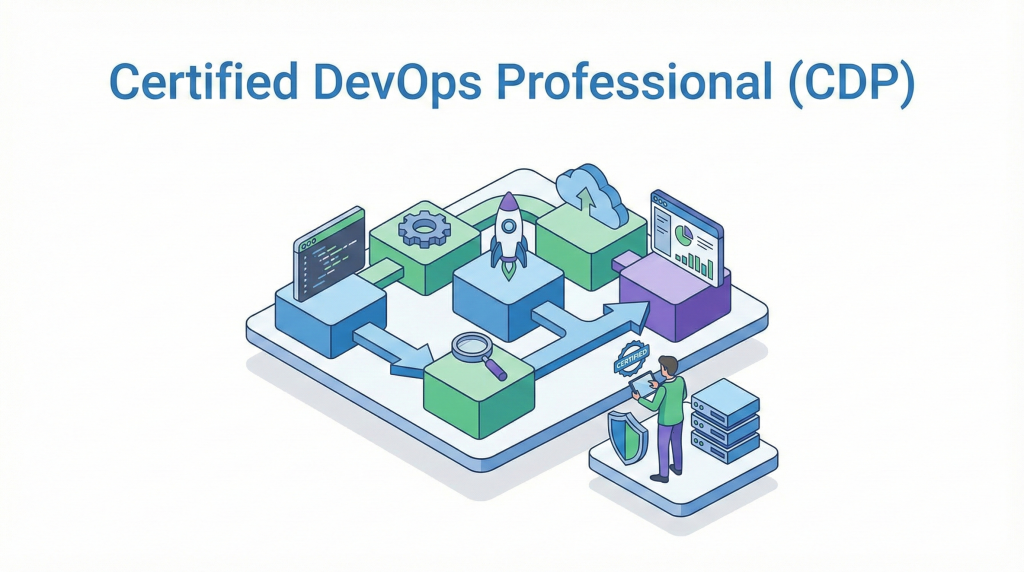
The Certified DevOps Professional (CDP) certification is designed for professionals looking to deepen their expertise in DevOps practices, tools, and methodologies. Whether you’re an engineer or manager, this certification equips you with the skills needed to implement a continuous integration and continuous delivery (CI/CD) pipeline, automation, and culture transformation in the software development lifecycle.
In this guide, we’ll cover everything you need to know about the Certified DevOps Professional certification, including the skills you’ll gain, preparation plans, common mistakes, and the best certifications to take afterward.
What is Certified DevOps Professional?
The Certified DevOps Professional (CDP) certification is a specialized program aimed at professionals looking to advance their expertise in DevOps practices. This certification focuses on automating the software development and deployment pipeline, enhancing collaboration between development and operations teams, and integrating security into the continuous integration and delivery process. CDP is recognized globally as a benchmark for professionals aspiring to master the tools, methodologies, and cultural aspects of DevOps, equipping you to drive operational efficiency and accelerate software delivery.
Who Should Take It?
The Certified DevOps Professional (CDP) certification is ideal for:
- DevOps Engineers: Those who want to deepen their understanding of DevOps tools and methodologies.
- Software Engineers: Engineers looking to implement DevOps in their software development lifecycle.
- Platform Engineers: Professionals who work with platforms and cloud infrastructures and want to enhance their knowledge in continuous delivery.
- IT Operations Managers: Managers who want to transition their teams to a DevOps-driven culture.
- Engineering Managers: Leaders who want to understand the technicalities of DevOps to make strategic decisions in their teams’ DevOps adoption.
- Anyone transitioning to DevOps: If you are considering a career shift into the field of DevOps or related areas such as AIOps, DataOps, or FinOps, this certification is perfect for you.
Skills You’ll Gain
By completing the Certified DevOps Professional certification, you will gain valuable skills, including:
- Automation of DevOps Pipelines: Learn to automate repetitive tasks such as testing, deployment, and integration using tools like Jenkins, Docker, and Kubernetes.
- Continuous Integration & Continuous Delivery (CI/CD): Master the techniques and tools for building, testing, and deploying software rapidly and reliably.
- Version Control: Get hands-on experience with version control tools like Git and GitHub for managing code changes.
- Infrastructure as Code (IaC): Learn how to manage and provision computing infrastructure through code using tools like Terraform and Ansible.
- Monitoring and Logging: Understand the best practices for monitoring your applications and infrastructure and using logging systems to track issues and improve performance.
- Security Integration: Implement security practices within the DevOps pipeline, emphasizing the DevSecOps approach.
- Collaboration: Enhance collaboration between development, operations, and security teams to improve workflow efficiency.
Real-World Projects You’ll Be Able to Do
Upon earning the Certified DevOps Professional certification, you will be equipped to execute several real-world projects, such as:
- Setting up a Full CI/CD Pipeline: Automate the testing and deployment of applications using tools like Jenkins, GitLab CI, or CircleCI.
- Implementing Infrastructure as Code (IaC): Automate the provisioning of infrastructure using tools like Terraform, Puppet, or Chef.
- Cloud Integration: Configure cloud environments (AWS, Azure, GCP) for DevOps pipelines, including automated scaling and monitoring.
- Integrating Security into DevOps (DevSecOps): Use tools such as Snyk, Aqua Security, or Twistlock to integrate security scanning into the DevOps pipeline.
- Monitoring & Performance Optimization: Set up continuous monitoring for your systems with tools like Prometheus, Grafana, or the ELK Stack and analyze performance bottlenecks.
- Automated Testing: Implement automated testing processes using Selenium, JUnit, and other testing frameworks integrated into CI/CD pipelines.
Preparation Plan
7–14 Days
- Initial Study: Focus on understanding the core DevOps principles like CI/CD, automation, and version control systems.
- Practice: Set up a basic pipeline with GitHub Actions or Jenkins, and automate simple tasks.
- Resources: DevOpsSchool’s tutorials and community forums.
30 Days
- Study DevOps Tools: Deep dive into tools like Docker, Kubernetes, Jenkins, Git, Terraform, and others.
- Projects: Begin implementing more advanced pipelines and automation tasks.
- Mock Exams: Start practicing with mock exams to get a feel for the test.
60 Days
- Master Advanced Concepts: Explore DevSecOps, monitoring, security integration, and performance tuning.
- Real-World Projects: Implement a fully automated CI/CD pipeline, using multiple tools and integrate security measures.
- Final Preparation: Take practice tests, review each section, and solidify your knowledge.
Common Mistakes
- Skipping Fundamentals: Missing out on foundational knowledge can make advanced concepts harder to grasp.
- Not Practicing Enough: Hands-on experience is crucial. Reading alone won’t help in a practical certification.
- Ignoring Security: DevSecOps is a critical part of the DevOps lifecycle—don’t neglect security best practices.
- Not Staying Up to Date: DevOps is rapidly evolving. Stay current with new tools, methodologies, and practices.
Best Next Certifications After This
After achieving the Certified DevOps Professional certification, here are the next steps in your career:
Same Track:
- Certified DevOps Architect (CDA): Focuses on designing scalable and efficient DevOps architectures.
- Certified Kubernetes Administrator (CKA): Dive deeper into Kubernetes for container orchestration.
Cross-Track:
- Certified Cloud Practitioner (AWS/Azure/GCP): Transition into cloud platforms and services.
- Certified Security Engineer: Dive deeper into DevSecOps and security best practices.
Leadership:
- Certified DevOps Leader (DOL): For those aspiring to take on a leadership role in DevOps transformation initiatives.
- Certified Cloud Architect (AWS/Azure): For those looking to move into cloud architecture.
Choose Your Path
The Certified DevOps Professional (CDP) opens the door to various specializations within the DevOps ecosystem. Depending on your interests and career goals, you can follow these learning paths:
- DevOps: Focus on automation, continuous integration, and software delivery pipelines.
- DevSecOps: Emphasize the integration of security practices into the DevOps lifecycle, making security a core component of the development pipeline.
- SRE (Site Reliability Engineering): Learn to enhance the reliability, scalability, and performance of infrastructure and applications.
- AIOps/MLOps: Dive into the integration of artificial intelligence and machine learning with DevOps practices for data-driven insights and automation.
- DataOps: Specialize in the automation and management of data pipelines to ensure efficient data delivery and governance.
- FinOps: Focus on optimizing cloud spending and financial operations in the DevOps lifecycle.
Role → Recommended Certifications
| Role | Recommended Certifications |
|---|---|
| DevOps Engineer | CDP, CKA, CDA |
| SRE | CDP, CKA, Cloud Certifications |
| Platform Engineer | CDP, CKA, Terraform |
| Cloud Engineer | AWS Certified Solutions Architect, CDP |
| Security Engineer | DevSecOps, CDP |
| Data Engineer | DataOps, CDP |
| FinOps Practitioner | FinOps Certified Practitioner, CDP |
| Engineering Manager | DOL, CDA, CDP |
FAQs
1. How difficult is the Certified DevOps Professional exam?
- The exam is moderately challenging, designed for professionals with hands-on experience. It covers a wide range of topics from automation to security.
2. What are the prerequisites for the CDP certification?
- A basic understanding of software development and IT operations is required. Experience with version control systems (e.g., Git) and CI/CD tools will be beneficial.
3. How long does it take to prepare for the CDP exam?
- Preparation time can vary based on your experience. On average, 30 to 60 days is recommended to thoroughly cover all topics.
4. What is the sequence of certifications in DevOps?
- Start with foundational certifications like Certified DevOps Engineer and then move on to advanced certifications like Certified DevOps Architect (CDA) or Certified Kubernetes Administrator (CKA).
5. What value does the CDP certification provide?
- The certification validates your ability to automate pipelines, integrate security, and optimize processes, making you an essential asset to any organization practicing DevOps.
6. What is the career outcome after obtaining the CDP certification?
- After completing the certification, you can expect opportunities as a DevOps Engineer, DevOps Architect, SRE, or in leadership roles within DevOps initiatives.
7. How often should I renew the CDP certification?
- Typically, certifications need to be renewed every 2–3 years to ensure you stay current with new tools and practices in the industry.
8. What resources should I use to prepare for the exam?
- Utilize online courses from DevOpsSchool, practice with hands-on labs, and read relevant DevOps books and blogs.
Institutions Providing Training for CDP Certification
- DevOpsSchool: Offers comprehensive training, real-world projects, and expert mentorship.
- Cotocus: Provides DevOps certifications with industry-expert guidance and practical sessions.
- ScmGalaxy: Known for its DevOps and Kubernetes training programs, tailored to certification success.
- BestDevOps: Offers practical training sessions and certification prep for DevOps professionals.
- DevSecOpsSchool: Specializes in security-focused DevOps training for security professionals.
- SRESchool: Focuses on Site Reliability Engineering principles and practices for DevOps.
- AIOpsSchool: Offers training in AI-driven operations and automation for DevOps professionals.
- DataOpsSchool: Provides specialized training for data pipeline automation and management.
- FinOpsSchool: Focuses on optimizing cloud costs through FinOps practices for DevOps teams.
Conclusion
The Certified DevOps Professional (CDP) certification is a gateway to mastering the essential skills needed to implement DevOps in real-world environments. Whether you’re looking to enhance your technical abilities in automation, collaboration, or security, the CDP certification provides a comprehensive learning experience. After achieving this certification, you can explore specialized tracks such as DevSecOps, SRE, AIOps, DataOps, and FinOps, positioning yourself for advanced roles and leadership opportunities. Start your DevOps journey today and unlock the potential for growth in this rapidly evolving field.