Limited Time Offer!
For Less Than the Cost of a Starbucks Coffee, Access All DevOpsSchool Videos on YouTube Unlimitedly.
Master DevOps, SRE, DevSecOps Skills!
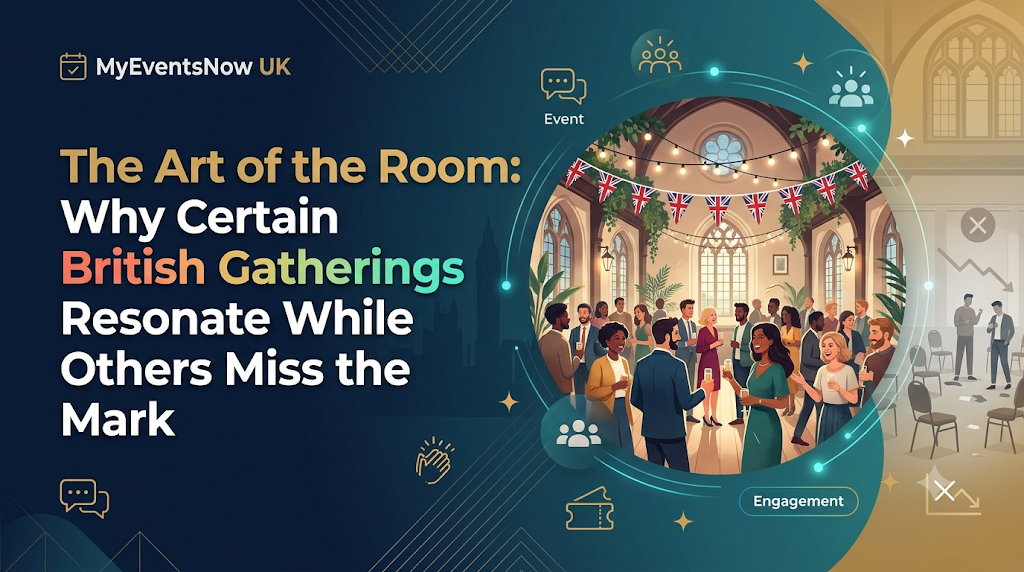
Stand outside an old brick venue along the docks in Newcastle on a blustery Friday evening, and you can tell within ninety seconds whether the night will be a triumph or an ordeal.
Down by the quay, one entrance has degenerated into a slow, sodden bottleneck. Patrons pull their coats tight against the chill, squinting at battery-drained phones while a steward taps repeatedly at an unresponsive handheld device. A mile inland, near the station, another room absorbs visitors like water into sand. Guests cross from the raw air into a low, warm hum of ambient sound, coatless and holding a drink before they have even consciously realised they are through the door.
On paper, both line-ups looked comparable. Both organisers booked well-reviewed talent, ran digital promotions, and set identical admission fees.
Yet one evening feels like a series of administrative obstacles set to music, while the other feels like an effortless community milestone.
The distinction rarely comes down to star power or production budgets. Long after the lights go up, people do not measure an evening by the wattage of the stage rig. They measure it by how comfortably the experience respected their attention, their comfort, and their limited leisure time. Staging an event that endures requires more than selling access; it demands an understanding of human pacing, friction points, and the understated craft of environmental hospitality.
1. The Decision Threshold: Lowering the Friction of Going Out
Every memorable live experience begins miles away from the venue, typically across the kitchen table or on an evening commuter train, when an individual decides whether leaving the house is actually worth the hassle.
The Mathematics of Leisure Hesitation
For most working people across urban hubs like Sheffield, Cardiff, or Leeds, an evening out represents a real investment of social energy and financial capital. When someone opens a browser and queries events near me on a whim, they are not simply browsing a calendar—they are evaluating risk.
The slightest hint of administrative confusion can kill that impulse:
- Is the venue accessible from the primary train lines, or does it require a convoluted sequence of late-night buses?
- Are the door timings realistic, or will there be two hours of dead air before anything happens?
- Will the venue cater to standard dietary needs, non-drinkers, or mobility requirements?
When these answers are obscured by over-designed graphics or missing information, potential attendees back out. Clear, reliable details provide the emotional permission people need to commit their evening.
The Transaction as the First Handshake
The booking process is often treated as a cold piece of accounting, yet it serves as the host’s opening gesture of welcome. If a buyer is greeted by sudden service fees at the final payment screen, mandatory account setups, or unresponsive forms, a layer of irritation settles over the entire outing before it has even started.
Modern online event ticket booking UK services succeed when they make that exchange feel completely invisible. Straightforward ticket options, clear refund or transfer terms, and instant passes delivered straight to a smartphone build baseline goodwill. An organiser who respects a guest during checkout signals that they will respect them when they arrive on site.
2. Spatial Geometry and Sensory Pacing: How Rooms Command Focus
A live gathering is an exercise in acoustic and physical pressure. The dimensions of a hall, the balance of light, and the density of human bodies dictate how people interact far more than any spoken announcement from a podium.
+-------------------------------------------------------------------------+
|                  THE SOCIAL DYNAMICS OF PHYSICAL SPACE                  |
+-------------------------------------------------------------------------+
|  Concentration   | Clustered seating and focused lighting draw people   |
|                  | together, banishing awkward self-consciousness.      |
+------------------+------------------------------------------------------+
|  Circulation     | Broad walkways, visible bars, and uncluttered exits  |
|                  | stop crowd stagnation before it starts.              |
+------------------+------------------------------------------------------+
|  Acoustic Relief | Dedicated quiet pockets allow guests to converse    |
|                  | without shouting over continuous high volume.        |
+------------------+------------------------------------------------------+
The Psychology of Empty Air
An oversized room is the natural enemy of collective momentum. Take two hundred engaged individuals and place them inside a seven-hundred-capacity Victorian civic hall in Edinburgh, and they will invariably stand four deep around the edges, speaking in guarded tones. Place that exact same group inside a snug, subterranean space with low ceilings, and conversation immediately spills over into laughter and debate.
Experienced venue programmers manipulate visual horizons to prevent dead space:
- Hanging acoustic baffle curtains to shrink cavernous conference rooms.
- Moving furniture inward to form natural conversation circles rather than passive, church-pew rows.
- Dimming perimeter lighting to train the eye toward the stage, visually uniting the crowd.
Avoiding Sensory Burnout
A common mistake among newer hosts is mistaking constant volume for vitality. Running continuous, ear-splitting audio through a six-hour gathering or packing an industry summit with uninterrupted back-to-back panel discussions does not excite an audience—it numbs them.
Memorable gatherings are structured around rhythmic pauses:
- The Entry Settling Period: Gentle background music and moderate ambient light that let people acclimatise, meet companions, and grab a beverage without shouting.
- The Dynamic Ascent: A clear shift in tone, bringing house lights down and focusing attention as the primary session or performance commences.
- The Peak Interval: The emotional or intellectual climax of the programme, kept focused and punchy rather than drawn out.
- The Unhurried Dissolve: Ample transition time that permits attendees to linger, discuss what they witnessed, and conclude the night on their own terms.
3. Behind the Curtain: Replacing Scramble with Cohesion
Every seamless, seemingly spontaneous evening relies on disciplined backstage coordination. Conversely, when an event stumbles, it is almost always because the team behind it treated core administrative tasks as afterthoughts.
The Cost of Disconnected Operations
A surprising number of event teams across the UK still attempt to steer productions using a patchwork of incompatible software tools:
- Ticket sales recorded in one web dashboard.
- Attendee lists exported manually into conflicting spreadsheets.
- Door staff relying on paper printouts or personal phone cameras.
- Email updates sent through personal inboxes with mismatched subject lines.
The inevitable consequence is friction: queues spilling onto wet pavements, duplicate entries, confused guests, and harried staff who have no time to be hospitable because they are busy troubleshooting errors.
Adopting unified event management software UK systems eliminates this chaos. When registrations, inventory thresholds, ticket verification, and attendee messaging exist within a shared operational pipeline, staff can stop panicking over spreadsheets and start focusing on the actual people in the room.
Fragmented Management                   Integrated Pipeline
---------------------                   -------------------
[Third-Party Sales Page]                 [ Central Hub ]
           |                                    |
[Manual CSV File Transfers]             +-------+-------+
           |                            |       |       |
[Separate Email Service]             Real-Time Mobile Instant
           |                         Sync      Gates  Messaging
[Paper Lists at the Door]               +-------+-------+
Freeing the Host to Host
Promoting cultural, civic, or business gatherings is emotionally demanding work. Creators do not launch projects simply to spend their evenings troubleshooting registration errors or manually updating contact lists.
When organisers decide to list your event online UK channels, the operational machinery must lighten their workload, not compound it. Flexible ticketing options—like early-bird discounts, student admissions, or multi-day passes—should be easy to set up and monitor on the go.
Relying on a reliable event ticketing platform UK promoters can eliminate manual list management, verify arrivals on smartphones in seconds, and keep the entrance moving quickly regardless of the weather.
4. Regional Realities: Why Local Context Trumps Blanket Formulas
A gathering in the UK cannot succeed if it ignores the geography, transport habits, and social codes of its specific location. What works effortlessly in central London often falls completely flat when replicated in Liverpool or Belfast.
| UK Region & City | Local Behavioural Pattern | Operational Priority |
| Greater London | Enormous event density; heavy reliance on tube and suburban rail timetables. | Early or strictly managed finish times so guests catch midnight transit connections. |
| The North West (Manchester & Liverpool) | Strong sense of community ownership; deep musical and grassroots pride. | Collaborations with regional independent food producers and homegrown creatives. |
| Scotland (Glasgow & Edinburgh) | Passionate arts audiences; distinct seasonal shifts and festival calendars. | Avoiding clashes with seasonal festival congestion; robust cold-weather provisions. |
| The Midlands (Birmingham & Coventry) | Widely spread population centres; diverse cultural communities. | Providing clear regional driving and parking guides alongside broad alcohol-free options. |
| Wales & South West (Cardiff & Bristol) | High priority placed on sustainability, independent venues, and local character. | Transparent environmental credentials; intimate, non-corporate venue spaces. |
In the capital, competing against thousands of concurrent events in London requires razor-sharp positioning. Audiences have virtually unlimited leisure options; they will only travel across zones if an event offers a distinctive, authentic perspective they cannot find closer to home.
Outside London, community ties dictate longevity. Audiences in cities such as Newcastle, Nottingham, or Glasgow reward authenticity. Promoters who work alongside local suppliers, independent caterers, and regional performers build an enduring reservoir of goodwill that slick, fly-in productions rarely achieve.
5. Reclaiming Discovery from Algorithmic Noise
The ways in which the public uncovers live experiences have fractured over recent years. Social platforms that once served as open community boards have turned into pay-to-play arenas saturated with sponsored posts and algorithmic video feeds.
ALGORITHMIC SOCIAL CHANNELS             DEDICATED SEARCH DIRECTORIES
---------------------------             ----------------------------
Passive, distracted scrolling.          Active, intentional browsing.
Low purchase intent.                    High intent to attend and purchase.
High impressions, poor conversions.     Direct discovery with fewer distractions.
Dependent on paid reach.                Organised by geography and interest.
The Deception of Social Reach
Promoters frequently waste hundreds of pounds boosting social media posts, celebrating high impression counts, only to look at an empty room on opening night. Scrolling past a photo on a smartphone while waiting for a bus is a passive action; it rarely translates into the conscious decision to purchase admission, plan a route, and show up.
The Return to Intent-Driven Search
Because social feeds feel increasingly cluttered, audiences are turning back to dedicated directories and curated hubs. A visitor browsing a specialised platform is not looking to be passively entertained by a video clip; they are looking for something concrete to do this weekend.
For independent producers seeking to sell event tickets online UK services that unite varied leisure categories—ranging from regional culinary showcases to live jazz performances and business seminars—offer immense cross-promotional value. They place an event directly in front of people who are actively planning their leisure time.
In this context, independent hubs like MyEventsNow UK serve a vital civic role, connecting small venues, passionate curators, and major event spaces with audiences eager to experience the rich cultural life of towns and cities across Britain.
6. Practical Blueprints: Turning Theory into Floor-Ready Tactics
To see how these principles function on the ground, consider three typical production challenges and the deliberate steps required to solve them.
Scenario A: The Half-Day Professional Symposium
The Challenge: A professional institute hosts an afternoon summit for eighty specialists in central Birmingham. The main risk is the predictable mid-afternoon drop in energy and the awkwardness of unstructured networking.
The Solution:
- Instant Digital Registration: Deploying streamlined event registration software UK attendees can use to scan in with a single QR code, keeping the reception area clear of paper queues.
- Cabaret Layouts: Ditching parallel rows of plastic chairs in favour of circular tables of six, equipped with water carafes, notepads, and clear sightlines to the stage.
- Structured Conversational Windows: Limiting formal presentations to twenty minutes, followed immediately by five-minute discussion prompts at each table, turning passive listeners into active participants.
- Curated Takeaways: Sending a clean, one-page digital summary of key speaker points to delegates’ inboxes the moment the closing remarks finish.
Scenario B: The Indie Music Showcase
The Challenge: A local promoter is booking four emerging bands at an intimate venue in central Glasgow, aiming to build strong pre-sales rather than gambling on unpredictable walk-ups at the door.
The Solution:
- Tiered Supporter Access: Offering an early-bird ticket tier that includes a physical, screen-printed gig poster or a voucher for a local record shop.
- Direct Band Incentives: Providing unique ticket links to each performing act so they can track their own sales and receive direct bonuses for driving turnout.
- Strict Stage Turnarounds: Keeping interval times to a disciplined twenty minutes, using a carefully curated playlist that matches the evening’s musical identity rather than random commercial tracks.
- Punctual Finish: Guaranteeing the headline act concludes twenty minutes before the final suburban rail departures, giving attendees an anxiety-free journey home.
Scenario C: The Suburban Weekend Makers’ Market
The Challenge: An independent artists’ guild runs a two-day autumn craft and design fair in a community hall in Bristol, needing to control footfall density and eliminate entry bottlenecks.
The Solution:
- Timed Entry Windows: Staggering ticket slots across morning and afternoon windows to smooth out the flow of visitors and prevent uncomfortable corridor jams.
- Loop Wayfinding: Designing a single, natural circular pathway past every vendor stall, leading inevitably to an open seating area with coffee and baked goods.
- Mobile Gate Management: Equipping door stewards with simple phone-scanning apps to check tickets in seconds, keeping crowds out of unpredictable weather.
7. The Emerging Cultural Current: Changing Expectations
The habits of British audiences have evolved significantly over recent years. Venues and promoters who cling to old operational habits risk alienating an increasingly discerning public.
LEGACY PRACTICES                        MODERN EXPECTATIONS
----------------                        -------------------
Late midnight finishes         --->     Curfew-friendly, twilight scheduling
Booze-heavy bar culture        --->     Thoughtful alcohol-free selections
Complicated, rigid ticketing   --->     Seamless digital transfers & transparency
Basic step-free access only    --->     Full sensory & environmental disclosures
The Twilight Shift
The presumption that an evening out must run past midnight is fading fast. Driven by rising travel costs, tighter train schedules, and an increased cultural focus on weekday wellness, audiences are actively seeking out earlier starts.
Venues programming live sets from 19:30 to 22:00 frequently see better attendance figures and higher secondary spending. Guests enjoy a full, immersive cultural outing, support the bar, and still make it home for a sensible night’s rest.
Accessibility as a Holistic Standard
Welcoming all audiences requires moving past basic legal minimums. True accessibility covers sensory and logistical clarity:
- Sensory Awareness: Providing upfront notes about strobe lighting, sudden sound spikes, and the presence of quiet areas for neurodivergent visitors.
- Visual Guides: Sharing photos of the entrance, seating layout, and facilities online so nervous or disabled guests can plan their visit with confidence.
- Straightforward Companion Passes: Making companion admissions simple to arrange without requiring intrusive administrative hurdles.
When an organiser addresses these details, they do not just avoid complaints; they cultivate an extraordinarily loyal audience base that returns time and again.
The Core Obligation
Running any live event is ultimately an exercise in radical hospitality. It is a quiet promise made to an audience that if they leave their homes, brave the elements, and give you their evening, their time will be met with care, imagination, and respect.
Every operational detail serves that central compact:
- The ease with which a curious person finds upcoming events in the UK and confirms their spot.
- The welcoming attitude of the team at the door.
- The acoustic balance that lets an audience hear every nuance without strain.
- The considerate scheduling that sends them back into the night fulfilled rather than drained.
Whether you are putting together an experimental art opening in Manchester, a business symposium in Leeds, or a headline performance in London, enduring success is never an accident of luck. It is built in the background, detail by detail, creating spaces where people can set aside the friction of everyday life and share a memorable experience together.
