Limited Time Offer!
For Less Than the Cost of a Starbucks Coffee, Access All DevOpsSchool Videos on YouTube Unlimitedly.
Master DevOps, SRE, DevSecOps Skills!
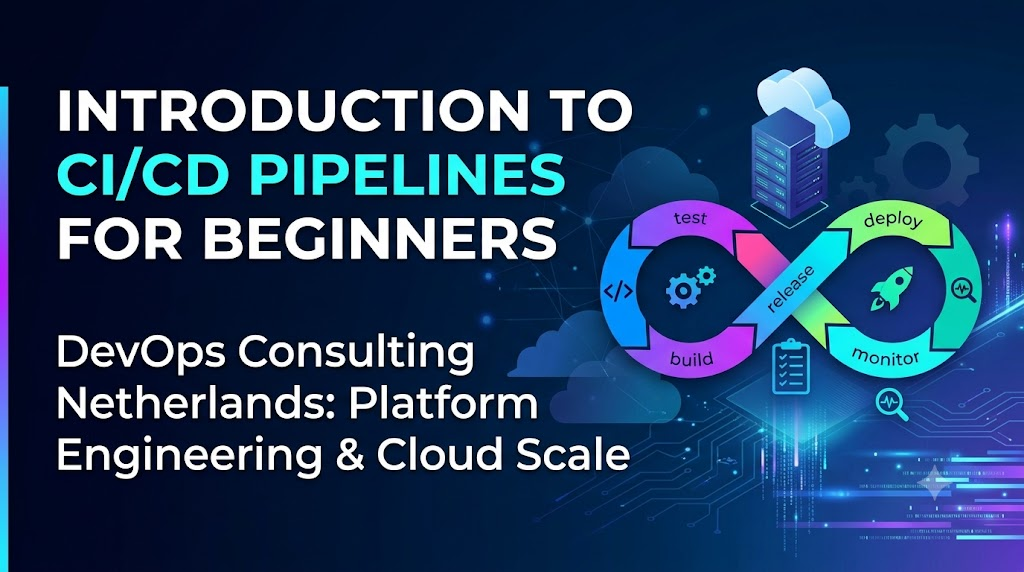
Walk through the engineering floors of scale-ups and established enterprises across the Randstad or the high-tech campuses of North Brabant, and a common paradox emerges: companies employ brilliant software engineers, yet shipping an incremental update to production still feels like defusing a bomb.
The modern Dutch IT landscape comes with its own distinct pressures. Strict data governance directives, such as NIS2 and DORA, demand absolute transparency. Simultaneously, soaring multi-cloud invoices squeeze operational margins, and recruiting elite systems engineers remains fiercely competitive across Western Europe.
When delivery pipelines begin to stutter, the default reflex is often to stitch together another commercial SaaS tool or mandate yet another layer of sign-offs. In practice, this only layers bureaucracy over fragility. Building a truly resilient delivery lifecycle requires clean platform architecture, continuous guardrails, and an engineering culture rooted in shared ownership. For organizations aiming to make this leap without stalling current sprint commitments, partnering with established DevOps Consulting Netherlands providers has become the go-to path for designing rock-solid, production-ready ecosystems.
Anatomy of the Modern Delivery Snag
Software velocity rarely slows down because of poor coding skills. It grinds to a halt within the operational “in-between”—the fragmented territory between a merged pull request and a running container. In most enterprise environments, friction concentrates around four key areas:
[ Developer Commit ]
         │
         ├──► (1) Pipeline Disarray: Inconsistent build environments & bespoke scripts
         │
         ├──► (2) The Compliance Wall: Manual audits halting deployments at the 11th hour
         │
         ├──► (3) Cluster Instability: Unmanaged configuration drift in production
         │
         └──► (4) Invisible Cloud Spend: Unowned infrastructure driving up monthly bills
- Platform Friction and Cognitive Drag: When product engineers are forced to spend their afternoons debugging ingress routes or writing custom Helm charts from scratch, core product innovation grinds to a halt.
- Late-Phase Compliance Roadblocks: In a regulatory climate governed by European privacy and operational resilience mandates, waiting until the end of a sprint to run vulnerability checks creates massive release delays.
- Cluster Sprawl and Configuration Drift: It is relatively easy to bootstrap a cluster for a proof of concept; it is much harder to keep dozens of production namespaces uniform, patched, and observable over multi-year lifecycles.
- Cloud Billing Blindspots: The flexibility of on-demand cloud infrastructure is a double-edged sword. Without strict tagging strategies and automated lifecycle policies, orphan volumes and over-provisioned nodes quietly drain IT budgets.
The Four Pillars of a Production-Ready Operating Model
Transforming an engineering organization from constant firefighting to predictable, quiet releases requires moving away from ad-hoc operational scripts toward structured platform disciplines.
+--------------------------------------------------------------------------+
|                  Modern Enterprise Platform Architecture                 |
+---------------------+-----------------------------+----------------------+
| Core Discipline     | Primary Objective           | Tactical Execution   |
+---------------------+-----------------------------+----------------------+
| Platform Eng.       | Maximize developer focus    | Golden paths & IDPs  |
| Continuous Security | Eradicate release-day audits| Shift-left policy    |
| Applied SRE         | Systematic system stability | SLIs, SLOs & budgets |
| Active FinOps       | Predictable infrastructure  | Cost-aware topology  |
+---------------------+-----------------------------+----------------------+
1. Internal Developer Platforms & “Paved Paths”
Top-performing engineering teams treat internal developer platforms as core products. Instead of requiring every team to architect its own deployment pipeline, the platform team delivers pre-configured, tested “paved paths.” Developers consume infrastructure, secrets, and telemetry through simple, self-serve interfaces, allowing them to release safely without needing a deep background in systems administration.
2. Shifting from Gatekeeping to Policy-as-Code
Security should never feel like a bureaucratic checkpoint. By shifting DevSecOps practices into the developer’s normal workflow, compliance validation happens automatically on every push. Embedding linters, dependency vulnerability scans, and policy-as-code assertions into CI checks means security issues are flagged and corrected within minutes of being written.
YAML
# Enforcing mandatory team ownership and cost-center metadata
apiVersion: kyverno.io/v1
kind: ClusterPolicy
metadata:
  name: require-workload-governance
spec:
  validationFailureAction: Enforce
  rules:
    - name: check-workload-labels
      match:
        resources:
          kinds:
            - Deployment
            - StatefulSet
      validate:
        message: "Workloads must define 'team-owner' and 'cost-center' tags."
        pattern:
          metadata:
            labels:
              team-owner: "?*"
              cost-center: "?*"
3. Establishing SRE Baselines
System uptime cannot be guaranteed by good intentions alone. Site Reliability Engineering replaces subjective debates with empirical metrics. By defining precise Service Level Indicators (SLIs) and Service Level Objectives (SLOs), leadership establishes an explicit “error budget.” When availability dips, automated policies trigger a shift in engineering priorities from feature delivery back to system resilience and technical debt remediation.
4. Cost-Conscious Architecture via FinOps
Cloud economics shouldn’t be confined to an end-of-quarter accounting audit. By instituting proactive FinOps practices, teams gain direct visibility into the financial footprint of their architectures. Correlating pod resource requests with actual utilization enables automated node rightsizing, spot instance adoption for non-critical queues, and team-level accountability for cloud consumption.
Maintaining Sanity Across Enterprise Kubernetes
For modern distributed applications, container orchestration remains the engine under the hood. However, keeping production clusters resilient over time demands rigorous operational governance.
[ Version Control (Git) ] ──(Continuous Reconciliation)──► [ Production Cluster ]
       Single Source of Truth                               Automated Sync & Drift Detection
To prevent production environments from drifting away from known-good baselines, forward-thinking organizations adopt declarative GitOps workflows. Treating Git as the absolute single source of truth for all cluster manifests, network policies, and runtime configurations turns disaster recovery from a days-long recovery mission into a fast, audited rollback.
Essential rules for stable production clusters:
- Declare compute boundaries universally: Workloads running without explicit CPU and memory boundaries are liabilities waiting to trigger node-level kernel panics during sudden traffic surges.
- Adopt zero-trust network segmentation: Enforce default-deny network policies across namespaces. An exposed front-end microservice should never possess unrestricted network visibility into private back-end datastores.
- Scale against business metrics: Move beyond simplistic CPU thresholds by using event-driven tools to dynamically autoscale workloads based on actual queue depths and traffic velocity.
Building Long-Term Delivery Strength with DevOpsSchool.nl
Navigating cloud platform overhauls, compliance mandates, and automated orchestration while maintaining sprint commitments is a major organizational challenge. Attempting a comprehensive platform rebuild in isolation often pulls core engineering staff away from the critical software that drives your business.
This is where bringing in external domain expertise creates immense leverage. Assisting engineering organizations throughout the Netherlands and across Europe, DevOpsSchool.nl provides strategic consulting, hands-on platform engineering, and deep capability development designed for modern enterprise realities.
Whether your technical leadership needs high-level Kubernetes Consulting Services to stabilize multi-tenant clusters, Site Reliability Engineering Consulting to implement clear operational SLOs, or DevSecOps Consulting Services to embed continuous compliance directly into release cycles, their practitioners collaborate directly alongside your teams.
Crucially, long-term velocity depends on internal capability. Through targeted Corporate DevOps Training and advanced infrastructure workshops, DevOpsSchool.nl ensures that your in-house engineers build the deep, practical confidence needed to run, maintain, and evolve their platforms long after the engagement concludes.
A Realistic Roadmap for Modernizing Your Delivery Stack
Overhauling an enterprise platform is an incremental journey rather than an overnight flip of a switch. Breaking the transition into structured phases ensures continuous delivery while building lasting foundations:
| Phase | Strategic Objective | Concrete Deliverables | Target Metric |
| Phase 1: Baseline Audit | Uncover points of friction | CI/CD mapping, security posture audit, IaC review | Deployment Lead Time |
| Phase 2: Platform Foundation | Standardize core workflows | Declarative GitOps pipelines, baseline IaC templates | Release Cadence |
| Phase 3: Resiliency & Security | Embed proactive controls | Policy-as-code gates, automated SRE error budgeting | Mean Time to Recovery (MTTR) |
| Phase 4: Operational Scale | Drive efficiency and autonomy | Granular cost attribution, team-wide upskilling | Infrastructure Cost per User |
Frequently Asked Questions
Why choose external consulting over simply hiring additional in-house platform engineers?
Recruiting top-tier infrastructure talent across Europe often takes months, during which delivery timelines stall. Specialist consultants step in immediately to diagnose systemic issues, lay down battle-tested platform foundations, and simultaneously train your existing team—giving you immediate architectural acceleration while cultivating internal long-term ownership.
How does automated DevOps streamline compliance with EU frameworks like NIS2 and DORA?
Manual compliance reviews create friction and invite human oversight. Automated pipelines turn regulatory requirements into executable code. By signing artifacts, enforcing policy-as-code, scanning dependency trees, and recording cryptographically verifiable build trails, your organization remains audit-ready without slowing release velocity.
At what point should an organization invest in formal FinOps?
The moment multiple product squads manage cloud resources autonomously. Establishing automated tagging hierarchies and budget visibility early prevents minor inefficiencies from turning into structural budget drains as traffic and infrastructure grow.
Taking Your Next Step
Transforming your delivery lifecycle is not about blindly following industry hype; it is about building a system that allows developers to deploy high-quality software safely, quickly, and predictably.
If your leadership team is currently evaluating its deployment strategy, planning an enterprise-wide cloud migration, or looking to upskill its internal engineering talent, explore the tailored advisory and training pathways at DevOpsSchool.nl to set your platform modernization on the right track.
