Limited Time Offer!
For Less Than the Cost of a Starbucks Coffee, Access All DevOpsSchool Videos on YouTube Unlimitedly.
Master DevOps, SRE, DevSecOps Skills!
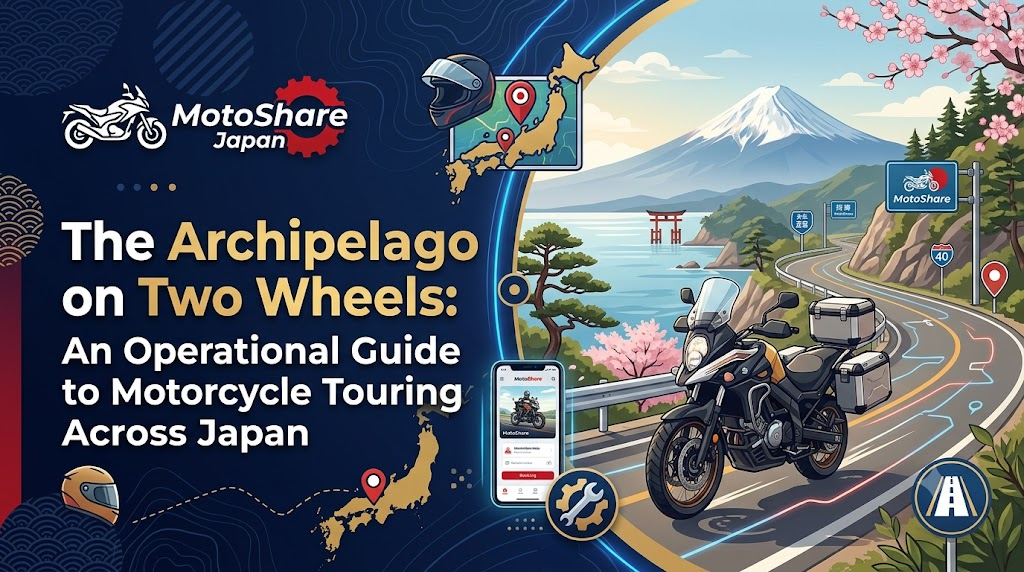
Relying solely on express rail systems keeps even adventurous travelers confined to a predictable corridor of sprawling train terminals and neon-lit avenues. Yet Japan’s most memorable topography—from mist-shrouded cedar forests to high volcanic ridges and secluded fishing outposts—lies completely out of reach of train tracks. Digital booking platforms like MotoShare Japan have eliminated the historical friction of organizing a cross-country ride, allowing independent travelers to browse neighborhood fleets, compare chassis sizes, and confirm reservations well ahead of departure.
Trading train tickets for a handlebar view turns a standard vacation into an extraordinary overland expedition. However, executing a long-distance run across Honshu and beyond demands far more than basic enthusiasm; it requires absolute licensing compliance, informed vehicle selection, and a firm grasp of local transit systems.
The Legal Groundwork: International Licensing and Permits
Operating a motor vehicle on Japanese roads involves precise administrative compliance. Japanese traffic patrols treat licensing discrepancies as criminal matters rather than administrative oversights, meaning paperwork must be verified down to the letter before any shop releases a bike.
The Two Regulatory Entry Paths
Depending on which sovereign government issued your home driving credential, you must arrive with one of two distinct documentation profiles:
- The 1949 Geneva Convention Track: Riders from participating countries must produce their physical home driver’s license alongside an International Driving Permit (IDP) issued strictly under the 1949 Geneva framework. The permit must show an authorized “Category A” stamp for two-wheelers. Documents issued under the 1968 Vienna Convention carry zero legal weight in Japan.
- The Authorized Translation Agreement: Travelers holding licenses from designated partner jurisdictions—namely France, Germany, Switzerland, Belgium, Monaco, and Taiwan—cannot rely on a standard IDP. Instead, the law requires their original domestic card accompanied by an official Japanese translation certified by the Japan Automobile Federation (JAF) or their respective home embassy inside Japan.
Both avenues remain valid for up to one calendar year from the date of entry, provided your passport displays an active temporary visitor stamp. Showing up with digital scans, unauthorized third-party translations, or car-only credentials leads to an immediate booking cancellation at the shop counter.
Machine Selection: Aligning Engine Size With Terrain
Motorcycles in Japan are categorized into formal displacement brackets. These government-defined tiers dictate expressway access, road tax brackets, and how easily a machine handles differing topographies.
| Displacement Class | Expressway Legal? | Practical Environment |
| 50cc to 125cc | No (Strictly Excluded) | Dense city commuting, harbor backstreets, short coastal runs |
| 126cc to 250cc | Yes | Technical mountain passes, rural backroads, lightweight loops |
| 251cc to 400cc | Yes | Balanced highway transfer and spirited canyon carving |
| Over 400cc (Heavy Class) | Yes | Extended intercity expressway cruising, heavy two-up touring |
Sub-125cc runabouts make light work of tight urban grids, but their exclusion from the national tollway system creates massive delays when you need to bridge wide distances between prefectures. For multi-day routes mixing high-speed transit with winding mountain passes, a 250cc to 650cc machine hits the sweet spot: sufficient mid-range torque for effortless expressway cruising, paired with a manageable curb weight when descending tight, wet hairpins.
Route Strategy: Connecting Arterials With Iconic Passes
Building a logical itinerary requires balancing high-speed transit sections against slower, technically challenging alpine routes.
Southern Gateways: The Izu Peninsula and Mount Fuji
Leaving metropolitan Tokyo southward through Kanagawa opens directly into the celebrated Hakone turnpikes and the sweeping curves of the Izu Skyline. The circuit encircling the Fuji Five Lakes delivers postcard vistas of Mount Fuji over immaculately maintained pavement. Be aware that weekend recreational traffic out of the capital creates long queues along the Tomei Expressway; an early weekday departure guarantees wide-open lanes.
The Central Highlands: The Japanese Alps
Heading northwest into Nagano, Gifu, and Toyama thrusts riders into high-altitude terrain. The Venus Line offers expansive high-country meadows, crisp air, and dramatic ridgeline views. Weather in these alpine sectors changes within minutes; afternoon squalls and sudden drop-offs in temperature mean windproof base layers and flexible travel targets are mandatory.
Island Exploring: Shikoku and the Inland Sea
Riders pushing west of Osaka can cross the iconic island-hopping bridges of the Shimanami Kaido toward Shikoku. Once on the island, the deep ravines of the Iya Valley feature narrow, winding asphalt carved into sheer rock faces, linking isolated hamlets far removed from mainstream tourist itineraries.
Toll Networks, Expressways, and Electronic Toll Collection (ETC)
Japan’s expressways are world-class, clean, and comprehensively tolled. Attempting to clear these barriers manually on a motorcycle turns into an exhausting ordeal very quickly.
Handling paper tolls requires braking on an incline, finding neutral, removing riding gloves, pulling out cash or a card, and securely stashing change before riding off. Reserving a machine pre-wired with an Electronic Toll Collection (ETC) unit and leasing a compatible ETC card removes this bottleneck entirely.
The motorcycle’s onboard transponder registers with overhead gantries, raising barriers automatically at cruising pace and tallying charges directly to your final checkout invoice. In addition, highway authorities regularly offer seasonal motorcycle touring discount programs, providing flat-rate, unlimited travel across designated regional corridors over multi-day periods.
Rules of the Road, Urban Parking, and Cultural Etiquette
Riding in Japan calls for proactive spatial awareness, courteous habits, and rigorous urban compliance. Adhering to local standards protects both your personal safety and your travel budget.
- Keep to the Left: Traffic flows on the left-hand side of the road. Turning right across oncoming lanes at complex, multilane intersections requires patience and heightened vigilance for oncoming vehicles and crossing pedestrians.
- Strict Urban Parking Rules: Never park a two-wheeler on sidewalks, store aprons, or quiet pedestrian lanes. Municipalities employ private enforcement wardens who issue costly citations to unattended motorcycles within minutes. Always search out dedicated municipal motorcycle garages or confirm dedicated on-site spaces with your lodging beforehand.
- Speed Monitoring: Expressways generally carry limits of 80 km/h to 100 km/h, with selective modernized corridors permitting 120 km/h. Mountain roads routinely drop to 40 km/h or 50 km/h. Unmarked patrol sedans and fixed overhead cameras monitor major corridors continuously.
- Zero Blood Alcohol Limit: Japan enforces a zero-tolerance policy for driving under the influence. Operating a vehicle with any detectable trace of alcohol brings severe criminal charges, hefty fines, license cancellation, and deportation. Passengers who willingly ride with an intoxicated driver face identical criminal penalties.
Weather Windows and Packing Logistics
Japan experiences four distinct seasons, each presenting a markedly different environment for motorcycle travel.
Spring (April into May) brings mild daytime riding and dry roads, though high-altitude corridors often retain morning frost and residual gravel through early April. Summer brings tropical heat and the rainy season (tsuyu) across June and early July; riding during these weeks demands breathable mesh gear, dedicated rain suits, and regular hydration stops at roadside rest areas (michi-no-eki).
Autumn (late September through November) offers the finest touring conditions of the year, characterized by crisp air, stable atmospheric conditions, and brilliant foliage across the mountains. Winter brings significant snowfall across northern Honshu and the Sea of Japan coast, closing highland passes between December and March.
Using modular, water-resistant soft luggage setups makes transporting your belongings into traditional Japanese inns (ryokan) far easier than carrying wide, rigid aluminum panniers over delicate tatami matting.
Frequently Asked Questions
Can rental motorcycles be loaded onto domestic vehicle ferries?
Yes. Japan maintains an extensive domestic roll-on, roll-off ferry network linking Honshu to Hokkaido, Shikoku, and Kyushu. Ferry crews strap down motorcycles using deck tie-downs and heavy wheel chocks, giving riders a chance to sleep comfortably overnight while bypassing long highway transfers.
What is the minimum age to rent a motorcycle in Japan?
While the statutory minimum age for lightweight bikes is 16, most commercial rental agencies enforce a minimum age of 18 or 20, especially for mid-tier and open-class machines above 250cc.
Are passengers allowed on Japanese expressways?
Pillion passengers are permitted on expressways only if the driver is at least 20 years old and has held a full motorcycle license for three consecutive years. Furthermore, certain central downtown elevated sectors of Tokyo’s Shuto Expressway prohibit two-up riding entirely, regardless of driver experience.
What should I do if the motorcycle gets a flat tire?
Most rental contracts include 24-hour emergency roadside assistance dispatch (such as through JAF). Because road motorcycles do not carry spare wheels, dispatch centers send flatbed recovery trucks to haul the disabled machine to an authorized partner workshop.
Exploring Japan’s outer prefectures by motorcycle delivers a genuine perspective on the country’s varied terrain, culinary traditions, and historic settlements. By securing the proper international permits before departure, selecting an engine displacement suited to your route, and installing an automated toll pass, you set the stage for an unforgettable cross-country expedition.
