Limited Time Offer!
For Less Than the Cost of a Starbucks Coffee, Access All DevOpsSchool Videos on YouTube Unlimitedly.
Master DevOps, SRE, DevSecOps Skills!
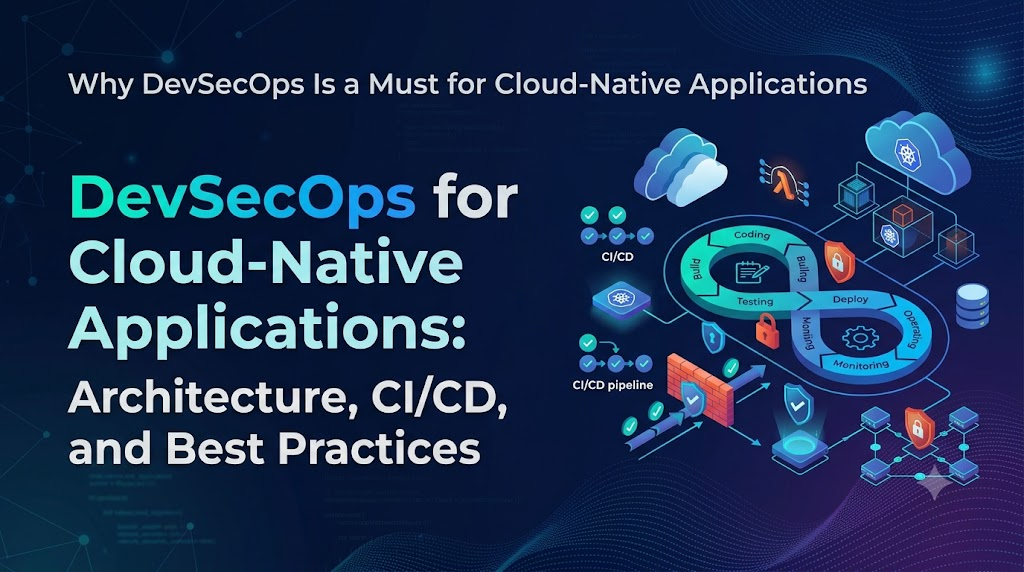
Introduction
Modern cloud-native architectures—driven by microservices, containers, dynamic APIs, and Kubernetes orchestration—enable engineering teams to ship updates at breakneck speed, but they also shatter the traditional perimeter security model. When hundreds of ephemeral workloads, complex identity permissions, third-party dependencies, and automated Infrastructure as Code templates deploy continuously across distributed environments, manual reviews and late-stage security audits inevitably become painful delivery bottlenecks or cause critical vulnerabilities to reach production. DevSecOps for cloud-native applications resolves this conflict by embedding automated security validation, policy enforcement, and proactive vulnerability detection directly into every stage of development, CI/CD pipelines, and runtime operations, making security a continuous, shared engineering responsibility rather than an afterthought.
What Is DevSecOps?
DevSecOps stands for Development, Security, and Operations. It is an evolution of the DevOps movement, designed to make security an integral, shared responsibility across software engineering, platform engineering, and security teams throughout the software development lifecycle (SDLC).
Historically, software developers wrote features, operations teams deployed and maintained systems, and information security specialists evaluated risks at the end of the development cycle. This separation created friction: developers prioritized delivery speed, operations focused on stability, and security teams flagged vulnerabilities right before release, forcing expensive re-architecting or delaying launches.
DevSecOps removes these silos by embedding automated security validation directly into standard developer workflows and operational practices. The core principles of DevSecOps include:
- Security Early in the Development Lifecycle (Shift-Left Security): Evaluating system architectures, designs, and code vulnerabilities at the point of creation, rather than waiting for production deployment.
- Automated Security Checks in CI/CD Pipelines: Running code analysis, software composition checks, container scanning, and configuration validation automatically on pull requests and builds.
- Secure Coding and Code Review: Establishing coding standards, running automated linters, and including security checks within peer code reviews.
- Dependency and Software Supply Chain Protection: Continuously verifying open-source libraries, base container images, third-party frameworks, and generated build artifacts.
- Container and Kubernetes Security: Ensuring container images run as unprivileged users, isolating workloads through network policies, and validating orchestrator configurations against security benchmarks.
- Infrastructure as Code (IaC) Validation: Scanning infrastructure templates for exposed cloud storage, overly permissive security groups, and misconfigured identities prior to provisioning.
- Secrets and Identity Management: Eliminating hardcoded credentials, rotating keys, and applying strict least-privilege principles to both human users and automated workloads.
- Continuous Monitoring and Incident Response: Aggregating runtime events, system logs, orchestrator audits, and vulnerability data to detect and contain threats quickly.
- Feedback and Continuous Improvement: Providing developers with actionable, low-noise diagnostic findings so problems can be resolved directly in their familiar development environments.
DevSecOps is not merely a collection of automated security scanners plugged into a continuous integration server. While tooling is critical, DevSecOps fundamentally requires a cultural shift: clear operational ownership, shared accountability, practical training for engineers, and pragmatic workflows that balance delivery velocity with systematic risk reduction.
What Makes Cloud-Native Applications Different?
To understand why DevSecOps is essential, it helps to examine how cloud-native environments differ fundamentally from traditional bare-metal or monolithic virtual machine setups.
Cloud-native systems are built around distinct architectural patterns:
- Microservices and Distributed Architecture: Applications are broken into smaller, decoupled services that communicate over local and remote networks.
- Containers and Ephemeral Images: Workloads are packaged with their immediate runtime dependencies into lightweight container images.
- Kubernetes and Container Orchestrators: Orchestration platforms schedule, scale, and manage workloads across clusters of physical or virtual compute nodes.
- Dynamic Infrastructure and Autoscaling: Compute instances, pods, and network routes are provisioned, scaled, and terminated automatically based on real-time traffic demands.
- Extensive API Surfaces: Microservices interact through REST, gRPC, GraphQL, and event brokers, resulting in extensive internal and external API footprints.
- Infrastructure as Code (IaC): Cloud networks, database instances, and permissions are defined in version-controlled configuration files (e.g., Terraform, OpenTofu, Pulumi, CloudFormation, or Bicep).
- CI/CD-Driven Releases: Delivery pipelines compile code, build container images, run automated tests, and deploy workloads to production environments with minimal manual intervention.
- Cloud Identity and Access Management (IAM): Access is governed by dynamic, fine-grained policies applied to users, groups, microservices, and orchestrator service accounts.
- Distributed Telemetry: Visibility relies on tracing, aggregated logs, and real-time metrics across thousands of short-lived components.
These characteristics make manual security governance ineffective. When hundreds of microservice releases happen across dynamic clusters daily, perimeter firewalls and periodic penetration tests cannot provide adequate coverage. Security mechanisms must be automated, declarative, API-driven, and embedded directly into the developer workflow.
The following comparison illustrates how security operational requirements shift between traditional and cloud-native systems:
| Security Dimension | Traditional Application Architecture | Cloud-Native Application Architecture |
| Workload Lifespan | Long-running servers (months to years); maintained with in-place patches. | Ephemeral containers and pods (hours to days); rebuilt and replaced immutably. |
| Infrastructure Provisioning | Manual tickets, hardware racks, or centralized hypervisor provisioning. | Declarative Infrastructure as Code (IaC) executed via automated pipelines. |
| Trust Perimeter | Well-defined network boundary protected by perimeter firewalls and edge appliances. | Zero-Trust architecture; services assume network traffic is untrusted and verify every call. |
| Security Gates | Scheduled pre-release security reviews, manual sign-offs, and annual penetration testing. | Automated CI/CD security scanning, policy-as-code gates, and continuous runtime monitoring. |
| Dependency Management | Monolithic enterprise libraries, reviewed on major version release cycles. | Extensive open-source package ecosystems, microservice-level libraries, and layered base images. |
| Identity & Access | Long-lived server credentials, static Active Directory service accounts, SSH keys. | Ephemeral tokens, fine-grained cloud IAM roles, and Kubernetes service account tokens. |
| Inspection & Visibility | Static host-based agents, perimeter network taps, and centralized log servers. | Container runtime instrumentation, orchestrator audit logs, service mesh telemetry, and eBPF probes. |
Cloud-native environments are not inherently less secure than legacy systems; however, their distributed, automated nature requires security controls explicitly designed for their architecture.
Why DevSecOps Is Essential for Cloud-Native Applications
Integrating security practices throughout the cloud-native delivery lifecycle delivers significant operational, technical, and risk-management advantages.
1. Identifies Vulnerabilities Earlier (Shift-Left Security)
The financial and operational cost of fixing a security vulnerability increases significantly as software progresses through the delivery lifecycle. An issue identified while a developer is writing code can often be fixed in minutes. Conversely, discovering that same flaw during a pre-release audit—or worse, following a security incident in production—requires emergency engineering patches, unplanned release freezes, and expensive root-cause investigations.
By introducing automated Static Application Security Testing (SAST), Software Composition Analysis (SCA), and linting into developer local environments and pull request reviews, teams get immediate feedback. Developers fix insecure code constructs and update vulnerable dependencies while the context is fresh, avoiding costly re-engineering later.
2. Protects Containers and Container Images
Containers package application binaries, system runtimes, shared libraries, and configuration files into an immutable image. If a team builds containers using an unmaintained, unpatched base image or downloads packages from unvetted registries, vulnerable or malicious code enters the delivery pipeline immediately.
DevSecOps establishes robust container security practices:
- Automated container image vulnerability scanning during the CI build process.
- Rejection of images containing known exploitable Common Vulnerabilities and Exposures (CVEs) above acceptable organization thresholds.
- Enforcing minimal base images (such as Alpine Linux or distroless images) to reduce the overall attack surface.
- Ensuring container processes run as non-root users with read-only root filesystems where possible.
- Cryptographic image signing to verify that only authorized images built by verified pipelines run in staging and production clusters.
3. Improves Kubernetes Security
Kubernetes coordinates container scheduling, networking, and resource allocation, making cluster configuration a critical security domain. Misconfigured role-based access control (RBAC), missing network segmentation, and excessive container privileges can allow an attacker who compromises a single pod to compromise the host node or the entire cluster.
DevSecOps incorporates Kubernetes security practices throughout development and deployment:
- Enforcing the principle of least privilege on Kubernetes RBAC service accounts.
- Restricting cluster API access and requiring strong authentication.
- Implementing Kubernetes Network Policies to restrict pod-to-pod communication to only necessary paths.
- Deploying admission controllers to evaluate workload manifests against security standards (such as blocking privileged containers or host path mounts) before admitting them into the cluster.
- Running automated configuration scanners against running clusters to detect configuration drift and exposed control-plane components.
4. Secures CI/CD Pipelines
Continuous integration and continuous deployment pipelines are central targets for attackers. Because CI/CD runners hold elevated access credentials to deploy resources across cloud environments, a compromised build system can allow unauthorized code modification, artifact tampering, or credential theft.
A DevSecOps framework hardens pipeline workflows by:
- Isolating ephemeral build runners and discarding environments after every job.
- Restricting pipeline runner permissions using temporary cloud credentials instead of permanent administrator keys.
- Protecting pipeline configuration files with branch protection rules and mandatory peer reviews.
- Logging and auditing pipeline execution events to detect unauthorized changes to build logic.
- Establishing distinct promotion gates between testing, staging, and production environments.
5. Reduces Infrastructure Misconfigurations
Infrastructure as Code allows teams to define complex networks, object storage buckets, managed databases, and IAM permissions in versioned code repositories. While this automation ensures consistent environments, it also means a single misconfiguration—such as an open Amazon S3 bucket, an overly broad security group rule (e.g., 0.0.0.0/0 on port 22), or an unencrypted disk—can be replicated across multiple environments in seconds.
DevSecOps introduces automated IaC security scanning directly into pull requests. Static analysis tools parse IaC templates (such as Terraform or CloudFormation) before execution, comparing proposed configurations against CIS benchmarks and organizational compliance policies. If a pull request attempts to provision an unencrypted storage bucket or an exposed ingress port, the pipeline flags the violation before any cloud infrastructure is provisioned.
6. Strengthens Secrets and Identity Management
Modern cloud applications require credentials to interact with managed databases, third-party APIs, cache clusters, and message queues. A common vulnerability in rapid application development is hardcoding API tokens, private keys, or database passwords into application repositories or container environment variables.
DevSecOps implements robust secret management practices:
- Automated secret detection scanners that block commits containing high-entropy strings, known token patterns, or private key files.
- Utilizing dedicated secret management solutions (such as HashiCorp Vault, AWS Secrets Manager, or Azure Key Vault) to store and retrieve credentials dynamically at runtime.
- Adopting short-lived, rotatable credentials and workload identities (such as AWS IAM Roles for Service Accounts or Workload Identity Federation) to eliminate static long-lived credentials entirely.
- Preventing sensitive tokens from leaking into container images, configuration maps, or application log files.
7. Improves Software Supply Chain Security
Cloud-native applications depend heavily on open-source packages, external base images, third-party plugins, and build-time utilities. A vulnerability or malicious dependency introduced several layers deep into an open-source library directly compromises the downstream application.
DevSecOps introduces disciplined software supply chain management:
- Generating a comprehensive Software Bill of Materials (SBOM) for each release, detailing every application library, package version, and component origin.
- Verifying the provenance and cryptographic signature of all base images and dependencies.
- Scanning dependencies continuously for newly disclosed vulnerabilities, even after an application is deployed to production.
- Hosting audited, approved dependencies within internal, controlled artifact registries.
8. Supports Continuous Security Monitoring
Preventive controls are essential, but they cannot guarantee that a zero-day vulnerability or novel attack technique will never bypass initial defenses. Cloud-native systems require active, runtime security observation.
DevSecOps bridges deployment and operations by collecting runtime security telemetry:
- Ingesting operating system kernel events and container runtime calls (e.g., unexpected process execution, shell spawns in containers, unauthorized file modifications) using tools like Falco.
- Aggregating cloud provider audit logs, Kubernetes API audit records, and network flow logs into centralized SIEM (Security Information and Event Management) platforms.
- Providing security operations teams with the workload context needed to isolate affected pods quickly without terminating unaffected services across the cluster.
Common Security Risks in Cloud-Native Environments
Securing cloud-native architectures requires addressing practical, common vulnerabilities. Below are frequent security risks encountered in production, their potential impact, and realistic mitigation strategies:
1. Vulnerable Third-Party Dependencies
- Impact: Application components inherit remote code execution, SQL injection, or cross-site scripting vulnerabilities present in unpatched open-source libraries.
- Practical Mitigation: Implement automated Software Composition Analysis (SCA) in build pipelines to block high-severity CVEs with verified fixes; automate minor version patch updates.
2. Misconfigured Cloud Storage and Network Resources
- Impact: Sensitive application data, customer records, or internal backups are exposed publicly via misconfigured cloud storage permissions or permissive security groups.
- Practical Mitigation: Apply automated Infrastructure as Code policy validation (e.g., Checkov, tfsec) to fail builds that define public object stores or unrestricted ingress rules.
3. Excessive User or Workload Permissions
- Impact: Compromising a low-criticality microservice allows an attacker to escalate privileges and access production databases or cluster management APIs.
- Practical Mitigation: Apply the principle of least privilege using cloud IAM roles and Kubernetes RBAC. Bind credentials to specific service accounts rather than granting broad administrative rights to cluster nodes.
4. Exposed Secrets and Credentials
- Impact: API keys, database credentials, or private certificates committed to version control grant unauthorized access to sensitive backend resources.
- Practical Mitigation: Run pre-commit and pipeline-based secret scanners (e.g., Gitleaks); retrieve credentials dynamically at runtime from dedicated secret management vaults.
5. Insecure Container Images
- Impact: Deploying images that contain outdated operating system packages, vulnerable utilities, or root-user execution profiles gives attackers ready-to-use exploit vectors.
- Practical Mitigation: Build from minimal, hardened base images (distroless or stripped Linux distributions); enforce non-root execution profiles; scan images at registry check-in and deployment.
6. Kubernetes Configuration Weaknesses
- Impact: Workloads run with
privileged: true, share host namespaces, or lack resource quotas, exposing the underlying worker node to host-escape attacks and denial-of-service conditions. - Practical Mitigation: Enforce Kubernetes Pod Security Standards using admission controllers (e.g., Kyverno or Open Policy Agent Gatekeeper) to systematically reject risky workload manifests.
7. Unprotected APIs and Service Communication
- Impact: Unauthenticated internal APIs allow attackers inside the network perimeter to intercept sensitive payloads, execute unauthorized functions, or tamper with data.
- Practical Mitigation: Implement mutual TLS (mTLS) for microservice communication, validate API schemas strictly, and deploy ingress API gateways with robust token authentication and rate limiting.
8. Insecure CI/CD Integrations
- Impact: Insecure webhook configurations, shared build runners, or over-permissioned deployment tokens allow attackers to tamper with build scripts or push malicious code into production.
- Practical Mitigation: Enforce branch protection rules, require multi-party code reviews, isolate build runners in ephemeral environments, and restrict pipeline deployment roles using short-lived tokens.
9. Software Supply Chain Tampering
- Impact: Malicious code is injected into an upstream package repository or build artifact without changing application source code.
- Practical Mitigation: Generate Software Bills of Materials (SBOMs), verify package cryptographic checksums, sign build artifacts using tools like Cosign, and restrict container runtimes to verified image digests.
10. Insufficient Runtime Visibility
- Impact: Active compromises, anomalous data exfiltration, or abnormal process executions go unnoticed for months due to a lack of container-level operational logging.
- Practical Mitigation: Deploy runtime behavioral monitoring (such as eBPF-based security monitoring) alongside centralized audit logging to detect and alert on anomalous process execution or unexpected outbound network connections.
Essential DevSecOps Practices for Cloud-Native Applications
Implementing DevSecOps effectively requires combining practices across every stage of the development and delivery lifecycle:
Threat Modeling During Application Design
- Description: Systematically identifying potential threat vectors, trust boundaries, and data flow vulnerabilities before writing code.
- Workflow Phase: Architectural planning and feature design.
- Consideration: Threat modeling takes engineering time and must be calibrated to match the risk level of the feature; attempting to model every minor cosmetic change will stall development.
Secure Coding Guidelines and Code Review
- Description: Documenting language-specific security patterns and incorporating explicit security verifications into peer code reviews.
- Workflow Phase: Local development and pull request evaluation.
- Consideration: Manual reviews rely on individual reviewer expertise; they must be backed by automated linters to maintain consistency.
Static Application Security Testing (SAST)
- Description: Analyzing source code for known security antipatterns, injection vulnerabilities, and insecure cryptographic implementations without running the application.
- Workflow Phase: Pull request pipeline and build stages.
- Consideration: SAST engines can generate false positives; rules must be tuned to avoid alerting fatigue that causes engineers to ignore warnings.
Software Composition Analysis (SCA)
- Description: Scanning application dependencies, package manifests, and libraries against vulnerability databases to flag known CVEs and outdated licensing terms.
- Workflow Phase: Build pipeline and continuous registry monitoring.
- Consideration: Not all reported library vulnerabilities are exploitable in the context of your specific application; teams should evaluate whether vulnerable functions are actually invoked.
Dynamic Application Security Testing (DAST)
- Description: Testing running web applications and APIs from the outside by simulating attacks to discover exposed endpoints, authentication flaws, and injection issues.
- Workflow Phase: Staging and pre-production integration testing.
- Consideration: DAST requires a stable, deployed testing environment and cannot pinpoint exact source code lines for discovered issues.
Container Image Scanning
- Description: Inspecting container filesystem layers to identify vulnerable OS packages, binary dependencies, and configuration missteps.
- Workflow Phase: Post-build container packaging and registry admission.
- Consideration: Scanning only at build time leaves running containers vulnerable to CVEs discovered after deployment; registries must be scanned continuously.
Infrastructure as Code (IaC) Scanning
- Description: Parsing cloud infrastructure definitions to detect security policy violations and misconfigurations prior to deployment.
- Workflow Phase: Infrastructure pull requests and plan/validate pipeline steps.
- Consideration: Static IaC scans evaluate configuration files, not actual cloud runtime state; configuration changes made outside of IaC (drift) will be missed without cloud posture tools.
Secret Detection and Credential Protection
- Description: Scanning commits, repository histories, and build logs for exposed passwords, keys, and tokens.
- Workflow Phase: Pre-commit hooks, pull request checks, and repository auditing.
- Consideration: Scanning cannot fix a leaked credential that has already been pushed to a remote server; leaked keys must be revoked and rotated immediately, not just deleted from git history.
Kubernetes Configuration Validation
- Description: Verifying Kubernetes manifests, Helm charts, and Kustomize overlays against security policies (e.g., blocking root users, enforcing read-only root filesystems).
- Workflow Phase: Manifest validation in CI, deployment gates, and cluster admission control.
- Consideration: Overly restrictive admission policies can prevent legitimate workloads from scheduling if exceptions and rollout phases are not planned properly.
Least-Privilege Identity and Access Management (IAM)
- Description: Restricting human and workload permissions strictly to the resources required to perform their designated functions.
- Workflow Phase: Architecture design, infrastructure provisioning, and access reviews.
- Consideration: Defining fine-grained permissions takes careful initial analysis; overly restrictive permissions can cause runtime deployment failures if necessary permissions are omitted.
Policy as Code
- Description: Writing and versioning organizational governance, compliance, and security rules as declarative code evaluated by automated policy engines.
- Workflow Phase: CI/CD validation steps and cluster admission webhooks.
- Consideration: Policies must be tested against existing workloads before enforcement to prevent unexpected production outages.
Software Artifact Integrity and Signing
- Description: Cryptographically signing container images, binaries, and release artifacts, and verifying those signatures prior to cluster deployment.
- Workflow Phase: Post-build artifact generation and Kubernetes admission control.
- Consideration: Requires robust key management or integration with keyless signing infrastructures (e.g., Sigstore) to avoid operational overhead.
Runtime Security Monitoring
- Description: Monitoring process execution, system calls, and network traffic within active containers to detect exploitation attempts.
- Workflow Phase: Production and staging cluster operations.
- Consideration: Runtime monitoring tools consume compute overhead and must be tuned to avoid flooding operations teams with benign process alerts.
Vulnerability Remediation and Patch Management
- Description: A structured process for prioritizing, patching, testing, and deploying updates for identified vulnerabilities based on their exploitability.
- Workflow Phase: Ongoing operational lifecycle and sprint maintenance.
- Consideration: Relying strictly on raw CVSS scores can lead to misallocated effort; teams should prioritize vulnerabilities that are actively exploitable and present in production-facing components.
Incident Response Planning
- Description: Documented, tested operational procedures for isolating compromised containers, revoking compromised credentials, and performing forensic analysis.
- Workflow Phase: Operational readiness and ongoing security simulations.
- Consideration: Untested incident response plans frequently fail during real incidents; regular tabletop exercises and runbook drills are required to validate procedures.
DevSecOps Tools for Cloud-Native Security
Modern DevSecOps relies on automated tools to enforce security standards at scale. Because no single product covers the entire cloud-native security lifecycle, organizations combine specialized, interoperable utilities.
The table below outlines common tools used across cloud-native environments:
| Tool | Primary Purpose | Lifecycle Placement | Implementation Consideration |
| Semgrep / GitHub Advanced Security | Static Application Security Testing (SAST) and code analysis. | Developer IDE, pull request checks, CI build stage. | Custom rule sets should be established to focus on high-impact vulnerabilities and minimize developer alert fatigue. |
| OWASP ZAP | Dynamic Application Security Testing (DAST) for web apps and APIs. | Pre-production testing and staging verification pipelines. | Requires realistic test data and authenticated session configurations to test protected application routes thoroughly. |
| Trivy | Comprehensive vulnerability and misconfiguration scanning for containers, filesystems, and Git repositories. | CI/CD build pipelines, container registries, and cluster auditing. | Fast and lightweight; must be integrated with updated vulnerability feeds to avoid missing newly published CVEs. |
| Checkov | Infrastructure as Code (IaC) security analysis for Terraform, CloudFormation, Kubernetes, and Dockerfiles. | IaC code reviews, pre-commit checks, CI validation steps. | Policy frameworks must be matched to organizational compliance requirements to avoid evaluating irrelevant rules. |
| Gitleaks | Lightweight secret detection and token scanning. | Developer pre-commit hooks, pull request validation pipelines. | Pre-commit hooks should be paired with centralized repository scanning to catch instances where developers bypass local checks. |
| Kyverno / Open Policy Agent (OPA) | Declarative Policy as Code and Kubernetes admission control. | CI manifest validation, cluster admission control webhooks. | Should be deployed initially in an audit/warn mode to evaluate policy impact before switching to hard blocking modes. |
| Falco | Cloud-native runtime threat detection based on system call inspection. | Production and staging Kubernetes cluster worker nodes. | Rules must be customized to account for legitimate background administrative processes and avoid alert spam. |
| Sigstore Cosign | Container image signing, verification, and software supply chain security. | Post-build CI pipeline step, Kubernetes admission controller. | Requires clear governance around who or what systems are authorized to generate production signatures. |
| Prometheus & Grafana | Metrics collection, operational monitoring, and visualization. | Cloud-native platform and infrastructure runtime operations. | Provide broad operational context; require clear alert thresholds and integration with security-specific logging to be effective for security investigations. |
These tools provide distinct capabilities. Teams should integrate tools incrementally based on priority risks, rather than attempting to adopt an entire suite at once.
How to Integrate DevSecOps into a Cloud-Native CI/CD Pipeline
To secure cloud-native software delivery, automated security checks must be integrated smoothly into the deployment pipeline. Below is a representative, end-to-end pipeline workflow:
Plaintext
+-------------+     +-------------------+     +---------------------+
| Code Commit | --> | Code & Secret     | --> | Unit Tests &        |
|  (Git PR)   |     | Scanning          |     | Dependency Scanning |
+-------------+     +-------------------+     +---------------------+
                                                         |
                                                         v
+-------------------+     +---------------------+     +---------------------+
| Deployment        | <-- | Infrastructure &    | <-- | Container Image     |
| (Staging/Prod)    |     | Policy Validation   |     | Build & Scan        |
+-------------------+     +---------------------+     +---------------------+
         |
         v
+-------------------+
| Runtime Security  |
| & Active Feedback |
+-------------------+
Detailed Pipeline Workflow
- Code Commit and Local Validation: The developer writes code and runs pre-commit hooks that perform basic linting and secret detection (e.g., Gitleaks). Code is committed to a feature branch, and a pull request (PR) is opened.
- Static Code Analysis and Secret Verification: The CI runner launches in an isolated environment. Automated SAST scans analyze code changes for common security antipatterns, while secret detection ensures no credentials slipped past local checks.
- Automated Testing and Software Composition Analysis (SCA): Unit and integration tests run. Simultaneously, an SCA scanner checks application manifest files against vulnerability databases to flag known flaws in third-party libraries.
- Container Image Build and Vulnerability Scanning: If previous checks pass, the pipeline builds the container image using a minimal base image. An image scanner (e.g., Trivy) inspects the filesystem layers for OS and runtime vulnerabilities.
- Artifact Signing and Provenance: Upon passing vulnerability checks, the image is cryptographically signed (e.g., using Cosign), and an SBOM is generated and attached to the image metadata. The signed image is pushed to an internal, secure container registry.
- Infrastructure as Code (IaC) and Policy Validation: Deployment manifests, Helm charts, and Terraform scripts are validated against security policies using IaC scanners and policy-as-code engines.
- Controlled Deployment and Admission Control: The deployment is initiated in staging or production. An admission controller (such as Kyverno or OPA Gatekeeper) verifies the container image signature and validates that workload specifications comply with cluster security policies.
- Runtime Monitoring and Continuous Feedback: The application runs in the cluster under observation by runtime security agents (e.g., Falco) and metric collectors. Findings feed back to developers and operations engineers to inform future sprints.
Establishing Sensible Pipeline Gates
A common failure mode in DevSecOps is configuring pipelines to fail on every minor warning, which creates friction and causes teams to bypass checks. Teams should define clear thresholds:
- Fail the Build (Hard Gate): Triggered by critical, unmitigated vulnerabilities with public exploits, hardcoded plaintext secrets, high-severity IaC misconfigurations (e.g., public database exposure), or missing image signatures on production deployments.
- Warning / Review Required (Soft Gate): Triggered by medium-severity vulnerabilities with no known exploit path, outdated package versions with minor upgrades available, or minor configuration deviations. The build proceeds, but a ticket or notification is logged for review.
- Informational / Low Priority: Logged in build output or dashboards to inform ongoing hygiene (e.g., license usage reviews, low-severity CVEs), without interrupting release flow.
A Practical Example: Securing a Cloud-Native Application
To illustrate how these principles operate in practice, consider the following realistic scenario:
Note: This scenario is an illustrative example designed to demonstrate workflow integration. It does not reflect specific company performance metrics or guarantees.
The Scenario
A retail organization runs an online e-commerce platform built as a microservices architecture. The system consists of an API gateway, an authentication service, a product catalog service, an order processing service, and a payment processing component. The microservices are packaged as Docker containers and deployed to a managed Kubernetes cluster on cloud infrastructure provisioned via Terraform.
Phase 1: Addressing Insecure Code and Dependencies
During a routine sprint, a developer updates the order processing service to add support for an external shipping calculation API.
- Local and PR Checks: When the developer opens a pull request, the CI pipeline automatically runs a SAST scan and an SCA tool.
- Vulnerability Detection: The SCA scanner identifies that an open-source JSON parsing library introduced in the PR has a critical vulnerability that allows remote code execution.
- Remediation: The pipeline flags the pull request, highlights the vulnerable dependency, and links to the updated package version. The developer updates the package manifest to a patched version, commits the change, and the automated check passes. No vulnerable code enters the main branch.
Phase 2: Building and Hardening the Container Image
With the code approved, the build stage packages the order processing service:
- Minimal Base Image: The build script uses a minimal distroless base image rather than a bloated, general-purpose Linux distribution.
- Container Image Scan: The CI pipeline runs Trivy against the built image, verifying that no high-severity OS package CVEs exist.
- Image Signing: The build system signs the generated container image using a keyless signature workflow and publishes the signature and SBOM to the internal container registry.
Phase 3: Validating Infrastructure and Configuration
Simultaneously, a platform engineer updates the Terraform configuration to provision an internal Redis cache used by the order processing service:
- IaC Validation: A pull request is submitted for the Terraform change. A static analysis scanner (Checkov) evaluates the code.
- Policy Enforcement: The scanner detects that the proposed Redis cluster does not have in-transit encryption enabled.
- Immediate Correction: The engineer adds the necessary encryption flag to the Terraform configuration and re-submits the pull request, ensuring the provisioned infrastructure meets corporate compliance requirements before applying the change.
Phase 4: Deploying to Kubernetes with Admission Control
The updated order processing service manifest is scheduled for deployment to the Kubernetes cluster:
- Admission Webhook Evaluation: The Kubernetes API receives the deployment request. An admission controller (Kyverno) intercepts the manifest.
- Signature and Spec Verification: The controller verifies that the container image signature matches the build pipeline’s trusted identity. It also checks that the pod specification specifies
runAsNonRoot: trueand defines CPU/memory resource limits. - Successful Rollout: Because the manifest complies with all defined policies, the admission controller permits creation of the pod, and the deployment completes.
Phase 5: Runtime Detection and Observability
The updated microservice is now live in production:
- System Call Auditing: A runtime security daemon (Falco) runs on the cluster nodes, monitoring Linux kernel system calls made by container workloads.
- Anomaly Alerting: If an unexpected binary execution occurs within the order service container (such as an unauthorized shell launch), Falco detects the abnormal system call and immediately transmits an alert to the platform security team’s incident management channel.
- Rapid Containment: The security team investigates the anomalous pod, isolates it using network policies, and inspects the container logs and audit trails to determine the root cause.
This practical workflow shows how layered DevSecOps practices detect, mitigate, and monitor risks across the software lifecycle without relying on a single protective barrier.
A Step-by-Step DevSecOps Implementation Roadmap
Adopting DevSecOps across an engineering organization is a gradual, iterative journey. Attempting to deploy every tool and policy simultaneously leads to engineer frustration, operational disruptions, and pushback. Organizations should adopt a phased approach, starting with high-value, low-friction controls and expanding maturity over time.
| Phase | Main Activity | Expected Outcome |
| Phase 1 | Assess architecture and security risks. | Gain a clear understanding of current architectural vulnerabilities, dependency flows, and high-priority risks. |
| Phase 2 | Establish secure coding and access practices. | Define baseline coding guidelines, mandate least-privilege access, and establish clear operational security ownership. |
| Phase 3 | Add code, dependency, and secret checks. | Detect hardcoded credentials and vulnerable third-party dependencies early in developer pull requests. |
| Phase 4 | Secure container images and build pipelines. | Standardize on minimal base images, scan container filesystems, sign images, and harden CI/CD runners. |
| Phase 5 | Validate Infrastructure as Code and Kubernetes configurations. | Automate IaC scanning and enforce Kubernetes admission policies to prevent misconfigurations from reaching production. |
| Phase 6 | Add runtime monitoring and incident workflows. | Deploy behavioral runtime detection, aggregate audit telemetry, and establish tested runbooks for security events. |
| Phase 7 | Review findings and improve controls. | Analyze metrics, reduce false positives, calibrate blocking thresholds, and build a sustainable feedback loop with developers. |
How to Measure DevSecOps Effectiveness
To determine whether DevSecOps practices are genuinely improving system security and team performance, organizations need meaningful, context-aware metrics. Tracking raw vulnerability counts alone can be misleading; an increase in detected vulnerabilities often indicates improved scanning visibility rather than declining software quality.
Teams should focus on metrics that measure velocity, coverage, hygiene, and responsiveness:
- Mean Time to Remediate (MTTR) High-Priority Vulnerabilities: The average time it takes from the discovery of a critical, exploitable vulnerability to its patched deployment in production. A decreasing MTTR indicates an effective, responsive remediation workflow.
- Vulnerability Aging and Backlog Trends: Tracking how long unresolved vulnerabilities remain open across services. A healthy organization sees steady resolution of older issues rather than an accumulating backlog.
- Automated Security Coverage Rate: The percentage of active code repositories, container images, and IaC templates covered by automated scanning in CI/CD pipelines.
- Policy Compliance Rate at Deployment: The percentage of deployment manifests that pass admission control and security policy checks without requiring manual exemptions.
- Secrets Detected Pre-Commit vs. Post-Commit: Tracking whether leaked credentials are caught locally before hitting remote repositories, showing developer adoption of early security checks.
- False-Positive Rates: The frequency with which automated scanners flag non-exploitable or benign findings. Keeping false positives low maintains developer trust in security alerts.
- Incident Detection and Containment Time: The time required to detect, investigate, and isolate an active runtime security anomaly.
Common DevSecOps Implementation Mistakes
Organizations frequently encounter stumbling blocks when adopting DevSecOps. Being aware of these pitfalls helps teams build more practical, sustainable security programs:
1. Adding Security Checks Only at the End of the Pipeline
- The Mistake: Running security scans as a final, isolated step right before production deployment, recreating traditional release bottlenecks.
- Corrective Action: Shift scans left by integrating lightweight SAST, secret detection, and linting directly into pull requests and local pre-commit workflows.
2. Installing Tools Without Defining Ownership
- The Mistake: Deploying multiple security scanners without assigning clear responsibility for reviewing findings, leading to unaddressed alerts.
- Corrective Action: Clarify ownership early. Developers should own application code and direct dependencies; platform engineers should own base images, IaC, and cluster policies; security engineers provide governance and tooling support.
3. Blocking Every Deployment for Low-Risk Findings
- The Mistake: Setting pipelines to fail on any finding, regardless of severity or exploitability, frustrating developers and delaying releases.
- Corrective Action: Adopt risk-based gating: fail builds only for critical, exploitable vulnerabilities and plaintext credentials; log lower-severity findings as warnings for planned maintenance.
4. Ignoring Developer Feedback and Scanner False Positives
- The Mistake: Forcing developers to triage noisy, irrelevant scanner alerts without providing an easy mechanism to tune rules or suppress false positives.
- Corrective Action: Regularly tune scanner configurations, remove outdated rules, and establish transparent processes for reviewing and documenting necessary exceptions.
5. Giving CI/CD Pipelines Excessive Privileges
- The Mistake: Granting CI/CD runners global cloud administrator permissions to simplify deployment scripts, creating a high-value attack target.
- Corrective Action: Apply least-privilege IAM policies, use scoped deployment roles, and adopt short-lived credentials via OpenID Connect (OIDC) rather than storing long-lived access keys in pipeline configurations.
6. Scanning Containers but Ignoring Runtime Configuration
- The Mistake: Assuming a vulnerability-free container image is secure, while running it with root privileges, host mounts, and unrestricted network access.
- Corrective Action: Enforce Kubernetes Pod Security Standards and admission control policies to ensure secure runtime execution settings regardless of the underlying image.
7. Treating Compliance as a Substitute for Security
- The Mistake: Treating security as an annual checklist exercise designed to pass an audit, rather than an operational discipline.
- Corrective Action: Focus on practical, automated controls that actively reduce attack surfaces; compliance documentation should naturally follow from sound operational practices.
8. Failing to Train Engineering Teams
- The Mistake: Expecting developers and operations engineers to resolve security findings without providing practical training on secure design and remediation techniques.
- Corrective Action: Invest in continuous technical training, maintain clear internal documentation and runbooks, and foster a collaborative security culture.
How DevOpsSchool Can Support DevSecOps Learning
Transitioning to a mature DevSecOps model requires hands-on technical skills across multiple disciplines, including cloud infrastructure, container orchestration, CI/CD automation, and modern security tooling. For engineering teams and individual professionals looking to build practical expertise, DevOpsSchool provides comprehensive training and learning resources focused on real-world adoption.
DevOpsSchool offers structured learning programs, industry-aligned certifications, and hands-on courses covering core domains, including:
- DevSecOps Engineering: Practical implementation of shift-left security, automated vulnerability assessment, and pipeline integration.
- Kubernetes and Container Security: Hardening container environments, implementing admission controllers, and securing cluster workloads.
- Infrastructure as Code (IaC) Automation: Writing secure Terraform and cloud-native templates, alongside policy-as-code frameworks.
- CI/CD Pipeline Security: Implementing secure artifact workflows, managing secrets, and configuring automated testing pipelines.
Whether you are an engineer seeking to expand your cloud security skills or an organization planning a comprehensive DevSecOps transition, exploring dedicated training programs can help bridge the gap between theoretical security concepts and operational execution. Visit DevOpsSchool to review available course catalogs, certification paths, and technical tutorials tailored to modern cloud-native engineering.
Frequently Asked Questions
1. Why is DevSecOps important for cloud-native applications?
Cloud-native applications deploy frequently across dynamic microservices, containers, and Kubernetes clusters. Traditional manual security reviews cannot keep up with this release velocity. DevSecOps embeds automated, continuous security checks directly into development and operational workflows, ensuring that fast-moving cloud environments remain resilient and protected against misconfigurations and software supply chain risks.
2. What is the difference between DevOps and DevSecOps?
DevOps focuses on breaking down silos between software developers and IT operations to accelerate delivery speed, deployment frequency, and system reliability. DevSecOps builds upon this model by introducing security as a shared, continuous responsibility across both development and operations teams, embedding automated security testing, policy enforcement, and compliance directly into existing delivery pipelines.
3. How does DevSecOps improve Kubernetes security?
DevSecOps improves Kubernetes security by introducing automated manifest validation, policy-as-code admission controls, least-privilege RBAC definitions, and network policies early in the delivery lifecycle. Instead of attempting to harden clusters reactively, DevSecOps verifies that workloads, images, and cluster configurations meet security standards before they are scheduled across worker nodes.
4. Which DevSecOps tools are useful for cloud-native applications?
Useful tools span several operational layers: Semgrep and GitHub Advanced Security for static code analysis (SAST); Trivy for container and dependency scanning; Checkov for Infrastructure as Code validation; Gitleaks for secret detection; Kyverno and Open Policy Agent (OPA) for admission policies; Falco for runtime anomaly detection; and Cosign for cryptographic image signing.
5. What is shift-left security?
Shift-left security is the practice of moving security evaluations, testing, and policy checks earlier in the software development lifecycle. Rather than waiting for pre-release testing or production monitoring, shift-left introduces vulnerability scanning, code analysis, and threat modeling during the design and coding stages, allowing developers to identify and resolve security flaws when they are easiest and cheapest to fix.
6. How can teams secure containers and container images?
Teams can secure containers by building from minimal, trusted base images (such as distroless or Alpine Linux), running automated vulnerability scans during CI builds, executing container workloads as unprivileged (non-root) users, applying read-only root filesystems, and cryptographically signing images to ensure only verified artifacts are admitted to production clusters.
7. How does DevSecOps protect CI/CD pipelines?
DevSecOps protects CI/CD systems by isolating build runners in ephemeral environments, rotating pipeline credentials, authenticating via temporary cloud identity roles rather than static keys, implementing branch protection and peer review requirements, and actively monitoring build logs to prevent tampering with build scripts, source code, and deployment artifacts.
8. What role does Infrastructure as Code security play?
Infrastructure as Code (IaC) security ensures that cloud infrastructure templates (such as Terraform, OpenTofu, or CloudFormation) are automatically evaluated for misconfigurations—such as exposed storage buckets, unencrypted databases, or overly broad network rules—before any real infrastructure is provisioned, preventing preventable configuration flaws from ever reaching production environments.
9. Can small teams implement DevSecOps effectively?
Yes. Small teams can implement DevSecOps effectively by starting with a small number of high-impact, low-maintenance controls. Integrating basic secret detection (e.g., Gitleaks), running automated container image scanning (e.g., Trivy), and adopting automated dependency updates provide immediate security improvements without requiring extensive administrative overhead or dedicated security personnel.
10. How should an organization start adopting DevSecOps?
An organization should begin by assessing its current architecture, development workflows, and high-priority risks. Start small: implement secret scanning and container vulnerability checks on a single non-critical microservice pipeline. Once the workflow is validated and developers are comfortable with the feedback loop, gradually expand to include IaC scanning, admission controls, and runtime monitoring.
Conclusion
Securing modern cloud-native architectures requires moving away from reactive, manual checklists toward an automated, continuous, and risk-calibrated security model that operates at the speed of software delivery. DevSecOps successfully unites people, processes, and technology—empowering developers with shift-left tooling, hardening Kubernetes clusters and CI/CD pipelines against supply chain risks, and providing deep runtime visibility into production environments. By starting with focused, high-impact controls like secret detection and container scanning before expanding to comprehensive policy-as-code and admission guardrails, teams can innovate rapidly while systematically reducing organizational risk; explore the structured courses and certifications at DevOpsSchool to build these practical DevSecOps capabilities and begin securing your cloud-native pipelines today.
