Limited Time Offer!
For Less Than the Cost of a Starbucks Coffee, Access All DevOpsSchool Videos on YouTube Unlimitedly.
Master DevOps, SRE, DevSecOps Skills!
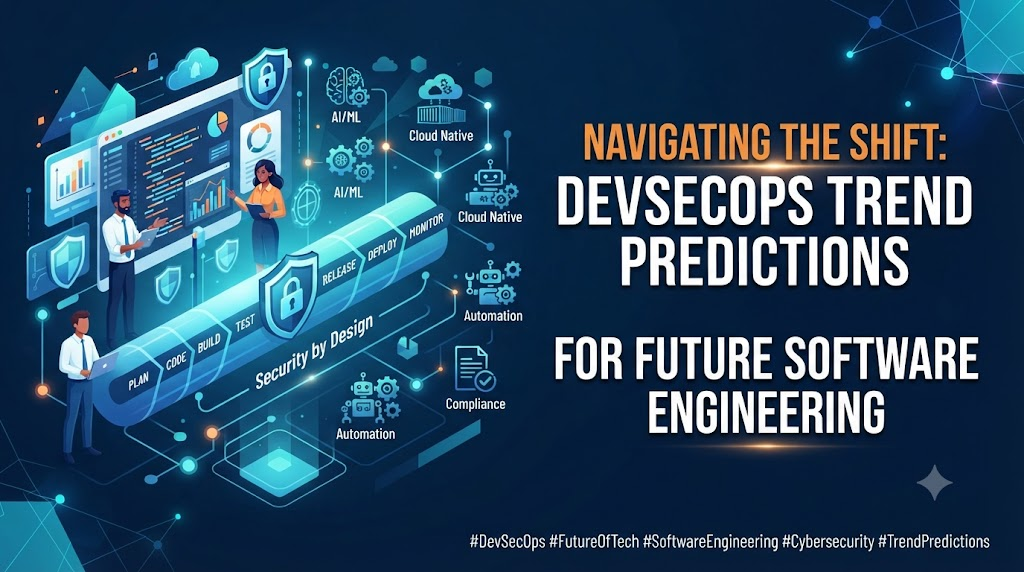
The software industry has moved past the era where security was treated as a final gatekeeper reviewing code just before production release. In fast-paced, cloud-native delivery environments, traditional security approaches—characterized by manual penetration tests, disjointed audit checklists, and isolated security teams—create severe bottlenecks that conflict with continuous delivery goals.
Modern software engineering relies heavily on automated CI/CD pipelines, containerized workloads, distributed microservices, infrastructure as code (IaC), and rapid integration of AI-generated code. As systems grow more complex, security requirements must scale dynamically. DevSecOps has evolved from an alternative operating model into an essential engineering discipline, integrating security into every layer of the software delivery lifecycle (SDLC).
This guide examines the core principles of DevSecOps, analyzes the forces driving its evolution, details the primary future trends shaping the discipline, and provides an actionable preparation roadmap for modern engineering teams.
What Is DevSecOps?
DevSecOps is the cultural, organizational, and technical practice of integrating security as a shared responsibility throughout the entire software delivery lifecycle. Rather than treating security as an external department that reviews applications at the end of a project, DevSecOps embeds security controls directly into the daily work of development, security, and operations teams.
Core characteristics of a mature DevSecOps practice include:
- Shift-Left Security: Introducing security checks, static analysis, and dependency scanning early in the development process, allowing engineers to catch and remediate issues while writing code.
- Shared Responsibility: Shifting the mindset so that developers, platform engineers, and operations personnel take active ownership of application and infrastructure security posture.
- Security Automation: Running automated security scans, policy checks, and vulnerability assessments inside CI/CD pipelines without slowing down developer velocity.
- Continuous Validation and Feedback: Monitoring runtime behavior, software supply chains, and production infrastructure continuously to detect anomalies and feed insights back into early development stages.
DevSecOps is not merely a collection of automated security scanners; it is an integrated engineering practice anchored in culture, automation, and continuous governance.
Why DevSecOps Is Evolving
The software engineering landscape is transforming under the weight of several compounding architectural and operational shifts:
- Cloud-Native and Microservices Architectures: Distributed applications running on containers and Kubernetes introduce massive numbers of ephemeral communication pathways, expanding the potential attack surface.
- Infrastructure as Code (IaC): Cloud environments are provisioned through code configurations. A single misconfiguration in an IaC script can expose critical databases or internal services to the public internet.
- Software Supply-Chain Dependency Complexity: Modern applications are built on thousands of open-source libraries and third-party packages, making dependency hygiene and artifact provenance a major enterprise risk.
- AI-Assisted and Automated Coding: The rapid adoption of generative AI tools increases the volume of generated code, requiring automated guardrails to prevent the propagation of subtle security flaws.
These pressures make it clear that traditional, perimeter-based security models are no longer sufficient for modern software engineering.
Top DevSecOps Trends for the Future
1. AI-Assisted DevSecOps and Agentic Workflows
Artificial intelligence is changing how security vulnerabilities are identified, triaged, and remediated. AI models and autonomous agents assist engineers by scanning code patterns, highlighting security smells, and suggesting contextual fixes directly within pull requests.
However, AI integration also introduces risks: models can generate insecure code, produce false positives, or create alert fatigue if poorly managed. Future DevSecOps models rely on AI to augment human security judgment rather than replace it, applying strict guardrails and human-in-the-loop oversight to automated changes.
2. Software Supply-Chain Security as an Operational Standard
Software supply-chain security has shifted from a peripheral concern to a primary engineering requirement. Teams are moving beyond basic vulnerability scanning to focus on artifact provenance, Software Bills of Materials (SBOMs), cryptographic signing, and strict dependency pinning. Mitigating supply-chain risk requires continuous monitoring of open-source packages and securing build runners (such as GitHub Actions) against tampering and unauthorized modifications.
3. Combining Shift-Left and Shift-Right Security
Future DevSecOps bridges the gap between early development and production runtime. While shift-left catches structural and dependency issues early, shift-right validates security posture in production through continuous monitoring, application telemetry, and runtime threat detection. Security is viewed as a continuous loop spanning design, coding, deployment, and operation.
4. Policy as Code (PaC) and Security Automation
Organizations are increasingly expressing security and compliance rules as machine-readable code. Policy as Code enables automated validation of infrastructure configurations, container manifests, and deployment pipelines against organizational compliance baselines. This eliminates manual security reviews, reduces human error, and ensures consistent enforcement across multi-cloud environments.
5. Platform Engineering and Internal Developer Platforms (IDPs)
Platform engineering is reshaping how security is delivered to developers. Rather than forcing developers to manage complex toolchains, platform teams build “golden paths”—standardized, self-service templates with built-in security guardrails, policy checks, and automated compliance. This allows developers to ship code rapidly without needing deep security expertise.
How These Trends Will Change Software Engineering
Day-to-day software engineering is shifting toward a model where security is native to the developer workflow. Engineers receive immediate automated feedback in their integrated development environments (IDEs) and pull requests, allowing them to address vulnerabilities before code merges.
While this grants developers greater autonomy and ownership over code quality, it also demands a foundational understanding of secure coding principles, threat modeling, and dependency management. Security no longer operates as a separate approval gate; instead, it functions as an integrated property of the software delivery platform.
Future DevSecOps Skills
As automation and AI reshape the discipline, DevSecOps professionals and software engineers require an expanded skill set spanning multiple domains:
- Core DevOps Skills: CI/CD pipeline configuration, Git workflows, Infrastructure as Code (Terraform, CloudFormation), containerization (Docker), and container orchestration (Kubernetes).
- Security Competencies: Threat modeling, secure coding practices, application security, container runtime security, and supply-chain risk management.
- Modern Engineering Capabilities: Policy as Code implementation, AI tool governance, security observability, and platform engineering concepts.
- Human Skills: Cross-functional collaboration, risk assessment, clear technical communication, and effective decision-making under uncertainty.
Benefits and Opportunities
Adopting advanced DevSecOps practices delivers measurable operational and security advantages:
- Earlier Defect Detection: Identifying and fixing vulnerabilities during early development reduces remediation costs and prevents production incidents.
- Reduced Manual Friction: Automation eliminates repetitive compliance checks, freeing engineering teams to focus on core product delivery.
- Strengthened Supply-Chain Visibility: Comprehensive artifact tracking and dependency governance protect applications against upstream supply-chain compromises.
- Consistent Governance: Policy-driven automation ensures uniform security enforcement across distributed multi-cloud architectures.
Risks and Challenges
Despite its advantages, future DevSecOps adoption presents distinct organizational challenges:
- Alert Fatigue and False Positives: Poorly tuned security tools can flood teams with uncontextualized vulnerability findings, leading to developer burnout.
- Tool Sprawl: Adopting disconnected security scanners without a unified platform strategy creates complexity and maintenance overhead.
- AI and Automation Overreliance: Unchecked AI code generation or overly permissive automation agents can introduce subtle logic flaws or unauthorized access paths.
- Skill Gaps: Bridging the gap between traditional development and modern cloud-native security requires continuous, structured training.
How Organizations Can Prepare: A Practical Roadmap
- Assess Current Maturity: Evaluate existing security scanning coverage, remediation turnaround times, and developer workflow friction.
- Standardize CI/CD Security: Implement automated secrets detection, static analysis (SAST), and Software Composition Analysis (SCA) in all active pipelines.
- Secure the Software Supply Chain: Enforce strict dependency pinning, SBOM generation, and cryptographic verification of build artifacts.
- Adopt Policy as Code: Translate compliance and infrastructure baselines into automated validation scripts that run before deployment.
- Invest in Platform Engineering: Build internal developer platforms that provide secure templates and golden paths for rapid, compliant deployment.
- Implement AI Governance: Establish clear usage policies and validation gates for AI-assisted coding tools and autonomous agents.
- Upskill Teams: Provide ongoing, practical training in secure engineering, cloud architecture, and modern DevSecOps practices.
Role of DevOpsSchool
As organizations transition toward automated, security-first engineering models, structured professional education plays a vital role in bridging capability gaps. Navigating complex toolchains, Kubernetes security, cloud-native architectures, and software supply-chain protection requires practical, hands-on guidance.
Platforms such as DevOpsSchool provide specialized learning paths, including the DevSecOps Certified Professional program. These tracks focus on security-first software delivery, shift-through-lifecycle pipelines, supply-chain risk mitigation, and compliance automation through instructor-led and hands-on formats.
Frequently Asked Questions
What is the future of DevSecOps?
The future of DevSecOps centers on deeper integration into developer platforms, AI-driven automation, continuous runtime validation, and robust software supply-chain governance.
How will AI change DevSecOps?
AI accelerates both threat detection and code generation. While it helps automate vulnerability triage and remediation suggestions, it requires rigorous governance to prevent the introduction of insecure patterns.
Why is software supply-chain security becoming more critical?
Modern applications rely heavily on external open-source packages and third-party build actions, making dependency tracking, artifact provenance, and pipeline integrity essential for stopping upstream attacks.
What skills will future DevSecOps engineers need?
Professionals need a blend of core DevOps automation skills, cloud-native security expertise, Infrastructure as Code proficiency, Policy as Code knowledge, and strong collaborative communication.
How does platform engineering affect DevSecOps?
Platform engineering embeds security guardrails directly into self-service developer portals and golden paths, reducing friction and allowing teams to ship secure software efficiently.
How can organizations prepare for future DevSecOps trends?
Organizations can prepare by auditing current security posture, automating CI/CD security gates, adopting Policy as Code, securing supply chains, and investing in continuous developer training.
Final Thoughts
DevSecOps has moved far beyond basic vulnerability scanning. It is now a fundamental pillar of future software engineering, blending automated pipelines, cloud-native architecture, platform engineering, and AI governance into a unified operational model. By treating security as a continuous, collaborative engineering practice rather than a static checkpoint, organizations can achieve high delivery velocity without compromising resilience or safety.
