Limited Time Offer!
For Less Than the Cost of a Starbucks Coffee, Access All DevOpsSchool Videos on YouTube Unlimitedly.
Master DevOps, SRE, DevSecOps Skills!
If you work in IT operations today, you’ve probably felt this tension firsthand:
the pressure to move faster while keeping systems secure and stable.
Traditional operations teams are asked to support rapid releases, cloud-native architectures, remote workforces, and increasing compliance demands—often with the same tools and processes designed a decade ago. Security teams, on the other hand, are expected to “approve” changes without slowing anything down. The result? Bottlenecks, late-night incidents, and security issues discovered far too late.
This article is written for IT professionals at a beginner to intermediate level, including system administrators, DevOps engineers, security engineers, and IT managers who want to understand how DevSecOps actually benefits IT operations in the real world, not just in theory.
By the end, you’ll clearly understand:
- Why DevSecOps matters specifically for IT operations
- How it changes day-to-day operational work
- What practical benefits it delivers (and what it doesn’t)
- Common misconceptions that hold teams back
- Proven best practices you can realistically apply
This is not marketing content. It’s grounded in real operational challenges and lessons learned from modern IT environments.
Why DevSecOps Matters for IT Operations
The reality facing IT operations today
IT operations teams are no longer just “keeping the lights on.” They are responsible for:
- Always-on systems with near-zero downtime expectations
- Cloud and hybrid infrastructure
- Frequent deployments and configuration changes
- Security incidents that can escalate within minutes
- Compliance and audit readiness
In many organizations, security is still treated as a separate phase—a gate at the end of development. This model fails in modern environments because:
- Issues are found too late, when fixes are costly
- Operations teams inherit insecure systems
- Security incidents become operational emergencies
- Trust between teams erodes
DevSecOps addresses the operational pain points
DevSecOps integrates security into development and operations from the start, rather than bolting it on later. For IT operations, this shift is critical because it:
- Reduces firefighting caused by insecure releases
- Improves system reliability and resilience
- Makes security controls predictable and automated
- Aligns security goals with operational stability
In simple terms, DevSecOps turns security from an obstacle into an operational advantage.
Core Explanation: How DevSecOps Works in IT Operations
A simple explanation first
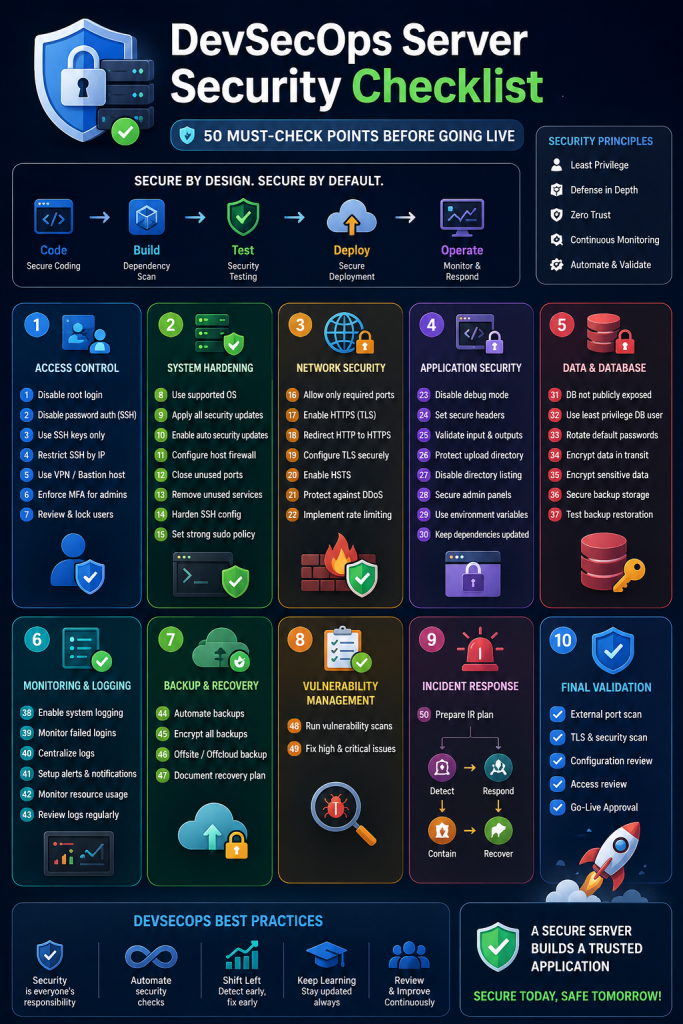
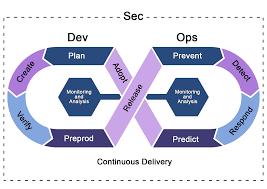
DevSecOps is the practice of embedding security controls, checks, and accountability throughout the entire software and infrastructure lifecycle—from code to deployment to runtime operations.
For IT operations, this means:
- Security checks happen automatically, not manually
- Infrastructure is built securely by default
- Monitoring includes security signals, not just uptime
- Incidents are detected earlier and resolved faster
How it differs from traditional DevOps
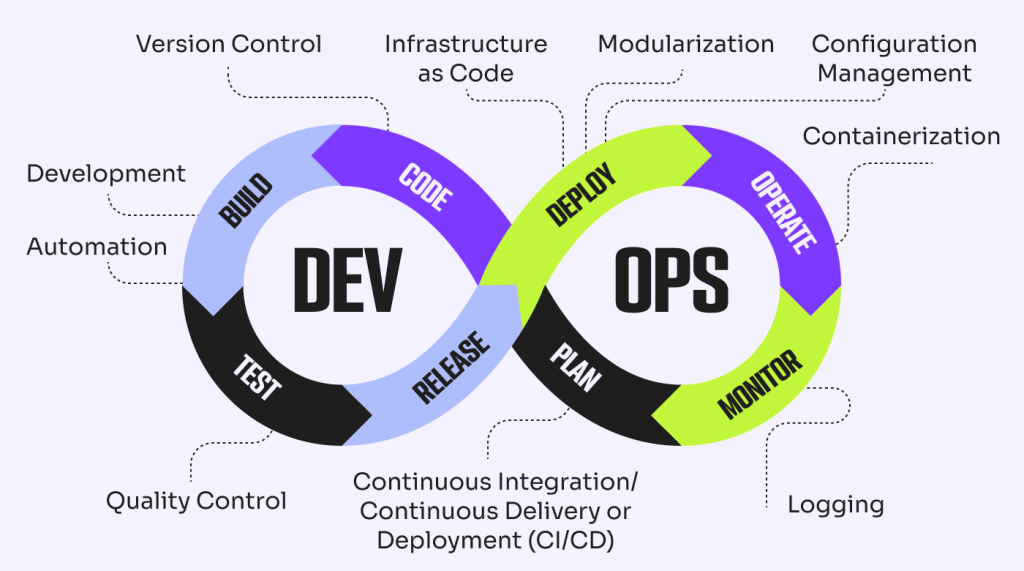
DevOps focuses on speed and collaboration between development and operations. DevSecOps adds one critical dimension: continuous security ownership.
| Aspect | Traditional Ops | DevOps | DevSecOps |
|---|---|---|---|
| Security involvement | Late-stage | Limited | Continuous |
| Incident response | Reactive | Faster | Proactive |
| Infrastructure | Manual / scripted | Automated | Secure-by-design |
| Risk visibility | Low | Medium | High |
What changes operationally
In a DevSecOps-driven IT operations environment:
- Servers are no longer “snowflakes”; they are reproducible and hardened
- Security misconfigurations are caught before deployment
- Patch management is automated and consistent
- Operations teams gain visibility into security risks early
This fundamentally shifts operations from reactive maintenance to predictable system management.
How DevSecOps Benefits IT Operations in Practice
1. Fewer production incidents caused by security gaps
One of the biggest operational drains is security-related outages:
- Expired certificates
- Misconfigured access policies
- Vulnerable dependencies
- Unpatched systems
With DevSecOps:
- Security scanning is part of CI/CD pipelines
- Configuration baselines are enforced automatically
- Known vulnerabilities are flagged before release
Result: Operations teams spend less time responding to avoidable incidents.
2. Improved system reliability and uptime
Security and reliability are deeply connected. A vulnerable system is an unstable system.
DevSecOps improves reliability by:
- Enforcing infrastructure standards consistently
- Preventing unauthorized configuration drift
- Reducing human error through automation
- Detecting anomalies early using security-aware monitoring
When systems are built securely from the beginning, they fail less often—and when they do fail, the root cause is easier to identify.
3. Faster and safer deployments
Many operations teams fear frequent releases because:
- Each deployment increases risk
- Rollbacks are painful
- Security approval delays releases
DevSecOps solves this by:
- Automating security checks
- Making risk visible early
- Enabling smaller, safer changes
- Supporting blue-green and canary deployments
Paradoxically, adding security increases speed—because it removes uncertainty.
4. Better collaboration between teams
In traditional setups:
- Ops blames Dev for insecure code
- Security blames Ops for misconfigurations
- Everyone blames the process
DevSecOps changes this dynamic:
- Security requirements are codified, not debated
- Ops and security share dashboards and metrics
- Issues are addressed collaboratively, earlier
This reduces friction and builds trust across teams—an underrated but critical operational benefit.
5. Stronger compliance with less effort
Compliance is often seen as paperwork-heavy and disruptive. For IT operations, audits can be painful.
DevSecOps improves compliance by:
- Automating policy enforcement
- Maintaining audit trails through pipelines
- Using immutable infrastructure patterns
- Capturing evidence continuously, not manually
Instead of scrambling during audits, operations teams can prove compliance as a byproduct of normal work.
6. Reduced operational cost over time
While DevSecOps requires upfront investment, it reduces long-term operational costs by:
- Lowering incident response expenses
- Reducing downtime-related losses
- Minimizing rework and emergency fixes
- Improving resource utilization
Operations teams move from crisis management to optimization.
Step-by-Step: How DevSecOps Fits into IT Operations Workflows
Step 1: Secure infrastructure provisioning
Instead of manually configuring servers:
- Use infrastructure as code (IaC)
- Apply security baselines automatically
- Validate configurations before provisioning
Operational benefit: Consistency, repeatability, and fewer misconfigurations.
Step 2: Integrate security into CI/CD pipelines
Security checks should run:
- On every code commit
- On every infrastructure change
- Before deployment to production
Operations teams gain confidence that deployed systems meet defined security standards.
Step 3: Continuous monitoring with security context
Traditional monitoring focuses on:
- CPU
- Memory
- Availability
DevSecOps monitoring adds:
- Unauthorized access attempts
- Configuration drift
- Suspicious runtime behavior
- Policy violations
This allows operations teams to detect problems before users notice them.
Step 4: Automated patching and vulnerability management
Manual patching is error-prone and slow.
DevSecOps enables:
- Automated dependency updates
- Scheduled OS patching
- Risk-based prioritization
- Controlled rollout strategies
Operations teams maintain security without disrupting service.
Step 5: Incident response and learning loops
When incidents occur:
- Logs and metrics are already centralized
- Root cause analysis is faster
- Lessons feed back into pipelines
Each incident strengthens the system instead of repeating mistakes.
Common Mistakes, Myths, and Misconceptions
Myth 1: DevSecOps slows down operations
In reality, manual security slows teams down. Automation speeds everything up.
The initial setup takes effort, but ongoing operations become smoother and faster.
Myth 2: DevSecOps is only for large enterprises
Small and mid-sized teams often benefit more because:
- They can standardize faster
- Automation replaces manual overhead
- Security expertise is embedded, not siloed
Myth 3: Security is still “security team’s job”
In DevSecOps:
- Security is a shared responsibility
- Operations owns secure runtime environments
- Accountability is clear, not fragmented
This clarity reduces operational confusion.
Mistake: Treating DevSecOps as a tool purchase
DevSecOps is not a product.
It is a mindset supported by tools.
Without process and cultural alignment, tools add noise—not value.
Best Practices and Expert Recommendations
Start with operational pain points
Don’t begin with abstract security goals. Start with:
- Frequent incidents
- Deployment failures
- Audit stress
- Configuration drift
Tie DevSecOps improvements directly to these problems.
Automate before enforcing
Manual policies create resistance.
Automated guardrails create adoption.
Make the secure path the easiest path.
Keep security feedback fast and actionable
Operations teams need:
- Clear alerts
- Prioritized risks
- Contextual information
Avoid overwhelming teams with low-value warnings.
Measure what matters operationally
Useful metrics include:
- Mean time to detect (MTTD)
- Mean time to resolve (MTTR)
- Number of security-related incidents
- Deployment success rate
These metrics resonate with operations leaders.
Invest in shared ownership and learning
Training operations teams in security fundamentals:
- Builds confidence
- Improves decision-making
- Reduces dependency bottlenecks
DevSecOps succeeds when knowledge is distributed, not centralized.
Frequently Asked Questions
1. How does DevSecOps differ from traditional security operations?
Traditional security is reactive and manual. DevSecOps is proactive, automated, and integrated into daily operations.
2. Do IT operations teams need to learn coding for DevSecOps?
Basic scripting and infrastructure-as-code knowledge is helpful, but deep programming expertise is not mandatory.
3. Can DevSecOps work in legacy environments?
Yes, but adoption is incremental. Start with monitoring, patch automation, and access controls before full pipeline integration.
4. Does DevSecOps replace existing security tools?
No. It orchestrates and integrates them into workflows that operations teams already use.
5. How long does it take to see benefits?
Operational improvements often appear within months, especially in reduced incidents and faster deployments.
6. Is DevSecOps only relevant for cloud environments?
Cloud accelerates adoption, but on-prem and hybrid environments also benefit significantly.
7. What is the biggest success factor for DevSecOps in operations?
Cultural alignment. Tools matter, but shared responsibility and trust matter more.
Conclusion
DevSecOps is not about adding more security tasks to already-busy IT operations teams.
It’s about removing chaos, uncertainty, and avoidable risk from daily operations.
When implemented thoughtfully, DevSecOps:
- Reduces incidents
- Improves system reliability
- Speeds up safe deployments
- Strengthens compliance
- Makes operations more predictable and sustainable
For IT operations, the real benefit of DevSecOps is not security for its own sake—it’s operational excellence in a complex, fast-moving world.
If your goal is fewer late-night emergencies, calmer deployments, and systems you can trust, DevSecOps is not optional anymore. It’s the foundation of modern IT operations done right.