
Limited Time Offer!
For Less Than the Cost of a Starbucks Coffee, Access All DevOpsSchool Videos on YouTube Unlimitedly.
Master DevOps, SRE, DevSecOps Skills!
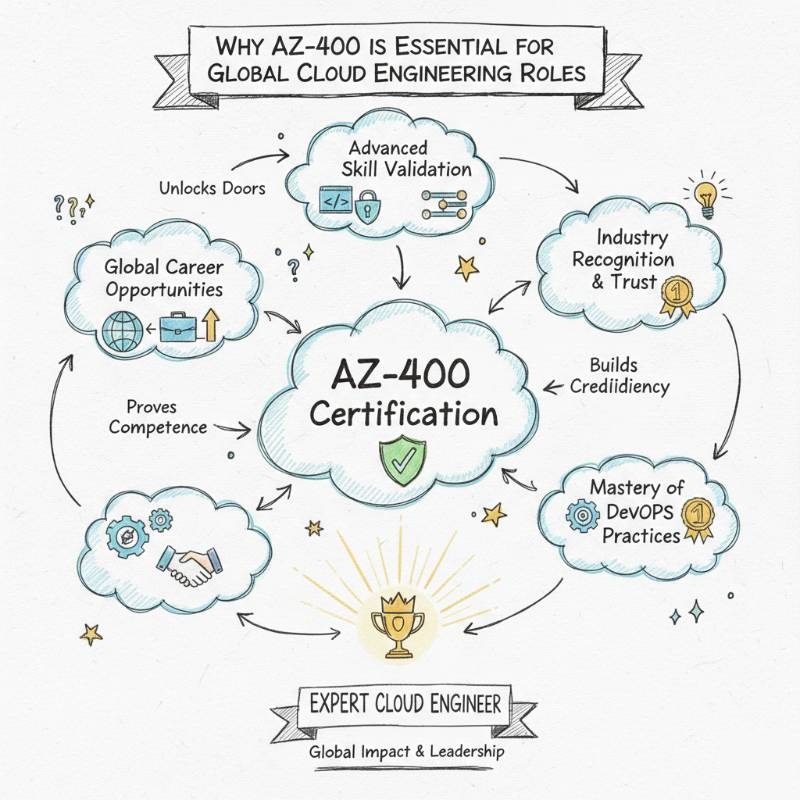
In my time watching the tech world evolve, I have seen many changes in how we approach software. We have moved from a world of slow, manual updates to a place where speed and safety must live together. This change has made the role of an Azure DevOps Engineer Expert more than just a job title—it is a vital part of how a company stays alive. If you are an engineer or a manager looking to make a real mark, understanding the Azure DevOps Engineer Expert (AZ-400) Training is the smartest move you can make.
This guide is designed for the working professional who wants more than just a certificate. It is for those in India and across the globe who want to lead. We will look at how this program can help you build better systems, lead better teams, and ultimately, grow a career that lasts.
Master Certification Overview
To start your journey, you need to know where you stand. This table gives you the full picture of the Azure DevOps Engineer Expert program.
| Track | Level | Who it’s for | Prerequisites | Skills Covered | Recommended Order |
| DevOps | Expert | Engineers & Managers | AZ-104 or AZ-204 | CI/CD, IaC, Security, Feedback | After Associate Level |
Azure DevOps Engineer Expert (AZ-400) Training
What it is
The Azure DevOps Engineer Expert (AZ-400) program is the high-level roadmap for anyone wanting to master the art of modern delivery. It is a deep dive into the strategy of combining people, process, and tools. Instead of just learning how to use a specific software, you learn how to build a “value stream.” This means you learn how to take an idea and turn it into a working product for the user as quickly and safely as possible. It covers everything from how you organize your code to how you watch your system in real-time.
Who should take it
This training is meant for those who are already working in the field and want to take the next big step. If you are a software developer who wants to understand the “Ops” side, or a system admin who wants to move into “Dev,” this is for you. It is also perfect for technical managers who need to know how to set up high-performing teams. If you want to be the person who designs the future of an organization’s technical culture, you should be in this program.
Skills you’ll gain
This training gives you a set of high-level skills that are very rare in the industry. You will move from being a “builder” to being an “architect.”
- Strategic CI/CD: You will master the creation of pipelines that build, test, and deploy code automatically every time a change is made.
- Infrastructure Management: Learn to use code to manage your cloud servers. This makes your work predictable and easy to repeat.
- Governance and Security: You will gain the ability to add security checks and rules directly into your automation, so your systems are always safe.
- System Health Monitoring: Learn how to set up tools that watch your application and tell you if something is wrong before your users even notice.
- Collaboration Tools: Master the use of Azure Boards and GitHub to keep everyone on the same page and moving in the same direction.
Real-world projects you should be able to do
The real test of an expert is the problems they can solve. After this training, you will be ready to lead projects that change the way a company works.
- Designing a Global Deployment Strategy: You can build a system that ships updates to users in multiple countries at once with zero downtime.
- Automating Security Compliance: Create a system that automatically checks if every new server follows the company’s safety and cost rules.
- Building a Self-Healing System: Use monitoring tools to create a cloud environment that can fix itself if a part of it stops working.
- Scaling Agile Teams: Set up the tools and processes needed to help a small team grow into a large, efficient engineering department.
Preparation plan
Preparation should be smart and focused. Based on your current work, here are three ways to get ready:
- 7–14 Days (The Quick Sprint): For those who build pipelines every day. Spend this time on the parts of the syllabus you don’t use often, like instrumentation or advanced security. Use mock exams to practice the question types.
- 30 Days (The Professional Path): This is the best choice for most working engineers. Spend about two hours a day. Focus on one major topic each week and do at least one hand-on project over the weekend.
- 60 Days (The Mastery Journey): Recommended if you are moving into a new area. Spend the first month learning the basics of Azure. Spend the second month deep-diving into the expert-level strategies and building complex systems.
Common mistakes
I have seen many talented people struggle because of a few simple errors. If you avoid these, your path will be much smoother.
- Focusing Only on the Portal: Don’t just learn where to click. You must understand the “why” behind the settings to be a true expert.
- Ignoring GitHub: GitHub is now a huge part of the Microsoft world. You must know how to use GitHub Actions and Repos just as well as Azure tools.
- Skipping the Practice: You cannot learn this by just reading. You must build, break, and fix pipelines yourself in a real environment.
- Forgetting the People: DevOps is about culture. If you ignore the sections on how to help teams collaborate, you are missing half of the value.
Best Next Certification After This
Once you have earned your expert title, the next step is to specialize. Based on what is happening in the global market, these are the best paths to follow:
- DevSecOps Certified Professional (DSOCP): Perfect for those who want to lead the security movement in their organization.
- SRE Certified Professional (SRECP): If you enjoy the technical challenge of keeping global systems fast and reliable.
- Master in DevOps Engineering (MDE): A high-level program that recognizes you as a leader in the global DevOps community.
Choose Your Path: 6 Learning Tracks
The AZ-400 is the start of many specialized careers. You can choose the one that fits your passion:
- DevOps Path: Focuses on the core speed and quality of how software is delivered.
- DevSecOps Path: Focuses on making security a natural part of every automated script.
- SRE Path: Focuses on the engineering of reliability, uptime, and performance.
- AIOps / MLOps Path: The future of tech—automating the world of AI and Machine Learning.
- DataOps Path: Bringing the speed and discipline of DevOps to data pipelines and big data.
- FinOps Path: A vital role focused on managing and saving money in the cloud.
Role → Recommended Certifications Mapping
Depending on what you do today, here is how you should plan your future:
- DevOps Engineer: AZ-400 + Kubernetes Certification + Infrastructure as Code (Terraform).
- SRE: AZ-400 + SRE Certified Professional + Performance Monitoring tools.
- Platform Engineer: AZ-400 + CKA + Advanced Cloud Networking.
- Cloud Engineer: AZ-104 + AZ-400 + Cloud Architecture Specializations.
- Security Engineer: AZ-400 + DevSecOps Certified Professional + Azure Security Engineer.
- Data Engineer: AZ-400 + DataOps Certified Professional + Azure Data Factory.
- FinOps Practitioner: AZ-900 + AZ-400 + FinOps Certified Professional.
- Engineering Manager: AZ-400 + DevOps Leader Certification + Modern Leadership programs.
Why Choose DevOpsSchool?
Choosing where to train is a big decision. You need a place that understands the real challenges of the engineering world.
- Expert Mentors: You learn from people who have actually worked in the industry. They share real stories and solutions that you won’t find in a book.
- Practical Learning: We focus on labs. You get to build and fix real systems, so you have the confidence to do the same at work.
- Updated Content: The tech world moves fast. We keep our training fresh so you are always learning the latest tools and tricks.
- Career Growth: We don’t just help you pass an exam; we help you understand how to use these skills to grow your career and your salary.
Testimonials
“The hands-on labs were the highlight for me. I finally understood how all the pieces of the puzzle fit together.” — Aman
“The focus on security in the pipelines was exactly what our company needed. It has changed how we work.” — Neha
“I moved into a lead role within months of finishing my training. The mentorship was the key for me.” — Vikram
Next Certifications to Take
After the AZ-400, I recommend broadening your skills beyond just one cloud provider. Referencing the data from GurukulGalaxy, here are three great options:
- Same Track: Get certified in Kubernetes (CKA). It is the perfect partner to Azure DevOps and is used everywhere.
- Cross-Track: Look at AWS Certified DevOps Engineer. Being an expert in both Azure and AWS makes you very valuable.
- Leadership: Consider the Certified DevOps Leader (CDL) to help you lead the “people change” part of technology.
Top Training Institutions for Azure DevOps (AZ-400)
If you are looking for help on your journey, these institutions offer the best training and support:
- DevOpsSchool: A global leader in DevOps education. They offer instructor-led sessions that focus on real-world projects and expert mentorship. This is the place for those who want a deep, practical understanding.
- Cotocus: Known for helping teams and individuals modernize their skills through high-quality workshops and consulting-style training.
- Scmgalaxy: A massive resource for the engineering community, providing structured paths and a wealth of knowledge on all things “Ops.”
- BestDevOps: Focuses on simplified, result-oriented training that helps you get the skills you need for a high-paying role as quickly as possible.
- DevSecOpsSchool: The authority on bringing security into the automation world. If you want to specialize in safety, this is where you go.
- SRESchool: Dedicated entirely to the science of Site Reliability Engineering and system uptime.
- AIOpsSchool: Helping engineers prepare for the future of AI-driven operations and machine learning automation.
- DataOpsSchool: A specialized center for bringing the speed of DevOps to the world of data engineering.
- FinOpsSchool: The best place to learn how to manage and optimize your company’s cloud spending.
FAQs on Azure DevOps Engineer Expert (AZ-400) Training
1. Is the AZ-400 exam hard for a working engineer?
It is a tough exam because it covers a lot of ground. It tests your ability to solve real problems, not just remember facts. But with good training and practice, it is very achievable.
2. How long will the training take me?
Most programs are about 40 hours of class time. You should plan for another month of self-study and lab work to be truly ready.
3. Do I need to know how to code?
You don’t need to be a full-time developer, but you must be comfortable with scripts. You will use a lot of YAML and PowerShell or Bash.
4. What are the prerequisites?
To get the Expert title, you must first have either the Azure Administrator (AZ-104) or Azure Developer (AZ-204) certificate.
5. Can I take the exam online?
Yes, Microsoft offers online proctored exams that you can take from your home or office.
6. Is this certification recognized globally?
Yes. It is one of the most respected cloud certifications in the world and is valued by companies everywhere.
7. How do I renew my certification?
You can renew it for free every year by taking a simple online assessment on the Microsoft website.
8. Will this help me in a manager role?
Yes. it shows you have the technical depth to lead engineering teams and understand modern delivery strategies.
9. What tools do I learn?
You learn Azure DevOps Services, GitHub Actions, Docker, Kubernetes, and Infrastructure as Code tools like Terraform.
10. Is the “Master in Azure DevOps” different from the AZ-400?
The AZ-400 is the specific exam. A “Master” program usually includes the AZ-400 plus extra projects and career-focused training.
11. What is the best study order?
I recommend starting with AZ-104 or AZ-204 to get the basics down, then moving immediately into the AZ-400 training.
12. Does the training cover Agile?
Yes. You will learn how to use Azure Boards to manage work using Agile and Scrum frameworks.
FAQs (Specific to AZ-400 Success)
1. How much focus is on security in the AZ-400?
Security is a major pillar. You must know how to automate security checks and manage secrets safely in your pipelines.
2. Is GitHub required for the AZ-400?
Yes, GitHub is now a core part of the syllabus. You should be equally comfortable with both Azure Pipelines and GitHub Actions.
3. What is the pass mark for the exam?
The passing score is 700. The questions include multiple-choice, case studies, and sometimes real-world labs.
4. How often is the exam updated?
Microsoft updates the content every few months to keep up with new features in the cloud, so using fresh training materials is vital.
5. Why is “Compliance” included in the training?
For large companies, automation must follow strict legal and safety rules. The training teaches you how to automate these checks.
6. What is the biggest benefit of being certified?
Beyond a higher salary, it gives you the technical authority to lead major projects and make important decisions.
7. Can I pass by only reading the documentation?
It is very hard. The exam tests practical application, which you can only really learn through hands-on labs and real projects.
8. How does this compare to AWS DevOps?
They are similar in theory, but the tools are different. AZ-400 is for the Microsoft cloud, which is used by many of the world’s largest businesses.
Conclusion
Making the choice to become an Azure DevOps Engineer Expert is a commitment to your professional future. It shows that you are not content with just doing the work, but that you want to master the systems that make modern engineering possible. In my years of seeing teams succeed and fail, I have found that those who bridge the gap between technical skill and business value are always the ones who lead. This training gives you exactly that—the ability to design systems that are fast, secure, and reliable. It is a challenging path, but the rewards in terms of career growth, leadership opportunities, and professional respect are well worth the effort. Now is the time to start, to learn, and to lead the future of engineering.


Leave a Reply