Limited Time Offer!
For Less Than the Cost of a Starbucks Coffee, Access All DevOpsSchool Videos on YouTube Unlimitedly.
Master DevOps, SRE, DevSecOps Skills!
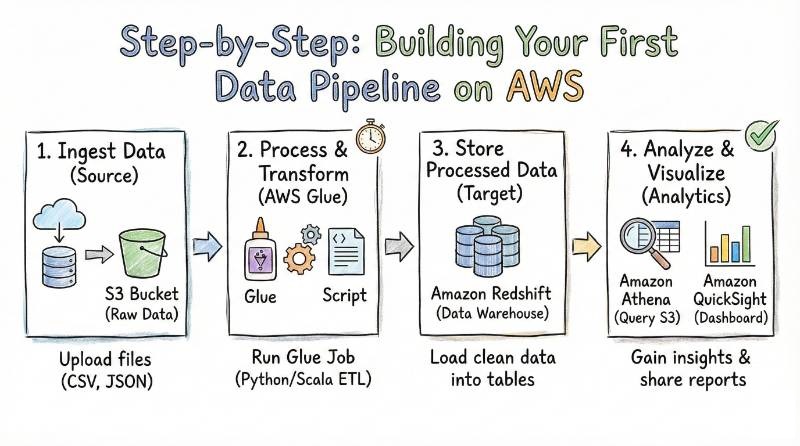
Data is the backbone of every modern application. Over the many years I have spent building systems, I have watched the focus shift from simple storage to the complex task of making data move and work for the business. We no longer just collect information; we must refine it and deliver it with speed and security. This shift has created a huge need for engineers who truly understand how to build reliable data pipelines in the cloud.
For software developers, site reliability engineers, and technical managers in India and globally, specialization is the best way to stay ahead. The AWS Certified Data Engineer – Associate is currently one of the most important credentials for anyone working in the cloud data space. It proves you have the skills to handle large-scale data tasks using the most popular cloud platform in the world.
This guide is designed for those ready to move past general cloud skills and become true experts in data infrastructure. We will explore what this certification covers, why it matters for your career, and a clear plan to help you pass the exam.
AWS Data Engineer Associate: Key Certification Details
The table below provides a snapshot of where this certification fits within the broader landscape of cloud professional development.
| Track | Level | Who it’s for | Prerequisites | Skills Covered | Recommended Order |
| Data Engineering | Associate | Developers, SREs, Data Engineers | 1-2 years cloud experience | Ingestion, ETL, Security, Data Lakes | After Solutions Architect Associate |
Detailed Look: AWS Certified Data Engineer – Associate
What it is
The AWS Certified Data Engineer – Associate (DEA-C01) is a technical certification that validates your ability to build and maintain data systems on AWS. It focuses on the actual “pipes” of the cloud—how data is collected, how it is changed into a useful format, and how it is stored safely. It proves you can choose the right tool for the right job, such as using AWS Glue for huge batch jobs or Amazon Kinesis for data that needs to be processed in real-time.
Who should take it
This certification is perfect for Software Engineers who want to specialize in data, Database Administrators moving to the cloud, and Technical Managers who need to understand the foundations of their team’s data platforms. It is also ideal for anyone who wants to prove they can design cost-effective and secure data systems that solve real business problems.
Skills you’ll gain
Studying for this exam will give you a “pipeline-first” approach to problem-solving. You will learn to see data as a moving resource rather than a static file.
- Data Ingestion & Collection: You will master how to bring data into the cloud from many different sources, including logs, databases, and IoT devices.
- Transformation & Processing: Learning how to clean, filter, and reorganize data so that it is ready for business analysts or machine learning models.
- Storage & Optimization: Understanding how to use S3, Redshift, and DynamoDB. You will learn how to organize data so it is fast to find but cheap to store.
- Security & Governance: You will gain skills in locking down data using AWS Lake Formation and encryption tools like KMS, ensuring only authorized people have access.
- Orchestration & Automation: Learning to use AWS Step Functions to connect different data tasks into one smooth, automated workflow that runs without manual help.
Real-world projects you should be able to do
Once you have finished this training, you will be prepared to lead actual projects in a production environment.
- Building a Real-Time Analytics System: Create a pipeline that takes in live website data, processes it immediately using AWS Lambda, and shows the results on a live chart.
- Designing a Serverless Data Lake: Build a storage system on S3 that automatically sorts and cleans data into different folders using AWS Glue.
- Managing Centralized Data Access: Set up a secure hub where different teams can access the data they need from different AWS accounts without breaking security rules.
- Cloud Database Migration: Move an old, slow on-premise database into a modern, fast Amazon Redshift data warehouse with very little downtime.
Preparation Plan
| Timeline | Action Plan |
| 7–14 Days (The Fast Track) | Best for those with current AWS experience. Focus on your weak spots. Review Glue and Redshift specifically. Take 3-4 practice tests to get used to the question style. |
| 30 Days (The Standard Path) | Weeks 1-2: Master storage and ingestion (S3, Kinesis). Week 3: Focus on processing and automation (Glue, Step Functions). Week 4: Deep dive into security and take multiple mock exams. |
| 60 Days (The Deep Dive) | Recommended for those new to data. Spend the first month doing daily hands-on labs in the AWS console. Use the second month to master the concepts and tricky exam scenarios. |
Pitfalls to Avoid
Many smart engineers struggle with this exam because they miss a few key areas.
- Focusing Only on Movement: It is easy to worry only about moving data. However, a large part of the exam is about security. If you don’t know how IAM roles and bucket policies work, you will find it hard to pass.
- Ignoring the Cost: AWS exams always test your ability to save the company money. Using an expensive service when a cheaper one works is a common mistake.
- Not Practicing the Code: While you don’t need to be a senior coder, you must be able to understand basic Python or Spark scripts used in AWS Glue.
- Bad Organization: Setting up an S3 data lake without clear folders (partitioning) makes queries slow and expensive. You must learn how to organize data properly.
Career Branches: Choose Your Path
This certification is a powerful building block that fits into several different career directions.
- DevOps: Use your data skills to manage the infrastructure that supports massive applications, ensuring the “pipes” are always working.
- DevSecOps: Focus on the security of the data. Since data is a target for attacks, you will learn how to encrypt and protect it at every step.
- SRE (Site Reliability Engineering): Focus on the reliability of the data systems. You will learn to build pipelines that don’t break and can handle huge traffic.
- AIOps/MLOps: Become the expert who prepares the data for AI models. Without good data engineering, machine learning cannot happen.
- DataOps: This is the primary home for this certification. You will focus on the speed, quality, and automation of data delivery across the organization.
- FinOps: Focus on the financial side. You will use your knowledge of AWS storage and compute to keep the company’s cloud bill as low as possible.
Role → Recommended Certifications Mapping
| Your Current Role | Primary Goal | Secondary/Support Certs |
| Data Engineer | AWS Data Engineer Assoc. | AWS Solutions Architect Assoc. |
| DevOps Engineer | AWS DevOps Engineer Prof. | AWS Developer Assoc. |
| SRE | AWS SysOps Admin Assoc. | AWS DevOps Engineer Prof. |
| Platform Engineer | AWS Solutions Architect Prof. | CKA (Kubernetes) |
| Security Engineer | AWS Security Specialty | AWS Solutions Architect Assoc. |
| Cloud Engineer | AWS Solutions Architect Assoc. | AWS SysOps Admin Assoc. |
| FinOps Practitioner | AWS Cloud Practitioner | FinOps Certified Practitioner |
| Engineering Manager | AWS Cloud Practitioner | AWS Solutions Architect Assoc. |
Next Steps: Future Certifications to Consider
After you earn your Data Engineer Associate, consider these three paths to continue your growth:
- Option 1 (Same Track): AWS Certified Machine Learning – Associate. This helps you move from just moving the data to building the AI models that use it.
- Option 2 (Cross-Track): AWS Certified Solutions Architect – Associate. This provides a broader view of how data services work with networking and general cloud design.
- Option 3 (Leadership): PMP (Project Management Professional). For those wanting to lead teams, this teaches you how to manage large, technical projects from start to finish.
Learning Hubs: Top Institutions for AWS Data Training
If you are looking for professional help to pass your certification, these institutions are highly recommended:
- DevOpsSchool: A leading choice for those who want instructor-led training. They provide detailed bootcamps that focus on real-world projects and help you understand the “why” behind every service.
- Cotocus: They specialize in technical training for corporate teams and individuals, helping you bridge the gap between classroom theory and actual industry work.
- Scmgalaxy: This institution offers training that covers the entire software lifecycle, helping you understand how data engineering fits into the bigger picture of DevOps and supply chains.
- BestDevOps: Focuses on quick upskilling, helping you learn the most important AWS data tools through structured and easy-to-follow modules.
- devsecopsschool: If you want to specialize in protecting data, this is the place. Their courses emphasize security, encryption, and compliance within the cloud.
- sreschool: Their curriculum is built around reliability and scalability, teaching you how to build data systems that can handle massive amounts of traffic without failing.
- aiopsschool: This school focuses on the future of operations, teaching you how data pipelines are essential for modern AI and machine learning workflows.
- dataopsschool: A specialized institution dedicated to the DataOps domain, providing focused training on the entire journey of data from collection to delivery.
- finopsschool: This school teaches the vital skill of cloud financial management, ensuring you can build powerful data systems that stay within the company’s budget.
FAQs : Career, Difficulty, and Strategy
1. How hard is the AWS Data Engineer Associate exam? It is more technically narrow but deeper than the Solutions Architect exam. You need a very clear understanding of specific tools like AWS Glue, Redshift, and Athena.
2. How much time do I need to study? If you already work in the cloud, 40-60 hours is usually enough. If you are new to data engineering, you should plan for 100+ hours to include hands-on practice.
3. Are there any prerequisites? No. You can take this exam without having any other certifications. However, understanding the basics of the cloud (Cloud Practitioner level) is very helpful.
4. What is the best order to take these certifications? The ideal path is: Cloud Practitioner -> Solutions Architect Associate -> Data Engineer Associate. This builds your knowledge step-by-step.
5. Does this certification help managers? Yes. It gives managers the technical language they need to lead teams effectively, plan project timelines accurately, and make better budget choices.
6. What are the career outcomes? Many people see a shift toward higher-paying roles like Senior Data Engineer or Analytics Lead. It is a major signal to recruiters that you have specialized, high-demand skills.
7. How long is the certification valid? It lasts for three years. To keep it active, you can either retake the latest version of the exam or move up to a Professional-level certification.
8. Is this better than the old Data Analytics Specialty? Yes, because it focuses on the engineering—the building of the pipes—which is what the industry needs most right now. It is the modern standard.
9. Can a regular Software Developer switch to Data Engineering with this? Absolutely. This certification is designed to teach developers how to use their coding skills to manage large amounts of data in the cloud.
10. How does this help with global job opportunities? AWS certifications are recognized all over the world. Having this credential makes it much easier to pass technical screenings for roles in the US, Europe, or the Middle East.
11. What is the passing score? The exam is scored from 100 to 1,000. You need a minimum score of 720 to pass.
12. Is there a lab portion in the actual exam? Currently, the exam is multiple-choice. However, the questions are based on real-world scenarios, so you cannot pass without having hands-on experience.
FAQs : Technical Training & Exam Content
1. Which AWS service is the most important to learn? AWS Glue is the star of the exam. You must understand the Data Catalog, Crawlers, and how to use Glue for cleaning and moving data.
2. Do I need to be an expert in Python? No, but you should be able to read and understand basic Python or Spark code, as you will see these in questions about Glue and Lambda.
3. How much focus is there on “Streaming” data? Quite a lot. You will need to know when to use Kinesis Data Streams for low-latency processing and when to use Firehose for delivering data to storage.
4. Does the training cover SQL? Yes. You should be comfortable using SQL to query data in Amazon Athena and to perform tasks in Amazon Redshift.
5. What is the role of “Data Lakes” in this certification? Data Lakes (using S3 and Lake Formation) are a central part of the exam. You will be tested on how to store data securely and how to manage access.
6. Is cost management a major part of the training? Yes. You will learn how to choose the right storage tiers and how to optimize your queries so they don’t cost too much.
7. How are security and compliance handled? The exam covers “Security by Design.” This includes using KMS for encryption and setting up IAM roles so different services can talk to each other safely.
8. What kind of automation tools are covered? The focus is on AWS Step Functions for serverless automation and Managed Airflow (MWAA) for more complex, code-based data workflows.
Conclusion
The move toward using data for every business decision is not a temporary trend; it is the new way the world works. By earning the AWS Certified Data Engineer – Associate certification, you are doing more than just adding a line to your resume. You are proving that you can build and manage the systems that modern business depends on. Whether you are an engineer looking to specialize or a manager trying to better understand your team’s work, this training provides the technical depth you need to succeed. The cloud is built on data, and now is the time to ensure you have the skills to lead the way in this field.


Leave a Reply